Antarctica is often imagined as absence — a continent defined by ice, wind, and distance. Yet beneath its frozen surface, scientists have uncovered something unexpectedly intimate: a tiny preserved world from 34 million years ago, sealed away like a message never meant to be found.
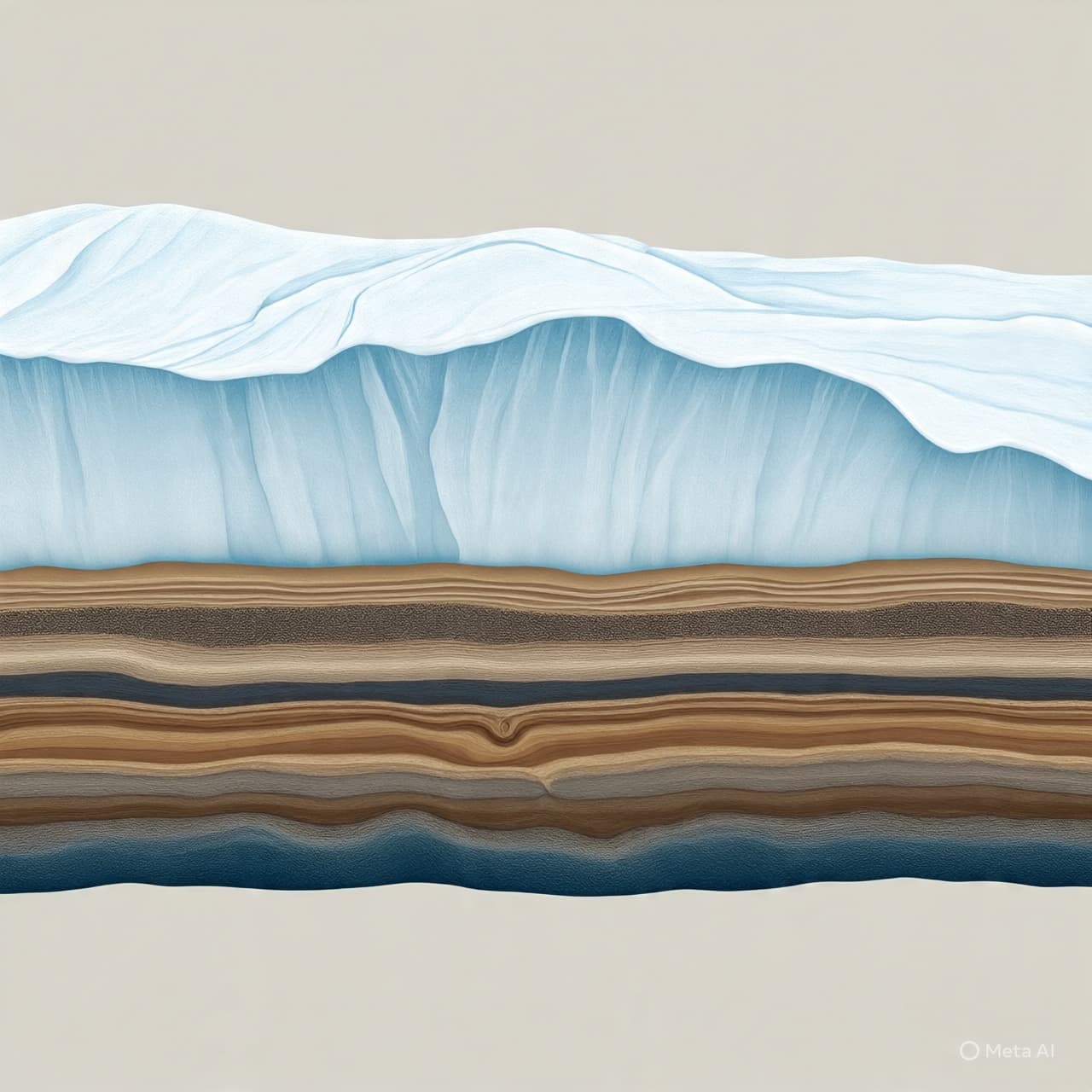
The discovery emerged from sediment samples extracted deep below the Antarctic ice sheet, revealing pollen, spores, and traces of ancient plant life. Together, they form a portrait of a time when the southernmost continent was not yet entombed in ice, but alive with vegetation, rivers, and seasonal warmth. Researchers described the find as a time capsule, not because it was hidden deliberately, but because it endured untouched.
This period marks a turning point in Earth’s history. Around 34 million years ago, the planet began a dramatic cooling phase that transformed Antarctica into the ice-dominated landscape we know today. As temperatures fell and glaciers advanced, ecosystems vanished — not gradually, but decisively. What remained was sealed beneath accumulating ice, protected by the very forces that erased it from the surface.
What makes the discovery remarkable is its clarity. The biological material appears exceptionally well preserved, allowing scientists to reconstruct details about climate, vegetation, and atmospheric conditions with unusual precision. These fragments suggest a temperate environment, one capable of supporting forests and diverse plant life, far removed from Antarctica’s modern reality.
Such findings carry weight beyond curiosity. Understanding how quickly Antarctica shifted from green to frozen helps scientists better grasp how Earth’s climate system responds to long-term change. The past becomes a reference point, offering context for present warming trends and future possibilities — not as prediction, but as reminder.
There is also something quietly humbling in the scale of the find. This was not a lost city or a fossilized giant, but a small, intricate world preserved in grains of sediment. Its survival depended on stillness, on being forgotten long enough to remain intact.
As researchers continue to study the samples, Antarctica reveals itself not as a blank expanse, but as an archive. Beneath the ice lies memory — landscapes that once breathed, seasons that once turned, waiting patiently for the moment they could be read again.
In that sense, the discovery is less about uncovering something new than about listening carefully to something very old, still speaking from the dark.
AI Image Disclaimer Visuals are AI-generated and serve as conceptual representations.
Sources Polar climate research teams Antarctic geological studies Paleoclimate and Earth history scientists
Published by Banx Network. This article is part of the Banx decentralized media programme, powered by the BXE token on the XRP Ledger.