
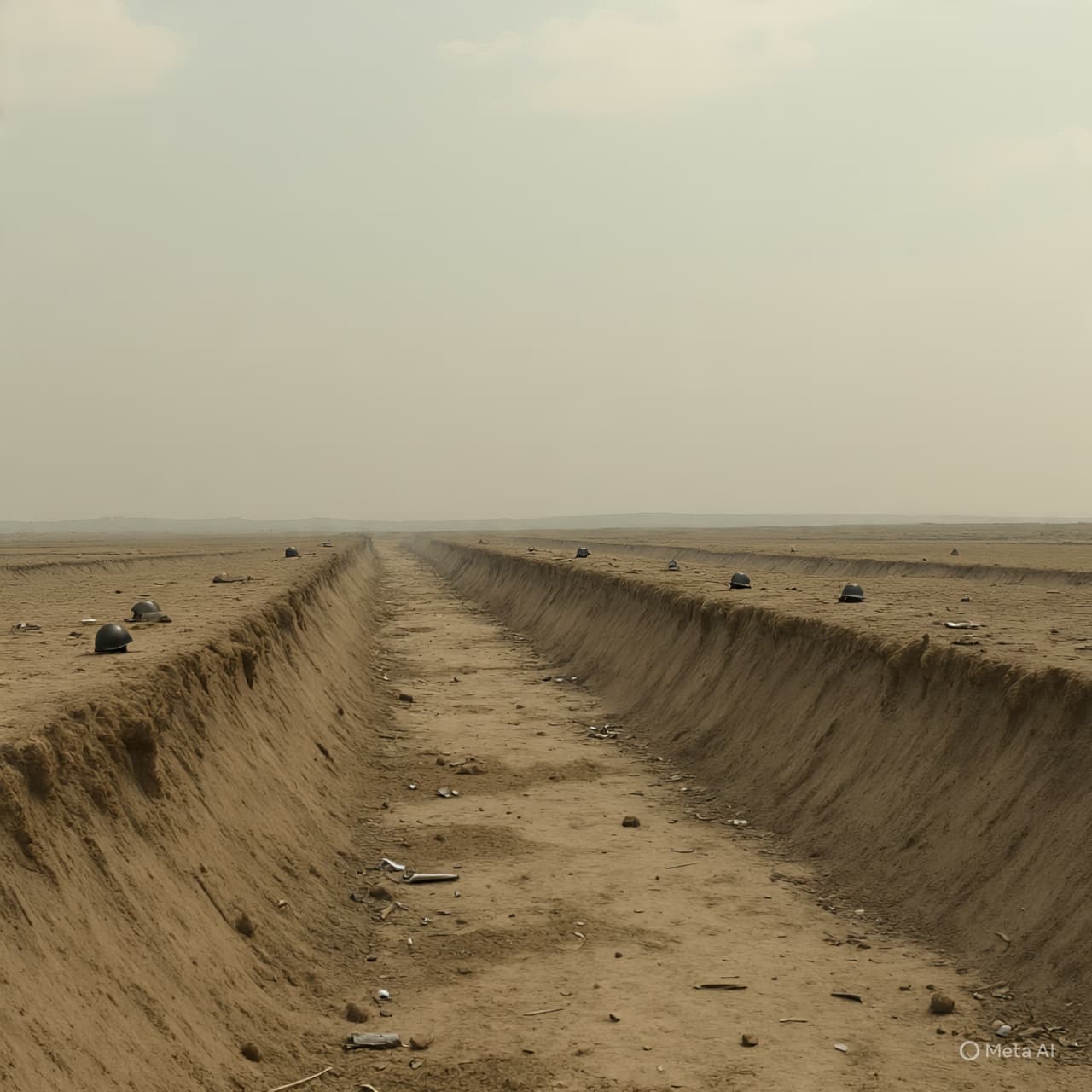
In the muted gray of early morning, a battlefield feels larger than maps suggest—a stretch of earth marked by trenches, fractured roads, and the silence that follows artillery’s echo. To measure loss in such a place is to attempt something almost impossible: to convert absence into numbers, and numbers into meaning.
More than four years after Russia launched its full-scale invasion of Ukraine in February 2022, the war has settled into a grinding rhythm. Advances and retreats alter the lines on maps, but the human toll continues to mount in ways that are harder to chart. Neither Moscow nor Kyiv publishes comprehensive, independently verified casualty figures. Instead, estimates come from defense officials, intelligence assessments, and international analysts piecing together fragments from the front.
Available estimates suggest that total military casualties on both sides—killed, wounded, missing, or captured—may now approach or exceed 1.8 million. Within that broad figure, Russia’s losses are widely assessed to be higher in absolute terms.
Western intelligence assessments and independent research groups have estimated that Russian forces may have sustained roughly 1.1 to 1.3 million total casualties since the start of the invasion, including approximately 300,000 or more killed. These figures fluctuate as new data emerges and remain subject to dispute, but multiple reporting organizations converge around the view that Russia’s losses are substantial and historically significant.
Ukraine, facing a larger adversary and defending its territory, is also reported to have suffered heavy losses. Estimates suggest between roughly 500,000 and 700,000 total military casualties, including more than 100,000 fatalities. Ukrainian officials have periodically acknowledged tens of thousands of soldiers killed, while maintaining that exact figures are closely guarded during wartime.
The disparity in totals reflects several factors: Russia’s larger troop deployments, repeated offensives across extended front lines, and the attritional nature of combat in eastern and southern Ukraine. Yet numbers alone do not capture context. Ukraine’s smaller population means that even lower absolute losses weigh heavily on communities already strained by displacement and economic disruption.
Civilian casualties form another dimension of the war’s toll. Thousands of Ukrainian civilians have been reported killed or injured since 2022, particularly in regions subjected to missile and drone strikes. Reliable figures for civilian losses inside Russian-held areas or within Russia itself are harder to verify.
All casualty estimates carry uncertainty. Access to front-line zones is limited. Governments shape narratives to sustain morale. Independent verification is challenging amid ongoing hostilities. For that reason, analysts describe these figures as informed approximations rather than final counts.
In comparative terms, however, most public assessments indicate that Russia has experienced higher total military fatalities and casualties than Ukraine since the invasion began. Both nations, nonetheless, continue to endure profound human loss as the conflict persists.
In straightforward terms, widely cited estimates suggest that combined military casualties since February 2022 may approach two million, with Russia’s total losses exceeding Ukraine’s in absolute numbers. Precise figures remain contested and subject to revision as the war continues.
AI Image Disclaimer Illustrations were created using AI tools and are not real photographs.
Sources (Media Names Only) Reuters Associated Press PBS NewsHour The Guardian The Washington Post
Published by Banx Network. This article is part of the Banx decentralized media programme, powered by the BXE token on the XRP Ledger.


.jpg&w=3840&q=75 "Blake Lively Awarded $400,000 in Legal Fees After Justin Baldoni Lawsuit Dismissed")