The sea has always carried both promise and uncertainty. For centuries, ships have crossed narrow straits and wide oceans, guided by currents, charts, and quiet trust in the rhythm of the water. Yet even the most familiar maritime routes can hold moments when calm horizons suddenly give way to unexpected events.
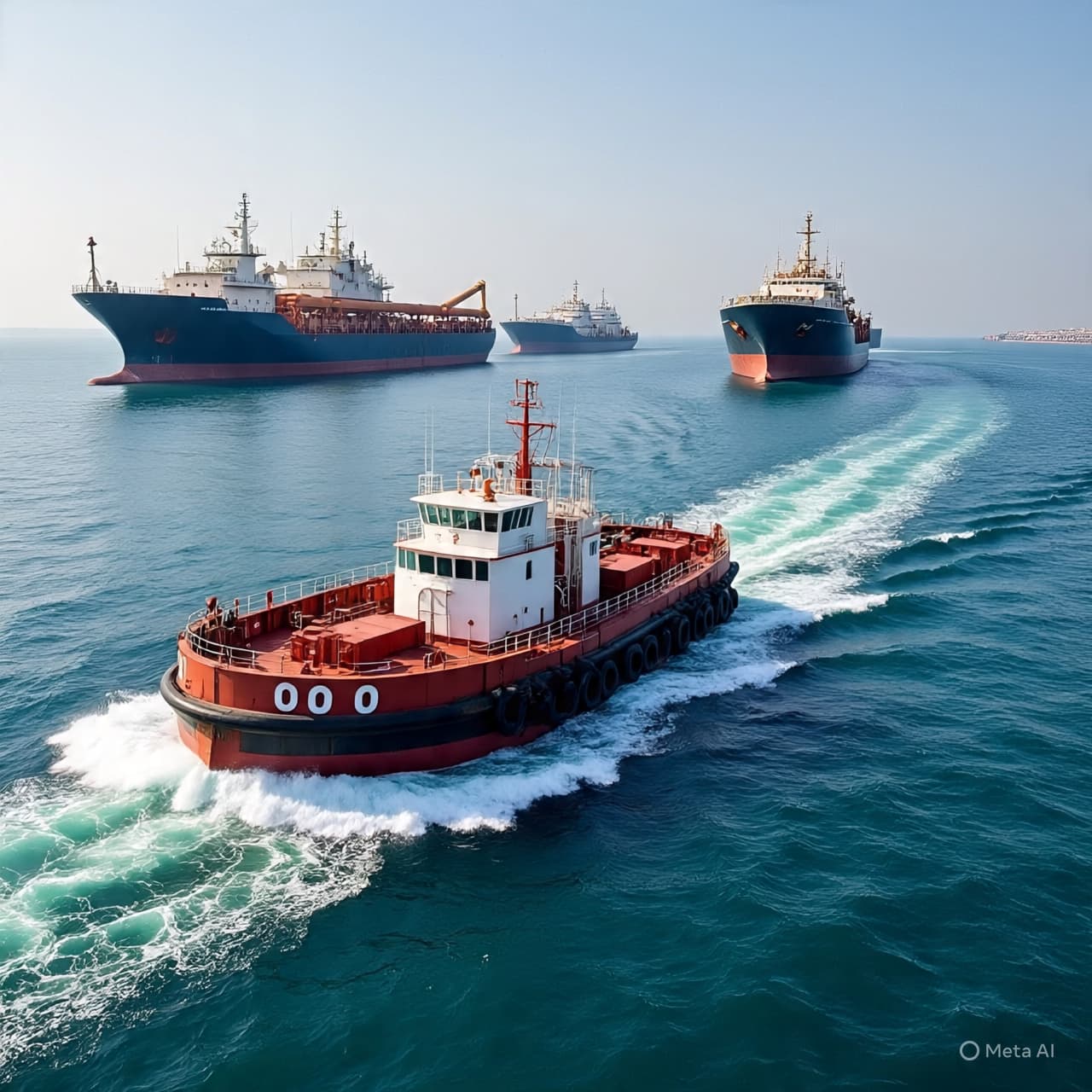
Such a moment recently unfolded in the Strait of Hormuz, one of the world’s busiest maritime passages. In waters where tankers and cargo vessels move steadily between continents, a tug boat known as Musaffah 2 was struck by an explosion that disrupted the quiet routine of seafaring life.
The incident quickly drew attention not only because of the location but also because of the people on board. Among the crew were Indonesian nationals, part of the many maritime workers from Indonesia who help operate vessels across international waters.
Indonesia’s Ministry of Foreign Affairs confirmed that three Indonesian crew members were reported missing following the explosion. The ministry stated that it is closely monitoring the situation while coordinating with relevant authorities and parties involved in the response efforts.
The Strait of Hormuz is often described as one of the most strategically important maritime corridors in the world. Every day, large volumes of global oil shipments pass through this narrow channel connecting the Persian Gulf to the Gulf of Oman. Tug boats, cargo ships, and tankers regularly navigate these waters as part of the complex system that sustains international trade.
Tug boats like Musaffah 2 play a specialized but essential role in maritime operations. They assist larger vessels in maneuvering through ports, narrow waterways, and busy shipping lanes. Although smaller than the tankers and cargo ships they guide, their work demands skill, coordination, and constant vigilance.
When an incident occurs at sea, the response often unfolds quickly but carefully. Maritime authorities and rescue teams typically coordinate search and rescue operations, while shipping companies and diplomatic representatives work to gather information about the crew’s safety.
Indonesia, one of the world’s largest suppliers of maritime labor, has thousands of citizens working aboard ships across global waters. These sailors form a quiet but vital link in international shipping, helping vessels travel between continents while often spending months away from home.
For families waiting far from the ocean, news of a maritime incident can travel slowly and painfully. Updates often arrive through official channels as authorities confirm information step by step. In situations like this, patience becomes part of the difficult rhythm of uncertainty.
The Indonesian Ministry of Foreign Affairs stated that its representatives are communicating with related institutions and monitoring developments surrounding the incident. Efforts are underway to determine the circumstances of the explosion and the status of those who were on board.
Maritime accidents, while relatively rare in heavily monitored shipping corridors, remind observers how demanding life at sea can be. Ships operate in environments shaped by weather, machinery, and complex logistics that stretch across borders and jurisdictions.
As investigations continue and search efforts proceed, the focus remains on locating the missing crew members and clarifying what occurred aboard the vessel. Each update may bring new pieces to a story that began suddenly in one of the world’s most traveled waterways.
For now, the Strait of Hormuz continues its steady flow of ships and commerce, much as it has for decades. Yet somewhere beyond the horizon of ordinary traffic, a search is still unfolding—guided by hope, coordination, and the quiet determination of those seeking answers.
And while official updates continue to emerge, the story remains anchored in a simple concern shared across many shores: the hope that those who went to sea will safely find their way home.
AI Image Disclaimer Visuals are created with AI tools and are not real photographs.
Sources Kompas CNN Indonesia Detik Tempo Antara News
Published by Banx Network. This article is part of the Banx decentralized media programme, powered by the BXE token on the XRP Ledger.