

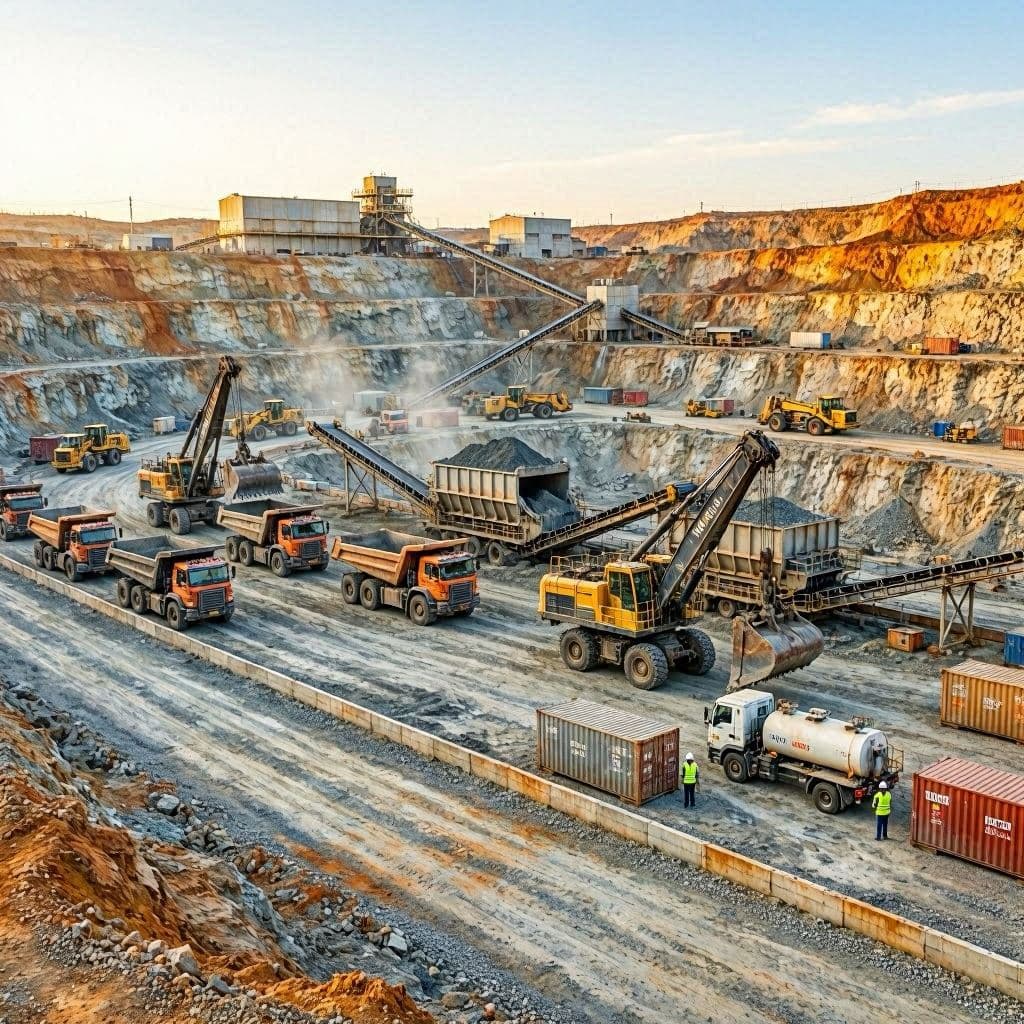
Key Highlights
- Global markets are increasingly concerned about critical minerals supply disruptions.
- Critical minerals are essential for advanced technologies and renewable energy.
- Governments are investing in domestic mining and international partnerships.
The modern economy often appears weightless, driven by digital platforms and invisible networks. Yet beneath smartphones, electric vehicles, and data centers lies a quieter reality: the world still depends on materials pulled from the ground. As the demand for advanced technologies surges, the supply of critical minerals has become a pressing concern for global markets.
Critical minerals, including rare earth elements, are vital components in products ranging from semiconductors and renewable energy technologies to defense systems and batteries. Their importance has grown rapidly as countries invest in artificial intelligence, electric mobility, and clean energy transitions. However, industry groups and manufacturers have warned that access to these resources is becoming increasingly challenging, raising alarms about potential supply shortages.
Businesses fear that these shortages could slow production and raise costs across multiple industries. In response, manufacturers are exploring alternative suppliers and considering strategies to diversify their sourcing arrangements. This proactive approach aims to mitigate risks associated with supply chain disruptions, which could have far-reaching implications for the economy.
Governments around the world have also intensified efforts to secure access to critical resources. Several countries are increasing investments in domestic mining projects and forming international partnerships to strengthen supply chains. This shift reflects a growing recognition that control over strategic resources is not just an economic issue but also a matter of national security and technological competitiveness.
The growing demand for minerals has renewed discussions about sustainability and responsible mining practices. Environmental concerns remain significant as governments attempt to balance resource development with ecological protection. Industry experts emphasize the need for cooperation between producing and consuming nations to avoid prolonged supply disruptions. Greater transparency and diversification may help reduce vulnerabilities in global supply chains, ensuring a more stable supply of critical minerals.
As economies become more dependent on advanced technologies, the importance of critical minerals continues to rise, turning once-obscure resources into key drivers of global economic strategy. The interplay between economic growth, technological advancement, and environmental stewardship will shape the future of resource management and international relations.
AI Image Disclaimer: The visual illustrations associated with this article were generated using artificial intelligence for representational purposes.
Published by Banx Network. This article is part of the Banx decentralized media programme, powered by the BXE token on the XRP Ledger.




