Far beneath layers of rock and soil, where daylight never reaches and the quiet is almost complete, scientists are preparing an instrument designed to listen to some of the faintest signals in the universe. In this deep silence—shielded from cosmic noise and human interference—researchers hope to detect traces of events that occurred long before Earth itself existed.
The signals they seek are not light, nor radio waves, but elusive subatomic particles known as Neutrino. Produced in enormous numbers during the violent deaths of stars, neutrinos travel across the cosmos almost entirely undisturbed. Billions pass through every square centimeter of Earth each second, slipping through planets, stars, and living bodies without leaving a trace.
Yet under the right conditions, a few of these ghostlike particles can be captured.
To make that possible, scientists build detectors deep underground, where thick layers of rock shield sensitive instruments from other forms of radiation. These facilities allow researchers to search for rare interactions between neutrinos and specialized detector materials. Among the most anticipated experiments of this kind is the Deep Underground Neutrino Experiment, which is being developed in the United States as part of the Fermi National Accelerator Laboratory.
The experiment will involve enormous detectors placed deep below the surface in order to observe neutrinos generated both by human-made particle beams and by natural cosmic sources. But some of the most intriguing signals researchers hope to capture originate from a phenomenon known as a Supernova.
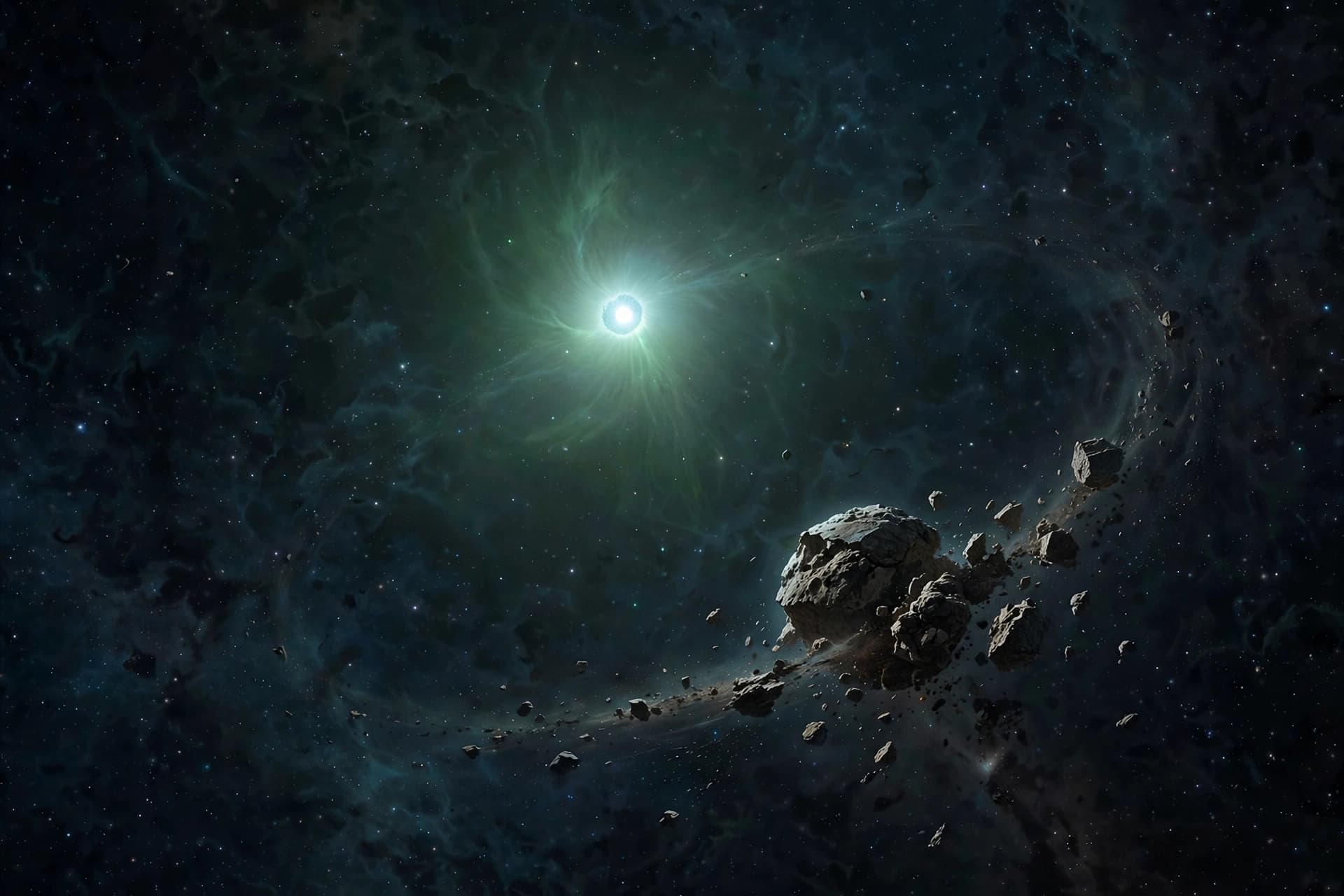
When a massive star collapses at the end of its life, it releases an immense burst of neutrinos. These particles race outward in every direction, crossing galaxies and interstellar space. Because neutrinos interact so weakly with matter, they preserve information about the conditions inside the dying star—details that light alone cannot reveal.
Scientists believe that by detecting these particles, modern instruments may glimpse the lingering echoes of ancient stellar explosions. Some of those events could have occurred billions of years ago, long before the formation of our solar system. The neutrinos released during those early supernovae are still traveling through space today.
Detecting them is extraordinarily difficult. A neutrino might pass through an entire planet without interacting once. To increase the chances of observation, detectors must be enormous and extraordinarily sensitive, capable of monitoring huge volumes of liquid or specialized materials in which a rare collision might produce a tiny flash of light.
Yet if such signals are detected, they could offer a unique window into the early history of the universe. Neutrinos from ancient supernovae may carry clues about the first generations of stars—massive objects that formed soon after the cosmos itself began to cool and organize.
Understanding those early stars could help answer long-standing questions about how galaxies formed, how heavy elements spread across space, and how the conditions eventually emerged for planets like Earth to appear.
For now, the work proceeds quietly, far below the surface. Engineers assemble detectors the size of buildings, while physicists refine instruments capable of sensing the faintest interactions imaginable.
Above ground, the universe continues its vast and restless motion—stars forming, exploding, and scattering their elements into the dark.
But deep underground, in chambers carved from ancient stone, scientists are preparing to listen for the faint whispers of stellar deaths that occurred long before our planet ever began to turn beneath the sun.
Published by Banx Network. This article is part of the Banx decentralized media programme, powered by the BXE token on the XRP Ledger.