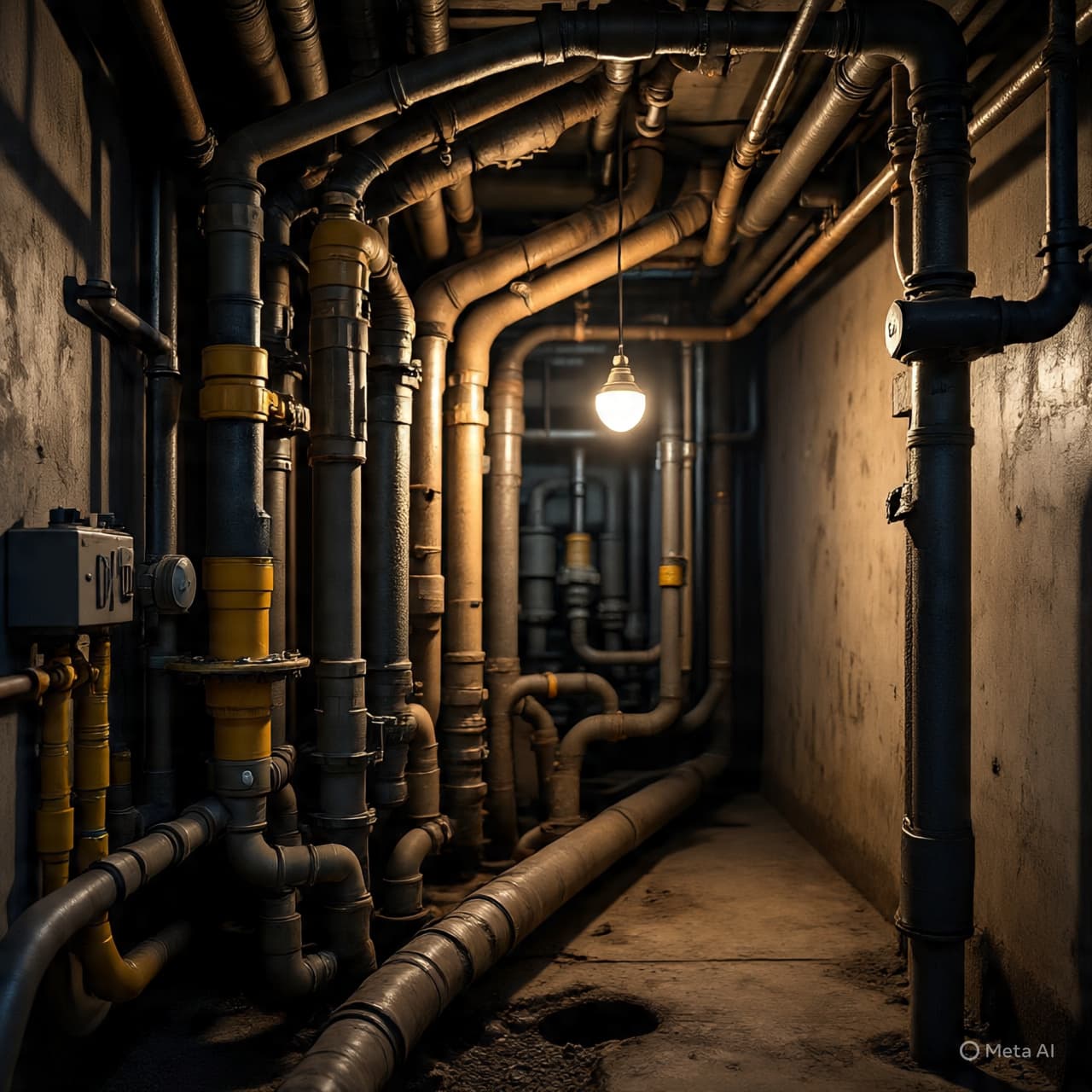
There are parts of a city that remain unseen, yet hold everything together. Beneath the movement of traffic and the rhythm of daily life, water travels in silence—guided through pipes that carry not only what is discarded, but what must be carefully managed, redirected, and understood. It is a system that asks for little attention, until the moment it can no longer remain unnoticed.
In council chambers, where such hidden systems are translated into plans and projections, that quiet flow becomes something else entirely. It becomes lines on paper, figures in reports, and decisions that extend far beyond the present moment. Here, what lies beneath the ground is brought into view—not physically, but through the language of cost, risk, and possibility.
A wastewater proposal advanced by a mayor has now encountered a measured but firm response from council staff, who have assessed the plan as both costly and carrying significant risk. Their conclusion does not arrive abruptly, but as the result of detailed evaluation—an attempt to weigh ambition against the practical demands of infrastructure that must function not occasionally, but continuously.
The proposal itself sits within a wider context. Across New Zealand, wastewater systems face increasing pressure from aging assets, population growth, and evolving environmental expectations. These are not challenges that announce themselves loudly, but they persist, accumulating over time until action becomes necessary. Plans to address them often reflect a desire to move forward, to anticipate what lies ahead rather than respond only when systems falter.
Yet within that forward movement lies uncertainty. Large infrastructure changes involve layers of complexity—engineering feasibility, financial sustainability, and the integration of new approaches with systems already in place. For staff tasked with reviewing such proposals, the responsibility is not only to consider what might be gained, but what could be lost if assumptions do not hold.
Their assessment, describing the plan as expensive and risky, suggests concern not only with immediate cost, but with longer-term implications. Projects of this scale rarely exist in isolation; they shape budgets, influence rates, and determine how resources are allocated across competing needs. In this way, a decision about wastewater becomes part of a broader equation, extending into the everyday lives of those who may never see the infrastructure itself.
The mayor’s position, by contrast, reflects the other side of the equation—the need to act, to address underlying issues before they deepen. Between these perspectives lies a familiar tension, one that does not signal conflict so much as process. It is how public systems refine themselves, through examination, challenge, and adjustment.
For residents, the debate remains largely out of sight, much like the pipes it concerns. Yet its outcome will shape something fundamental: the reliability of services, the cost of maintaining them, and the resilience of the city in the face of future demands. These are decisions that move slowly, but carry lasting effect.
Council staff have formally advised against the mayor’s wastewater proposal, citing high costs and significant risks. The plan is expected to undergo further consideration as elected officials weigh the staff assessment against broader infrastructure priorities.
AI Image Disclaimer
These images were generated using AI and are intended for illustrative purposes only.
Source Check:
RNZ NZ Herald Stuff Otago Daily Times
Published by Banx Network. This article is part of the Banx decentralized media programme, powered by the BXE token on the XRP Ledger.