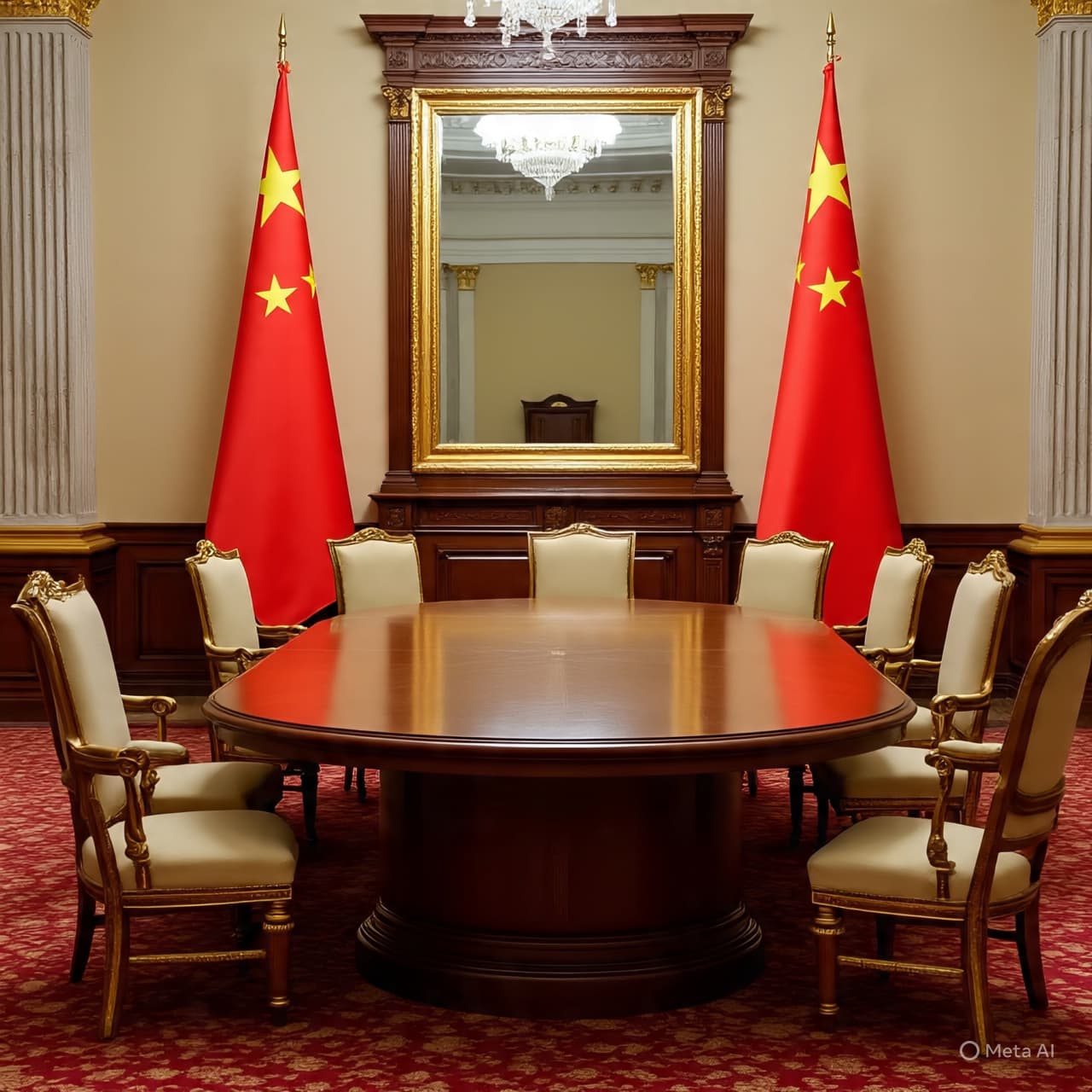
In the gray morning light over Beijing’s sprawling avenues, there is a stillness that belies the sheer force of the machinery of power hidden behind steel gates and red banners. It is in this hushed atmosphere — where gestures matter and absences speak — that a sudden change in the top ranks of China’s military snapped global attention upright. What appeared routine on a ministerial bulletin became, almost instantly, a moment of seismic resonance.
General Zhang Youxia, long regarded as one of the most senior and influential officers in the People’s Liberation Army (PLA), has been removed from his post and placed under investigation for what Chinese authorities described as “serious violations of discipline and law.” The announcement came in brisk official language, but its meaning rippled far beyond the brief statement. Zhang, who served as vice chairman of the Central Military Commission (CMC) — the top body that oversees the armed forces — was widely seen as a fixture of China’s military modernization and a close ally of President Xi Jinping. His sudden fall from grace startled analysts who had viewed him as untouchable.
This week’s developments also included the investigation of General Liu Zhenli, chief of staff of the CMC’s Joint Staff Department. Their removal leaves few senior military officials remaining beside Xi himself in active leadership roles, amplifying the sense that the purge “reaches deep into the heart of PLA command,” as one observer succinctly put it.
China’s official narrative frames these moves as part of a long-running anti-corruption and discipline campaign that began over a decade ago. In that telling, the purge upholds political discipline and legal norms within the military, reinforcing unity and loyalty. But beyond these words lies a broader consolidation of authority. By placing two of its most senior commanders under official investigation, Beijing sends a clear signal that not even long service, battlefield experience, and high rank shield an official from scrutiny.
For decades, Zhang was seen as a stabilizing force in a military still transitioning from a massive land force rooted in tradition toward a modern, technology-driven expeditionary institution. His involvement in past conflicts and his deep institutional ties made him an anchor for continuity. Now, his abrupt removal leaves a gap not just in rank, but in experience.
Observers note that this wave of personnel changes also dovetails with Xi’s long-term goal of tightening political control over the PLA, ensuring that strategic direction and loyalty flow directly from the top of the party into the barracks. With senior officers reshuffled or sidelined, decision-making centers increasingly around Xi’s inner circle, narrowing the space for alternative power bases within China’s military bureaucracy.
Regionally and globally, analysts are watching how these shifts could impact China’s military posture. Questions arise about continuity in planning, cohesion among commanders, and how future contingencies — especially in the Taiwan Strait — may be navigated without the seasoned voices that once sat at the highest tables. Even as Beijing asserts that its strategic trajectory remains unchanged, the purge underscores a deep intertwining of political loyalty and military command in an era of rising geopolitical tension.
In the latest developments, Chinese state media have reiterated that the investigations are ongoing and that decisions will be announced when due process — as defined by party discipline channels — is complete. Foreign policy forums around the world are recalibrating assessments of PLA leadership dynamics as a result.
AI Image Disclaimer (rotated wording)
Visuals are created with AI tools and are not real photographs.
Source Check — Credible Media Identified Reuters Financial Times Associated Press Washington Post The Economist
Published by Banx Network. This article is part of the Banx decentralized media programme, powered by the BXE token on the XRP Ledger.