The artificial-intelligence boom is often described through processors, data centers and enormous investments in computing infrastructure. But another part of the story can be found in corporate balance sheets, where the cash generated by technological demand eventually becomes a question of how that money is used.
Nvidia brought that question into focus on September 28 by announcing a $150 billion increase to its existing share-repurchase authorization. Reuters reported that the addition surpassed Apple’s $110 billion authorization from 2024, making it the largest increase to a share-buyback authorization on record.
The decision lifted Nvidia’s remaining repurchase capacity to $235 billion, with the company expecting to deploy the funds through fiscal 2028. Nvidia shares rose more than 2% following the announcement, while the broader market moved lower during the same session.
The announcement came as Nvidia continues to sit at the center of the global AI infrastructure expansion. Its processors are used by companies and data-center operators building systems designed to train and operate increasingly sophisticated artificial-intelligence models. Strong demand for those products has generated substantial cash for the company.
A share buyback is one mechanism through which a company can return capital to shareholders. Nvidia’s latest authorization does not mean that all of the money will be spent immediately. Instead, it gives the company the capacity to purchase shares over time, subject to its capital-allocation decisions and market conditions.
The scale of the authorization also arrives during a period of growing competition in the AI-chip market. Reuters reported that Nvidia’s shares had risen just over 20% through the Friday before the announcement, while AMD had more than doubled and Intel had more than tripled during the same period.
At the same time, investors have been watching the enormous spending required to build AI infrastructure. Data centers require processors, networking equipment, electricity and increasingly sophisticated cooling and computing systems. The pace of that spending has helped Nvidia’s business grow rapidly, while also keeping attention focused on the durability of the broader AI investment cycle.
Nvidia has continued to forecast strong growth. Reuters reported that the company projects approximately 70% revenue growth for fiscal 2028, reflecting expectations surrounding continued demand for AI hardware and related services.
The company ended its July quarter with $22.44 billion in cash and cash equivalents and had previously authorized an $80 billion buyback in May. The latest authorization therefore adds a substantial new layer to a capital-return program unfolding alongside continued investment in artificial-intelligence technologies.
For the technology industry, the announcement illustrates how the AI expansion is increasingly connecting two different worlds: the physical construction of computing infrastructure and the financial movement of corporate capital. Chips are being produced, data centers are being built and enormous sums are being invested, while companies at the center of the cycle are also deciding how to use the cash generated by that growth. Nvidia’s latest move adds another chapter to that rapidly changing landscape.
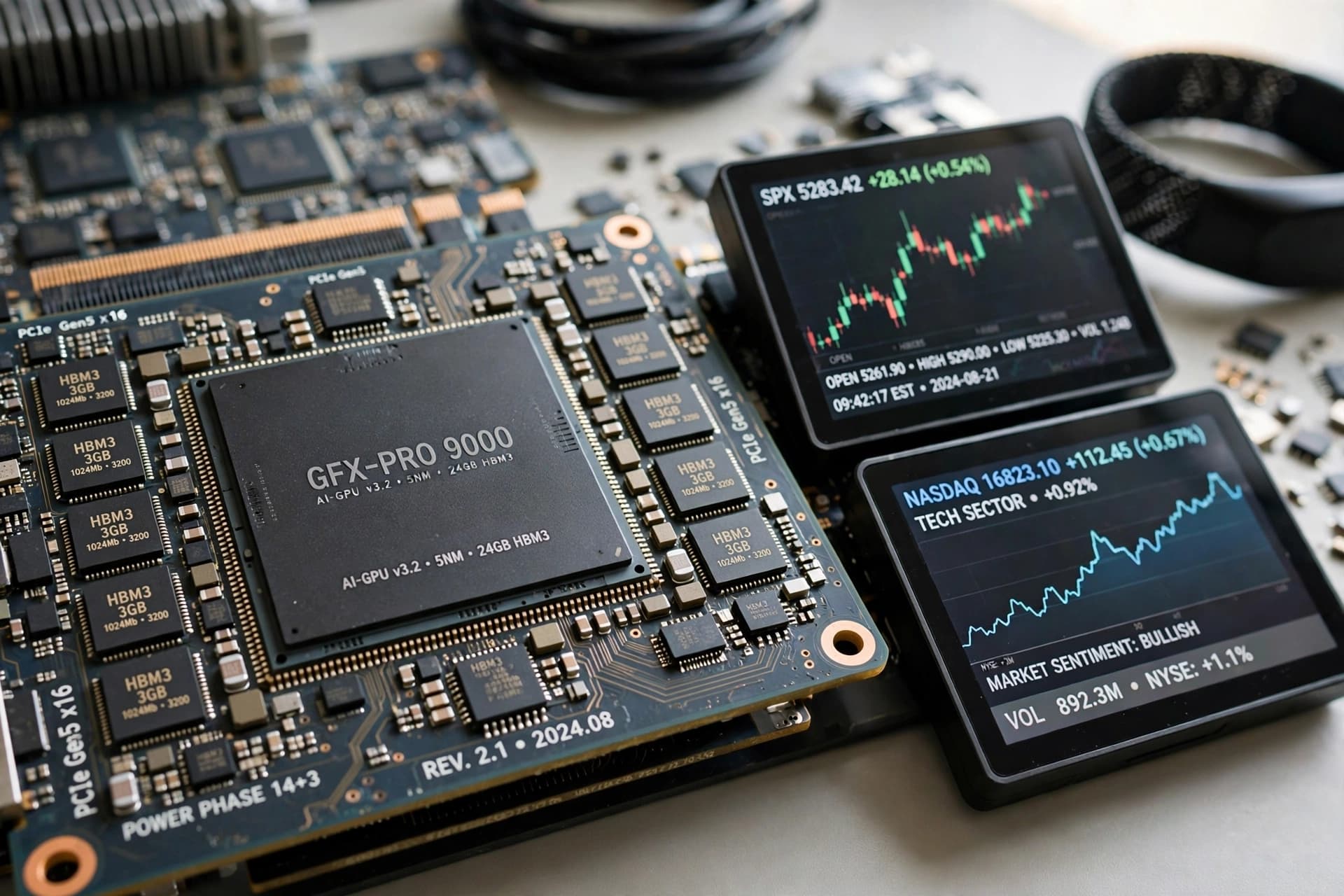
IMAGE DISCLAIMER
The accompanying visuals are AI-generated conceptual illustrations and are not photographs of the actual reported events.
SOURCES
Reuters NVIDIA
Published by Banx Network. This article is part of the Banx decentralized media programme, powered by the BXE token on the XRP Ledger.