Sometimes the earth keeps its oldest letters sealed beneath stone and water, waiting for patient hands to read them. In Central Texas, a cave has opened such a page, revealing traces of animals that moved across the landscape roughly 100,000 years ago. The discovery reminds us that silence underground is often only a pause in the story.
Researchers examining Bender’s Cave reported fossils linked to Ice Age creatures, including remains of a giant tortoise and a pampathere, an armored mammal related to armadillos and said to be roughly lion-sized.
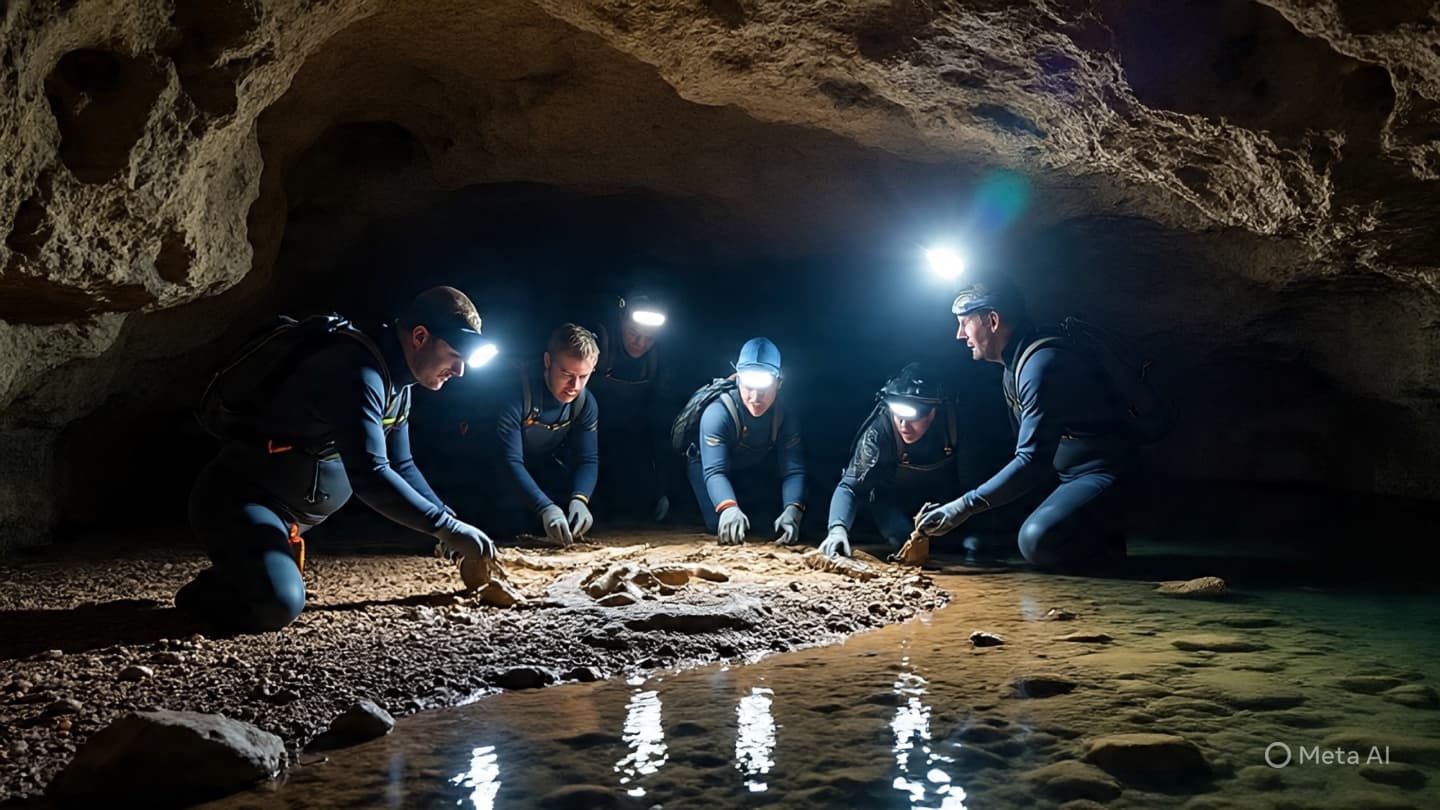
The fossils were found during exploration of an underground stream system, where scientists used snorkeling gear to reach deposits. Investigators described a dense concentration of remains scattered across the cave floor.
Additional finds reportedly included evidence of giant ground sloths, saber-toothed cats, camels, and mastodons. Together, the remains suggest a richer and more varied prehistoric ecosystem than many had associated with that part of Texas.
Researchers believe some of the fossils may date to the last interglacial period, a warmer interval during the broader Ice Age cycle around 100,000 years ago. If confirmed, the site could offer clues about how climate shifts changed vegetation, water systems, and animal movement.
The discovery is notable because fossils from that specific period had not previously been identified in Central Texas despite decades of study. New finds in familiar regions often matter as much as discoveries in remote places.
Caves can preserve history in unusual ways. Floods, sinkholes, and erosion may have carried bones into the system long ago, where mineral-rich conditions helped protect them through immense stretches of time.
Researchers continue to study the material and its dating. For science, the cave is more than a chamber of bones—it is a record of landscapes that vanished, and of life that once flourished where roads and towns now stand.
AI Image Disclaimer: These visuals are AI-generated representations intended to illustrate the reported discovery.
Sources (verification check): University of Texas at Austin, Phys.org, Smithsonian Magazine, Houston Chronicle, Quaternary Research
Published by Banx Network. This article is part of the Banx decentralized media programme, powered by the BXE token on the XRP Ledger.