Evening in Rio de Janeiro has a way of softening edges. Light slips down the granite face of Sugarloaf, taxis hum along Flamengo’s curve, and the city exhales into the warm Atlantic air. Yet beneath that golden hush, memory has its own current. It moves through neighborhoods and council chambers alike, carrying forward the name of a woman whose voice once rose from the favelas to the marble floors of City Hall.
In March 2018, Marielle Franco, a sociologist and city councilor known for her advocacy for Black Brazilians, women, and residents of Rio’s poorest communities, was shot and killed along with her driver, Anderson Gomes. The crime stunned Brazil and reverberated far beyond its borders. Franco had been a visible critic of police violence and militia influence in parts of the city. Her death, carried out in the heart of Rio, became a question that lingered in murals, marches, and in the careful work of investigators.
This week, that long and winding inquiry reached a decisive moment. A court in Rio convicted two brothers — both politicians — for ordering the murder. Among them was Domingos Brazão, a senior figure with a long career in regional politics, alongside his brother Chiquinho Brazão, a sitting federal congressman at the time of his arrest. Prosecutors argued that the brothers orchestrated the killing, alleging that Franco’s positions and local political disputes had placed her in their sights. After years of shifting testimonies, financial trails, and forensic analysis, judges concluded that the evidence supported their central role in commissioning the attack.
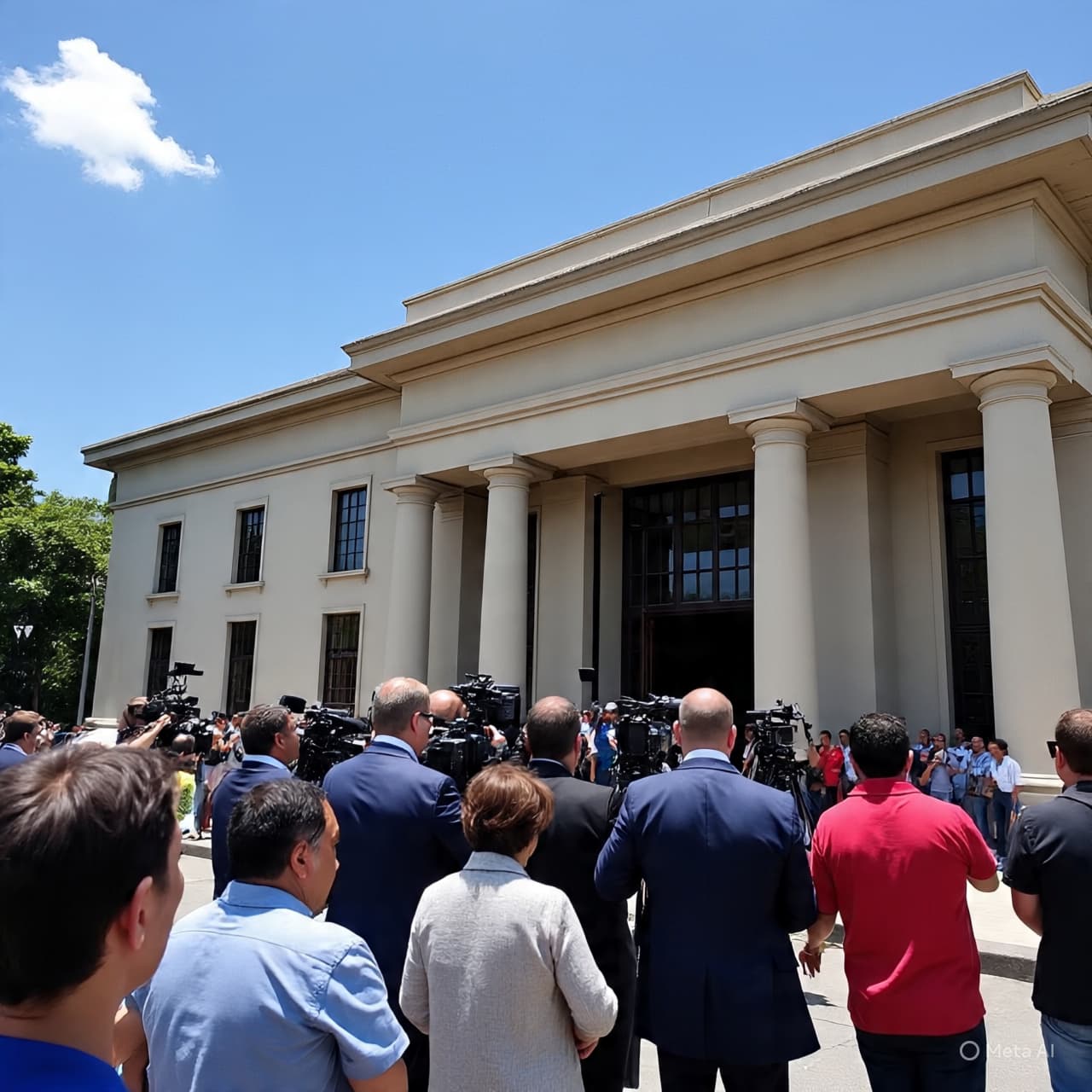
The courtroom proceedings unfolded under intense public scrutiny. Outside, supporters of Franco gathered quietly, some holding flowers, others lifting posters bearing her image — the now-familiar portrait that has come to symbolize both loss and defiance. Inside, legal arguments traced connections through contracts, communications, and alleged rivalries that prosecutors said tied the brothers to those who carried out the shooting.
The defense teams maintained their clients’ innocence and signaled plans to appeal, as permitted under Brazilian law. In a country where investigations into political violence often encounter layers of complexity, the verdict marked a significant institutional statement: that those suspected of wielding power behind the scenes could be brought into the open of a courtroom.
For many in Rio de Janeiro, the decision carries both gravity and restraint. It does not restore a life cut short at 38, nor does it erase the broader anxieties about organized crime and political influence that Franco frequently addressed. Yet it adds a chapter written in judicial language to a story long told in candlelight vigils and painted walls.
As dusk settles again over Guanabara Bay, the city resumes its layered rhythms — buses winding through Lapa, vendors closing stalls, waves tapping against stone. The convictions of the Brazão brothers now move into the next legal phase, where appeals will test the durability of the court’s conclusions. But for a moment, amid the familiar glow of Rio’s evening, there is a sense that the long arc of inquiry has bent toward accountability.
And in that bend, the name Marielle continues to travel — across neighborhoods, across years — carried by those who believe that even in a city of restless motion, some truths must be patiently, persistently pursued.
AI Image Disclaimer Visuals are AI-generated and serve as conceptual representations.
Sources (names only) Associated Press Reuters BBC News Folha de S.Paulo
Published by Banx Network. This article is part of the Banx decentralized media programme, powered by the BXE token on the XRP Ledger.