Long before a container reaches a warehouse or a product finds its way onto a store shelf, it may spend days moving quietly across the sea. Singapore sits at one of those crucial intersections. Its port connects shipping routes, manufacturers, traders and consumers across continents, making the movement of containers an important reflection of the wider global economy.
Singapore's maritime activity has remained resilient in 2026 as the city-state continues to handle enormous volumes of international cargo. The port's position along major East-West shipping routes has helped it remain one of the world's most important transshipment centers, even as shipping companies adjust routes and manage changing global trade conditions.
Container traffic is particularly significant because Singapore functions largely as a hub where cargo is transferred between vessels rather than simply delivered to domestic consumers. This makes the port closely connected to economic activity across Southeast Asia, China, Europe, the Middle East and other major markets.
The strength of electronics and technology-related trade has provided additional support. Singapore's manufacturing sector has benefited from the global demand cycle surrounding semiconductors and artificial intelligence, while the movement of components and finished products requires an extensive logistics network connecting factories with international customers.
Shipping routes have nevertheless become more complicated. Geopolitical tensions and disruptions around major maritime corridors have forced some vessels to take longer routes, adding time and costs to international supply chains. Singapore's location gives it strategic importance precisely because so much of global shipping passes through the wider region.
For shipping companies, efficiency has become increasingly important. Fuel costs, vessel availability, port congestion and changes in route planning can affect the economics of every voyage. Ports therefore compete not only on geographic position but also on their ability to handle vessels quickly and connect cargo efficiently to other destinations.
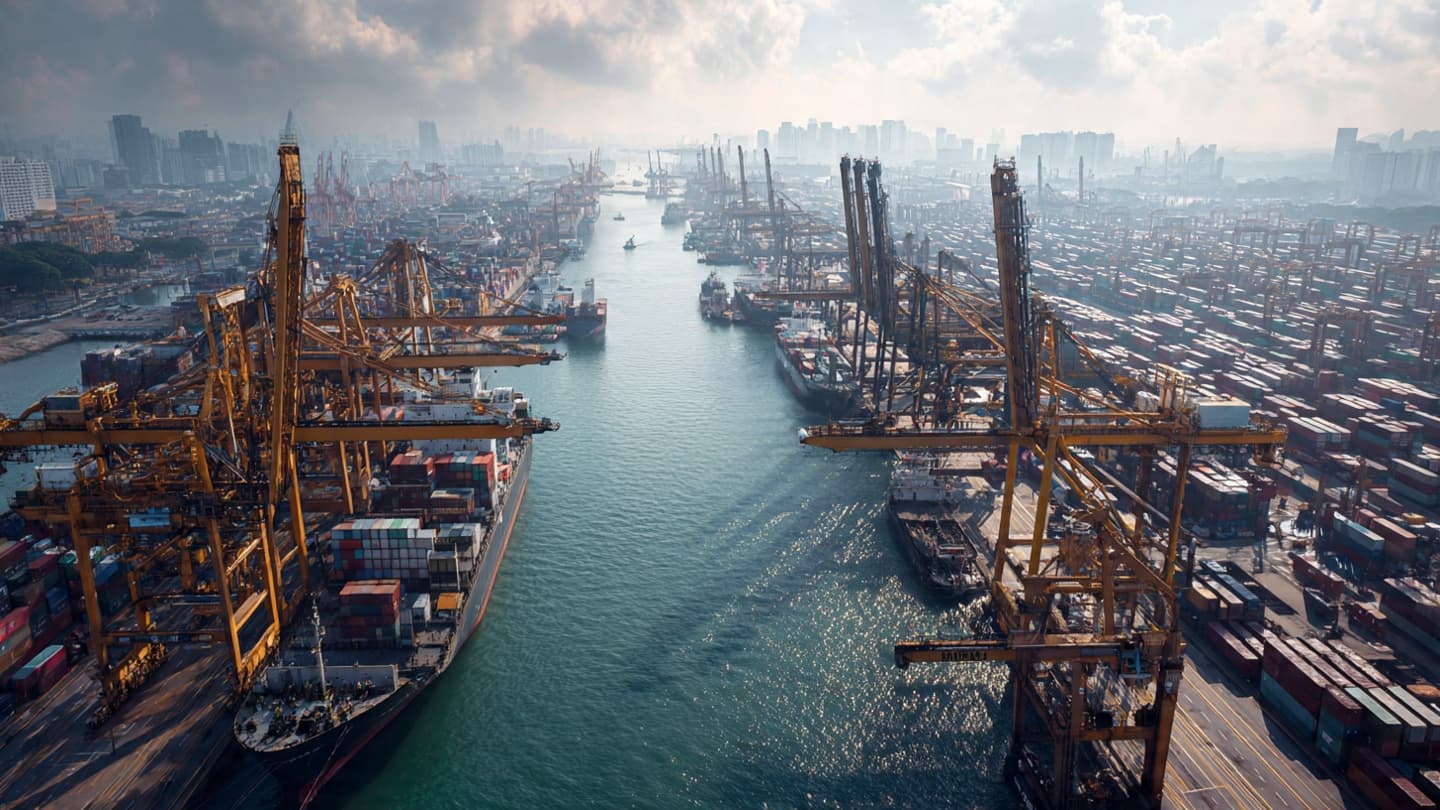
Singapore has invested heavily in automation and digital systems to maintain that efficiency. Automated cranes, digital documentation and advanced logistics systems allow the port to process large volumes of cargo while reducing the amount of time ships spend in port. The long-term goal is to maintain capacity as global trade becomes more complex.
The maritime economy also extends beyond containers. Singapore is an important center for ship management, marine engineering, bunkering, maritime finance and other services. Thousands of businesses are connected to the shipping ecosystem, creating economic activity far beyond the physical port itself.
The changing global energy system is also affecting the maritime sector. Shipping companies are under increasing pressure to reduce emissions, while ports are preparing infrastructure for cleaner fuels and more efficient vessels. Singapore has positioned itself as an important testing ground for new maritime fuels and technologies.
The result is a port economy balancing two different demands: moving more goods while gradually changing how those goods are transported. That transition requires investment, coordination and technological development, particularly as international regulations surrounding shipping emissions become stricter.
For Singapore, the continued strength of maritime activity reinforces a long-established role in the global economy. Ships will continue to arrive and depart, containers will continue moving between continents, and the port will remain a physical link between distant markets.
The challenge ahead is to maintain that position while adapting to changing trade routes, new technologies and cleaner shipping requirements. For now, Singapore's maritime sector remains an important source of economic activity and a reminder that even in an increasingly digital world, global commerce still depends heavily on movement across the sea.
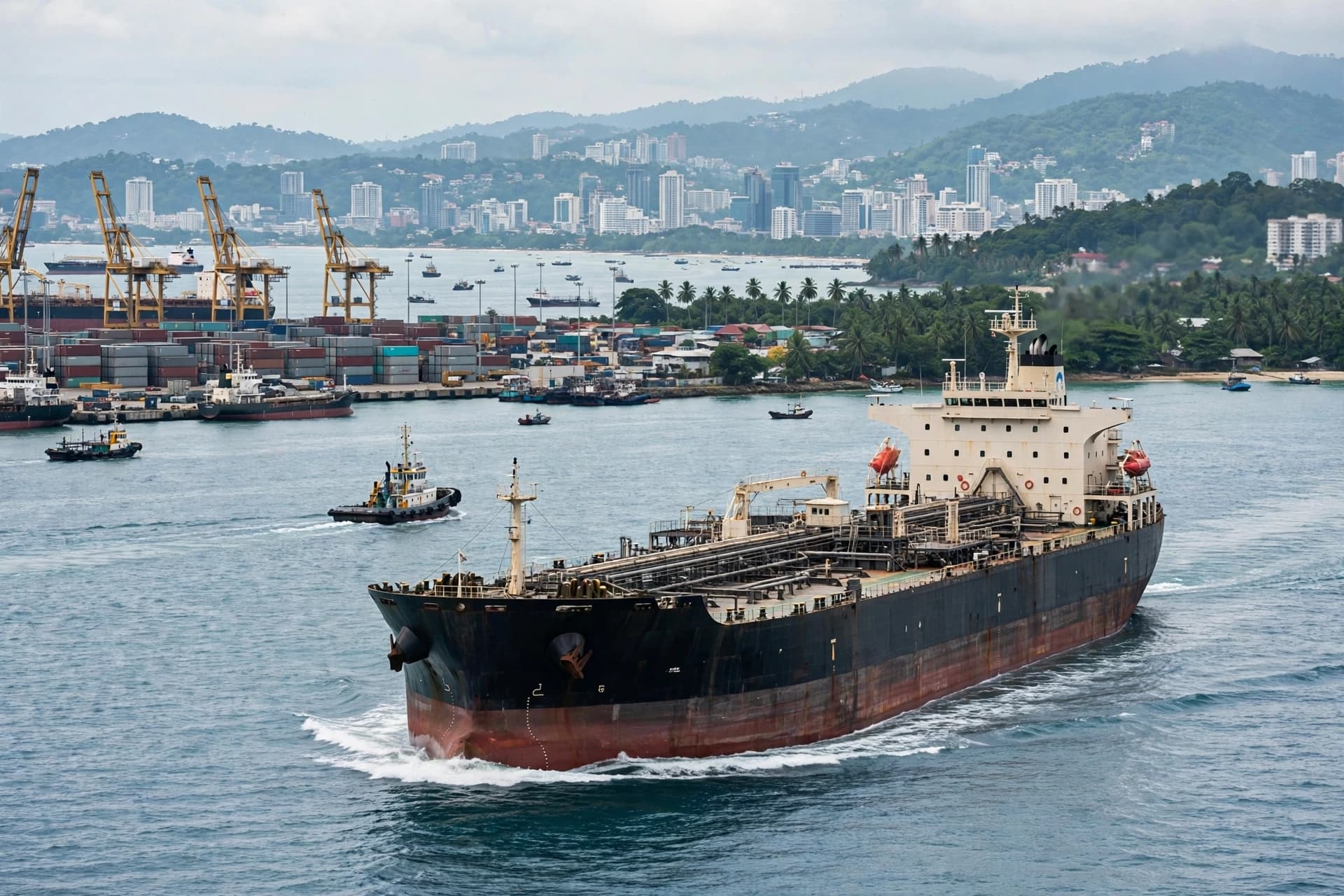
Image Disclaimer These images were generated using AI as conceptual illustrations of Singapore’s maritime and logistics environment and are not real photographs.
Sources Maritime and Port Authority of Singapore The Straits Times Reuters The Business Times Singapore Economic Development Board International Maritime Organization
Published by Banx Network. This article is part of the Banx decentralized media programme, powered by the BXE token on the XRP Ledger.