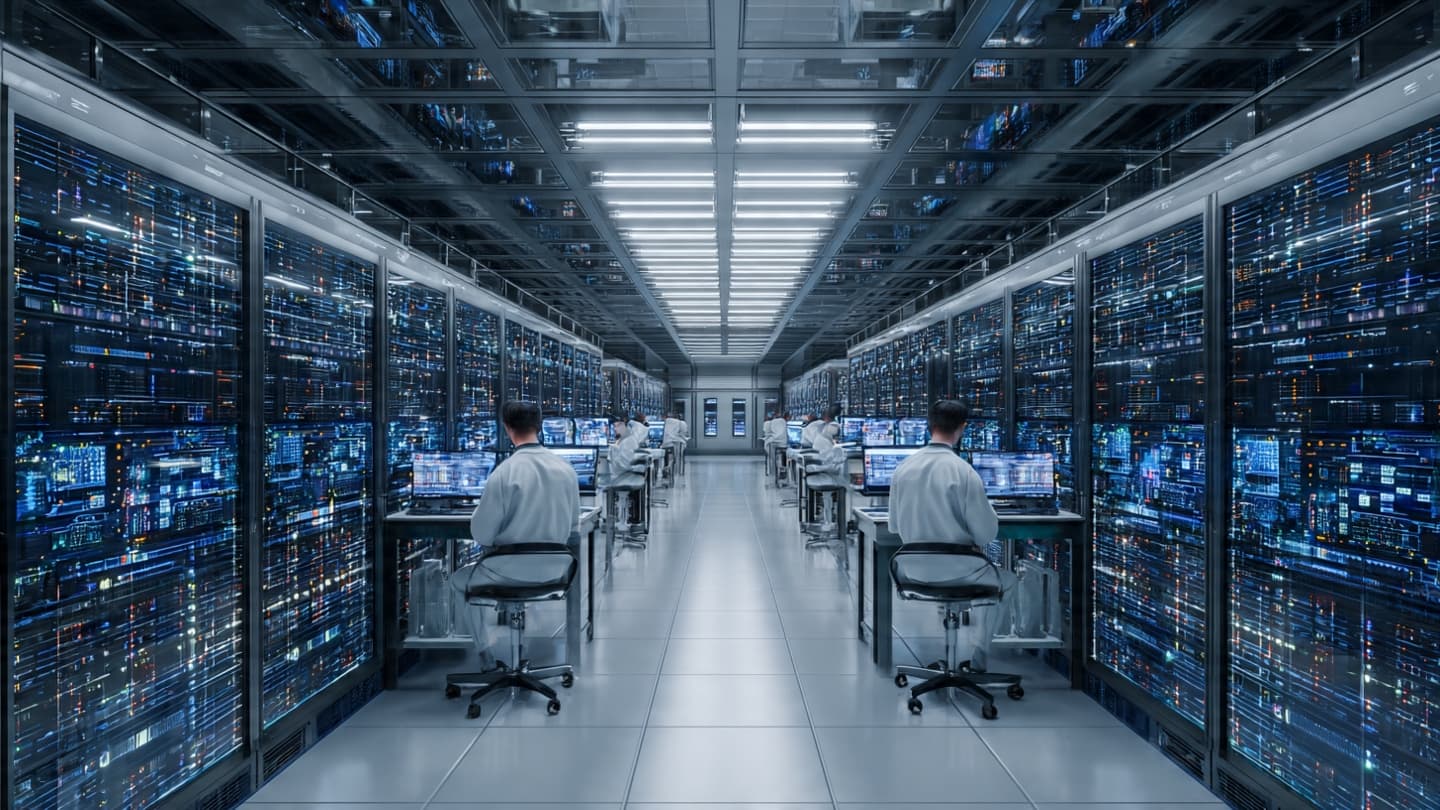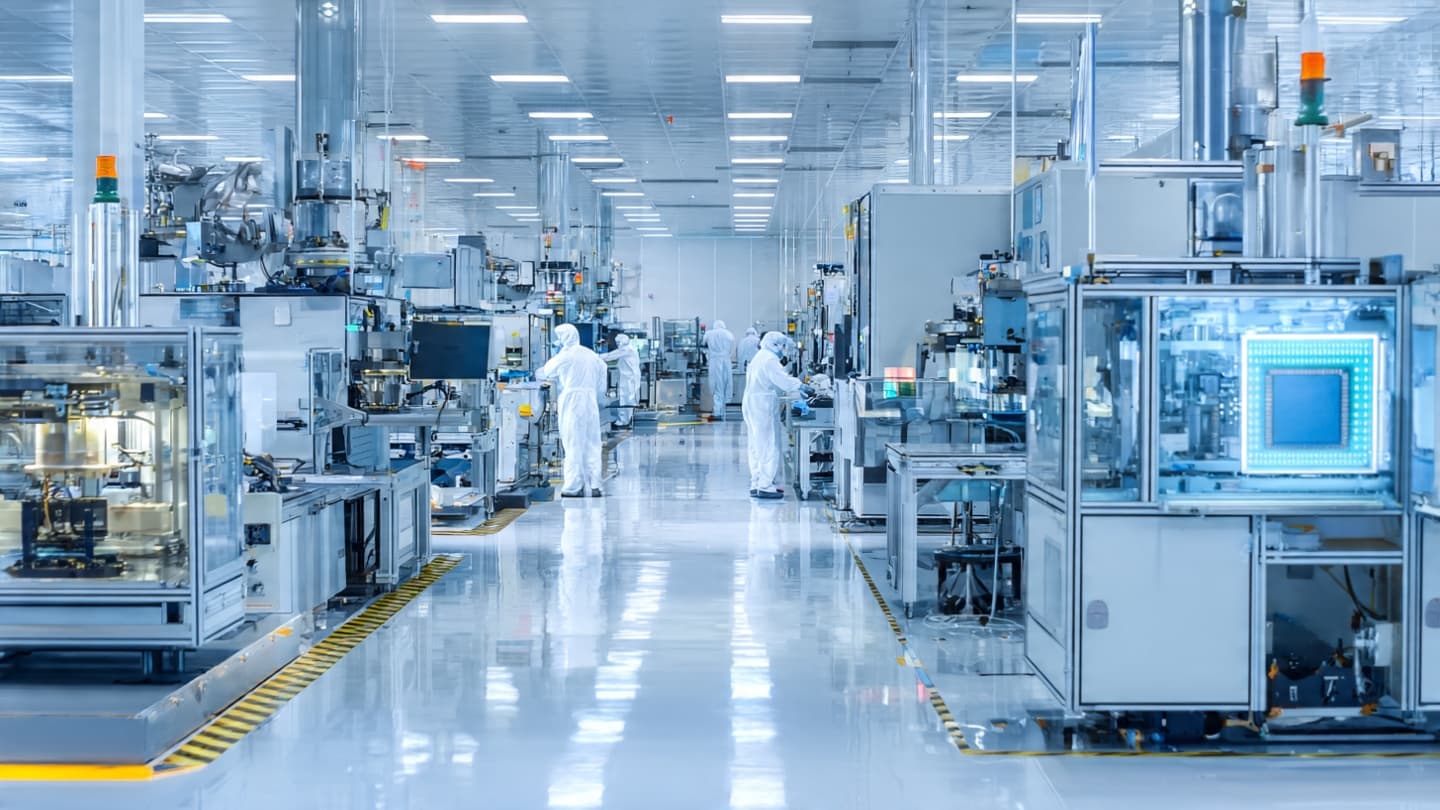
There is a particular quietness inside the machinery of a technological boom. While consumers see new applications appearing on screens, the deeper movement often happens elsewhere, inside data centers filled with processors working continuously. At the center of much of that infrastructure stands Nvidia, whose chips have become closely associated with the rapid expansion of artificial intelligence.
The company continues to benefit from enormous demand for computing power as technology firms and data-center operators invest in infrastructure capable of running increasingly sophisticated AI systems. Nvidia's latest results have reinforced the scale of that demand, with revenue continuing to be supported by its data-center business and the accelerated computing market. Reuters has described the company's growth as being driven by the continuing AI investment cycle. (reuters.com)
The significance of Nvidia's position comes from the way modern AI systems are trained and operated. Advanced models require large quantities of computing power, particularly during training and inference. Nvidia's graphics processing units, or GPUs, are designed to perform the parallel calculations that make these workloads possible at large scale.
This has transformed the role of a company that was once primarily known for graphics technology. Its processors are now part of the infrastructure supporting cloud computing, generative AI, scientific research, autonomous systems, and a growing range of industrial applications.
The demand has also created a much broader ecosystem around Nvidia. Data-center operators need networking equipment, cooling systems, electricity, storage, and specialized software alongside the processors themselves. The expansion of AI computing therefore reaches far beyond a single semiconductor company.
Nvidia's influence can also be seen through its relationships with other technology companies. On August 31, Reuters reported that Nvidia invested $3.5 billion in MediaTek through convertible bonds, another example of the company's efforts to expand its position across the semiconductor ecosystem. (reuters.com)
The physical requirements of this growth are becoming increasingly visible. New data centers require large amounts of electricity and sophisticated cooling infrastructure, while governments and utilities in different regions are dealing with questions about how quickly power networks can accommodate new demand.
For investors, Nvidia has consequently become one of the clearest indicators of expectations surrounding artificial intelligence. Strong demand for its products can signal continued investment by technology companies, while any slowdown could raise questions about whether the enormous spending cycle is beginning to mature.
For now, the flow remains strong. Companies continue building data centers, AI developers continue seeking more computing capacity, and semiconductor manufacturers continue adjusting production to meet demand. Nvidia remains positioned near the center of that movement, connecting the abstract world of artificial intelligence with the physical reality of chips, servers, and power.
AI IMAGE DISCLAIMER
The visuals were generated with AI as conceptual representations of semiconductor and artificial intelligence infrastructure and are not real photographs.
SOURCES
Reuters
Published by Banx Network. This article is part of the Banx decentralized media programme, powered by the BXE token on the XRP Ledger.