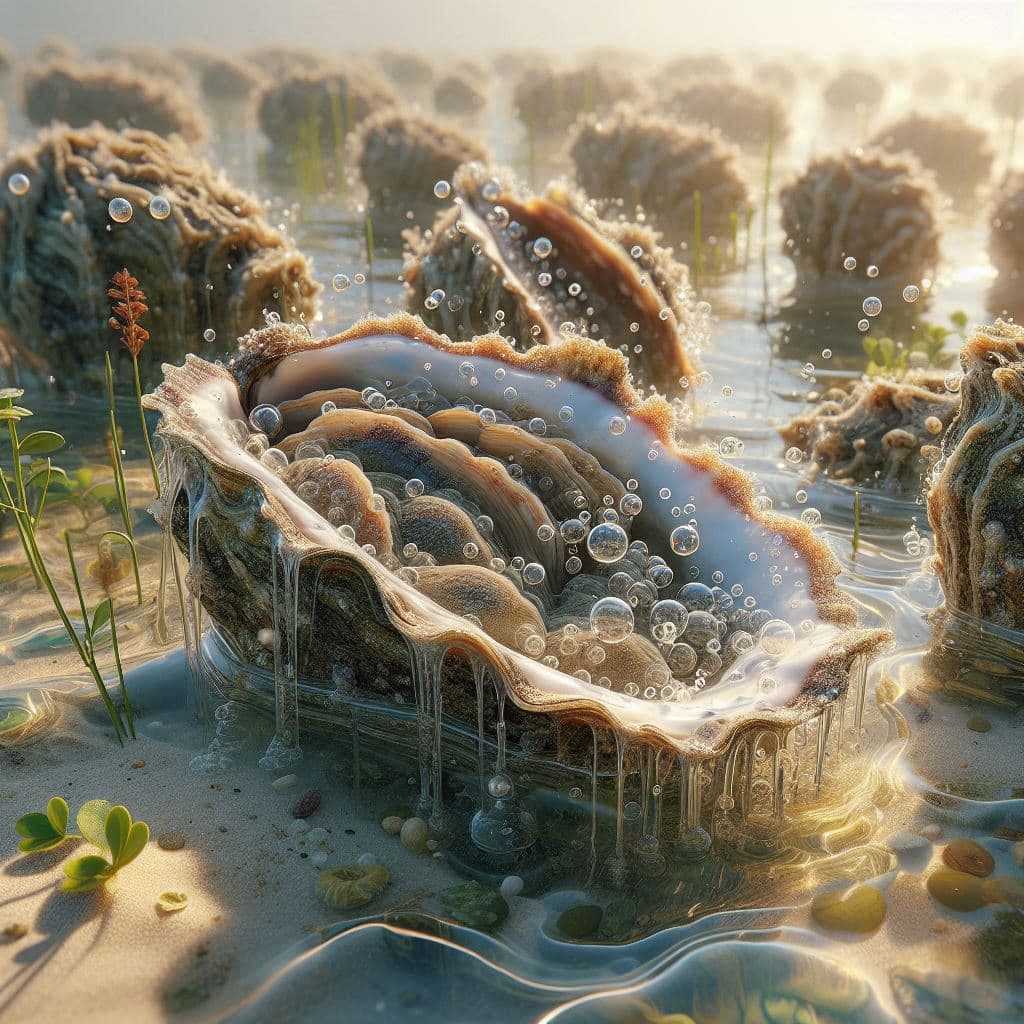
In the intertwining narratives of estuaries and the creatures that call their marsh-fringed waters home, the unassuming oyster often figures as a humble protagonist. To many, these bivalves are simply denizens of sand and tides, filtering water with tireless patience. Yet scientists, in their reflective pursuit of understanding Chesapeake Bay’s intricate web of life, have recently uncovered a quieter harmony — one in which oysters act not only as gardeners of water quality but as shield-bearers against unseen threats to a beloved marine neighbor. Imagine the Bay’s currents as threads in a tapestry, through which tiny particles of life and disease drift; in this fluid loom, filter-feeding oysters seem to catch not just algae and nutrients, but the very seeds of sickness that would otherwise find their way into young crabs.
In a thoughtful fusion of field experiments and laboratory observations, researchers from William & Mary’s Batten School of Coastal & Marine Sciences and the Virginia Institute of Marine Science studied how live oysters influence the transmission of Hematodinium perezi, a parasitic dinoflagellate that can plague juvenile blue crabs. Through filter feeding, oysters removed significant numbers of pathogen stages from the water — more than 60 percent within an hour in controlled tests — and juvenile crabs placed among oysters in high-salinity coastal bays were about one-third less likely to become infected than those without this molluscan company. This effect — driven by the oysters actively pumping and filtering water — reveals a subtle ecological partnership, where one species’ everyday behavior can foster resilience in another.
Beyond this direct reduction in infection risk, the experiments hinted at a broader, brighter reflection: crabs among oysters showed signs of reduced mortality compared with those left unsupported. While researchers caution against attributing this outcome solely to oysters, the pattern invites us to ponder the ways in which biodiversity and habitat complexity weave together in nature’s protective embrace.
Yet this newfound role arrives against a backdrop of ecological challenge. Oyster populations in Chesapeake Bay, while benefiting from restoration efforts, remain a fraction of their historic numbers, limiting the scale of filtration and habitat they once provided. The promise of oysters acting as guardians in the ecological theatre of the Bay will depend in part on continued restoration work, thoughtful fisheries management, and deeper comprehension of how disease dynamics ripple through marine communities.
The researchers’ next steps include interdisciplinary mathematical modeling to explore how oyster filtration might influence disease patterns across broader spatial and temporal scales, and how climate-driven changes in salinity and water temperature could shape these interactions in the warming waters of coastal estuaries.
In gentle currents and swirling tides, oysters — long appreciated for their ecological gifts — are revealing yet another layer of significance: as partners in the dance of life and health beneath the surface. Their filter-feeding rhythms offer more than cleaner water; they offer a glimpse of nature’s multifaceted resilience, forged over millennia and now guiding scientific curiosity toward more holistic stewardship of marine ecosystems.
AI Image Disclaimer Illustrations were produced with AI and serve as conceptual depictions.
Sources (Media Names) Phys.org / Virginia Institute of Marine Science EurekAlert! PubMed / Ecology journal NOAA Fisheries ScienceDaily
Published by Banx Network. This article is part of the Banx decentralized media programme, powered by the BXE token on the XRP Ledger.