
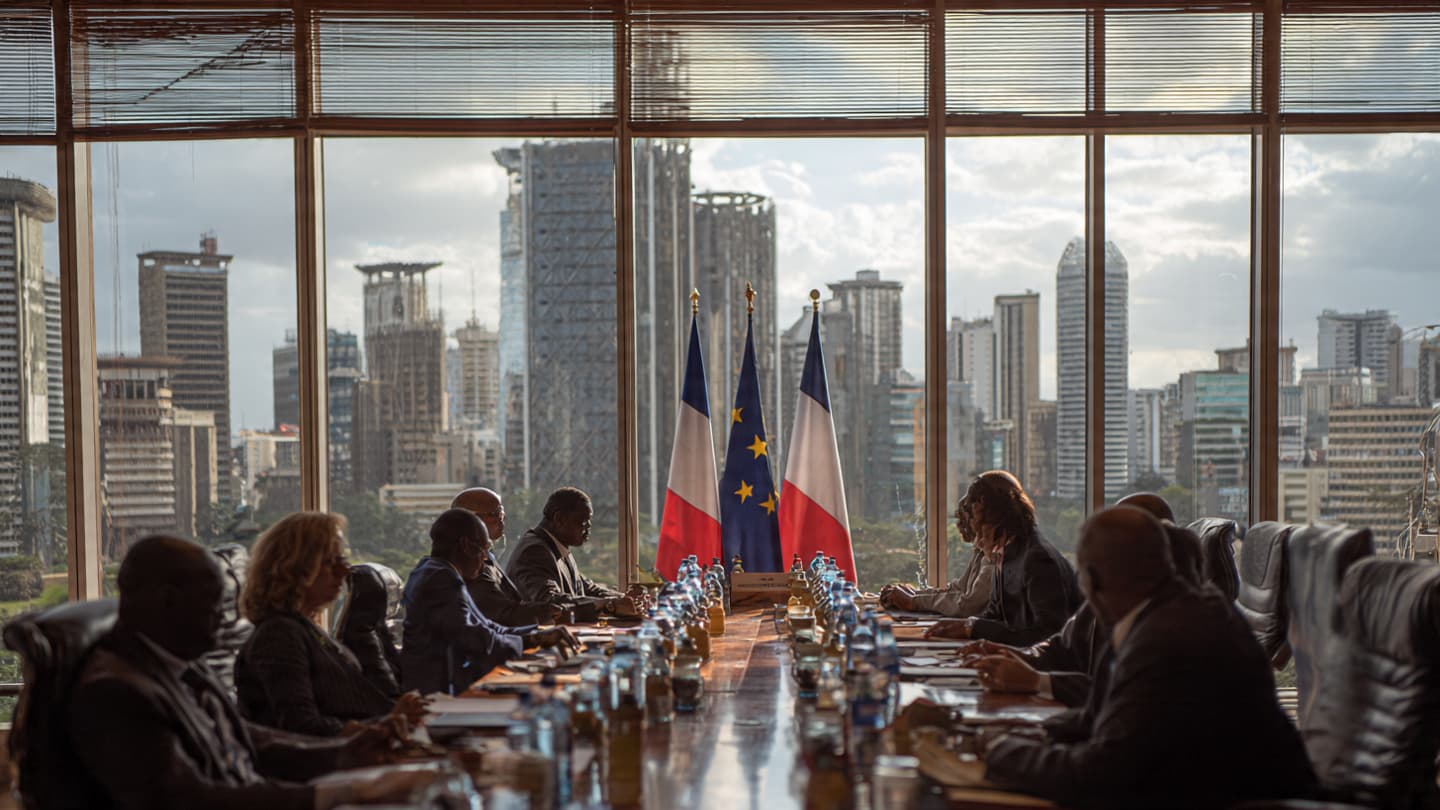
Key Highlights
- Macron's visit to Kenya marks a significant diplomatic engagement.
- France seeks to recalibrate its influence in Africa amid changing dynamics.
- Kenya's strategic position enhances its role in regional partnerships.
French President Emmanuel Macron's recent visit to Kenya has garnered attention not only for its immediate diplomatic engagements but also for what it signifies about France's evolving role in Africa. This visit occurs during a period of increasing scrutiny and recalibration of France's traditional influence in the continent, particularly in regions where political transitions and public sentiment have reshaped long-standing relationships.
Kenya occupies a unique position within East Africa's diplomatic landscape. As a regional economic hub with burgeoning technological and financial sectors, Kenya has increasingly engaged with a diverse array of global partners beyond its historical ties. This includes expanded cooperation with Asian economies and continued engagement with Western states, positioning itself as a regional anchor for innovation and diplomacy.
Historically, France's presence in Africa has been closely tied to its former colonial territories, especially in West and Central Africa. However, recent years have seen a shift as several countries reassess defense agreements, economic partnerships, and cultural ties. In this context, engagement with non-Francophone African states like Kenya can be viewed as part of a diversification strategy—an attempt to broaden diplomatic reach beyond traditional spheres of influence.
The notion of “reviving influence” is more complex than it may seem. In contemporary international relations, influence is no longer measured solely through formal alliances or historical proximity but through a combination of economic investment, technological cooperation, climate partnerships, security coordination, and educational exchange. Diplomatic visits, therefore, function less as turning points and more as moments of alignment within longer, gradual processes.
During Macron’s engagement in Kenya, discussions have focused on trade cooperation, green energy transition, infrastructure development, and regional stability. These themes reflect broader global priorities while highlighting France's desire to reposition itself as a partner in Africa’s future-oriented sectors rather than solely within historical frameworks.
However, any assessment of France’s influence on the continent must also consider the wider geopolitical landscape. African states today engage with a multitude of partners, including the United States, European Union members, China, India, Turkey, and Gulf countries. This diversification has reshaped the dynamics of external engagement, making influence more distributed and competitive rather than concentrated within traditional blocs.
In this environment, diplomatic visits carry symbolic weight, signaling intent, openness, and continuity of engagement, even when structural outcomes take time to materialize. Macron’s presence in Kenya can thus be interpreted as part of an ongoing effort to maintain visibility and relevance within a continent whose political and economic trajectories are increasingly self-directed and multi-aligned.
For Kenya, such engagements are situated within its own strategic balancing act. The country continues to expand infrastructure partnerships, attract foreign investment, and position itself as a regional gateway for commerce and innovation. Engagement with France adds another layer to this network of relationships, contributing to a broader diplomatic portfolio that spans multiple global actors.
On the streets of Nairobi, however, these high-level discussions often feel distant from daily life. Markets open as they always do, matatus weave through traffic, and conversations unfold in offices, cafés, and public spaces where policy is experienced indirectly rather than designed. Yet the effects of such visits often emerge slowly, through agreements and partnerships that shape the future of Kenya and its role in the region.
Published by Banx Network. This article is part of the Banx decentralized media programme, powered by the BXE token on the XRP Ledger.



