
Key Highlights
- Navalny's death: European nations conclude it was due to poisoning.
- Mourners gather at Borisovskoye Cemetery to honor his memory.
- Kremlin dismisses European findings, maintaining he died of natural causes.
In February, the light in Moscow took on a softer hue, as if the city itself was leaning closer to hear the voices of those who have grown quieter over time. At the Borisovskoye Cemetery, beneath a winter sky that had forgotten its sharp chill, flowers rested on a granite stone inscribed with a quiet testament to a life lived against the current. In a gathering of mourners, diplomats, and silent walkers, the memory of Alexei Navalny, a man who once filled city squares with hope, lingered in the hush between passing cars and drifting petals.
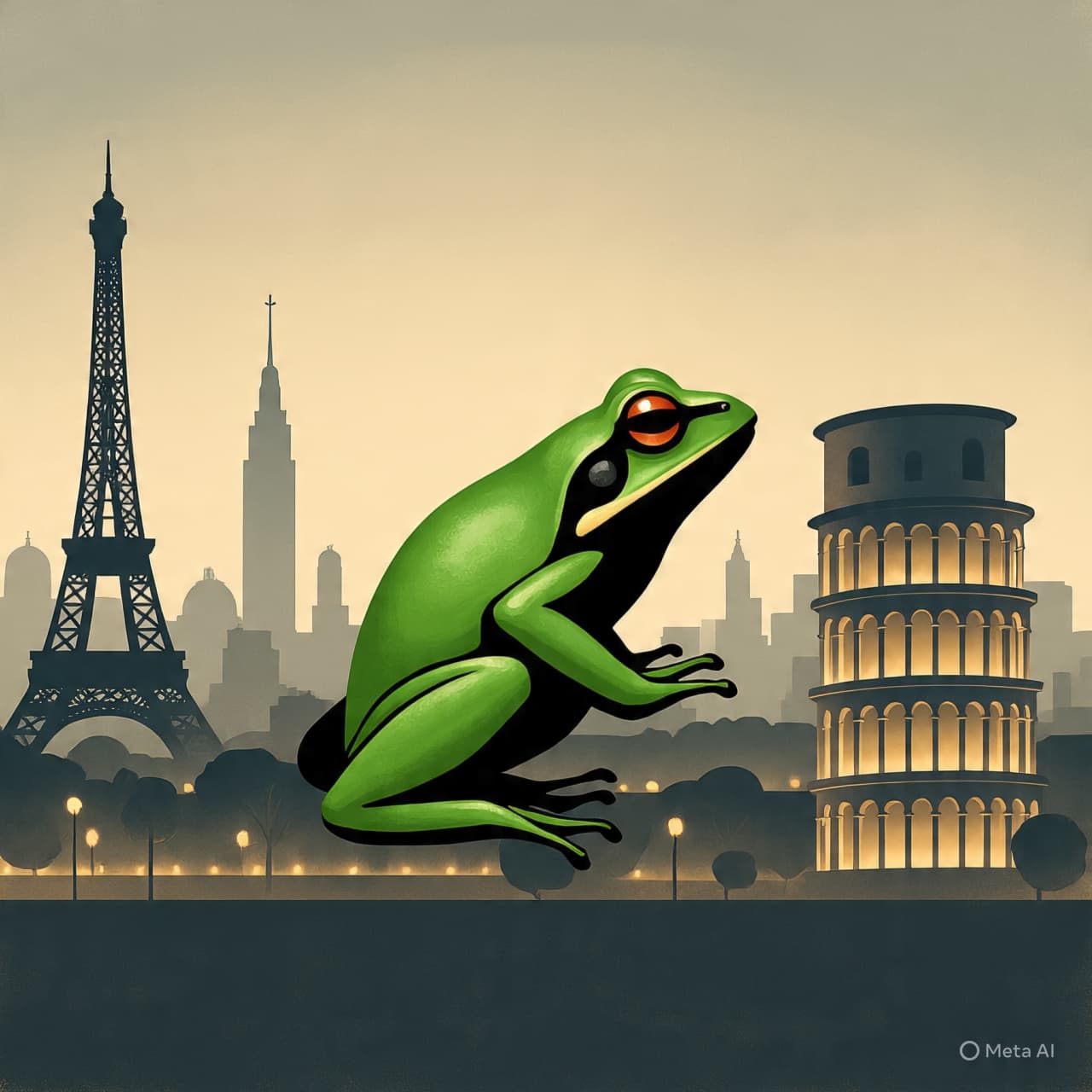
For two years, the narrative surrounding Navalny's final hours remained unsettled, with fragments circulating like poor translations of a complex poem. Official accounts offered one version: a walk in a prison yard, a sudden collapse, and an unnamed cause. However, on the edge of those narratives lay another truth, murmured in exile and expressed with defiant certainty by his closest kin. On this day, that certainty felt vindicated as a group of European nations — including Britain, France, Germany, Sweden, and the Netherlands — released a joint assessment concluding that Navalny's death was not merely a tragic passing but the result of poisoning with epibatidine, a rare neurotoxin found in poison dart frogs, seldom encountered outside laboratories or the humid forests of South America.
In the soft winter light, Navalny's mother stood by her son’s grave, speaking words both simple and immense. “We knew that our son did not simply die in prison,” she said, her voice a bridge between grief and affirmation. “He was murdered.” Her calm gaze carried the weight of years spent waiting — not just for answers, but for acknowledgment of a truth she felt was always there. “This confirms what we knew from the very beginning,” she told reporters, invoking memory like an archive of unspoken certainties.
Behind her, diplomatic visitors laid wreaths, and the crowd stood quietly, their presence becoming a collective meditation on loss and meaning. The tale of poisoning — rare, exotic, and scientifically traced — has unfolded at the edges of geopolitics, raising questions of accountability that ripple far beyond the snowy Arctic prisons where Navalny's life ended. European governments have suggested that only a state apparatus with the necessary resources and motive could have administered such a toxin, a statement that gives form to what had been whispered in exile and shadows.
However, the narrative of truth is rarely linear, and for every declaration, there is pushback. In Moscow, the Kremlin dismissed the European assessment as “biased” and “unfounded,” reaffirming the official account that Navalny died of natural causes in custody. That response carries its own gravity — not merely denial, but part of the larger frame through which power and memory intersect.
As the last visitors departed the grave, a quiet shift seemed to occur. Not a resolution, but a reckoning: the acknowledgment of what had long been argued in hearts and halls alike. For Navalny's family, there remains an unfilled space where accountability ought to stand; for observers abroad, a punctuation in the ongoing dialogue about dissent and consequence; and for the city that keeps his resting place, a moment in the endless play of remembrance and history.
In these lingering ties between loss and justice, the story remains open — a chapter not yet concluded, but more visible against the winter light.
Published by Banx Network. This article is part of the Banx decentralized media programme, powered by the BXE token on the XRP Ledger.



