
Key Highlights
- New Discovery:NASA's Curiosity rover detects organic compounds on Mars.
- Ancient Conditions:Findings suggest Mars once had environments suitable for life.
- Future Missions:Upcoming explorations may focus on Martian sample collection.
NASA's Curiosity rover has made a groundbreaking discovery on Mars, detecting additional organic compounds within Martian rocks. This finding adds to the growing body of evidence that the red planet once had environmental conditions capable of supporting complex chemistry. Scientists have long pondered the question of whether life exists beyond Earth, and these new results may provide critical insights into Mars' past.
Organic compounds, which are molecules containing carbon, are considered fundamental building blocks of life as we know it. However, researchers caution that the mere presence of these compounds does not confirm the existence of past or present life on Mars. The compounds were identified through advanced analysis conducted by the rover's onboard instruments, which have been exploring Gale Crater since its landing in 2012.
The Curiosity rover continues to investigate ancient geological formations believed to have formed billions of years ago. Researchers have noted that Mars once contained rivers, lakes, and potentially long-lasting bodies of water. These ancient environments are particularly significant because liquid water is regarded as essential for life on Earth. The discovery of organic compounds suggests that Mars may have had the right conditions for life to emerge in its distant past.
The implications of these findings are profound. They will help scientists better understand the chemical evolution of Mars and refine future exploration strategies. Upcoming missions may focus on collecting and returning Martian samples for detailed analysis on Earth, which could provide further insights into the planet's history and its potential to support life.
NASA officials have described this discovery as another important step in reconstructing Mars' environmental history. Each new measurement contributes to a broader understanding of how the planet has changed over billions of years. While definitive evidence of life remains elusive, the discovery reinforces Mars' status as one of the most compelling destinations in planetary science and future space exploration.
As scientists continue to analyze the data collected by the Curiosity rover, the quest to uncover the mysteries of Mars remains at the forefront of planetary exploration. The findings not only enhance our understanding of Mars but also inspire future generations to look toward the stars in search of answers to the age-old question: Are we alone in the universe?
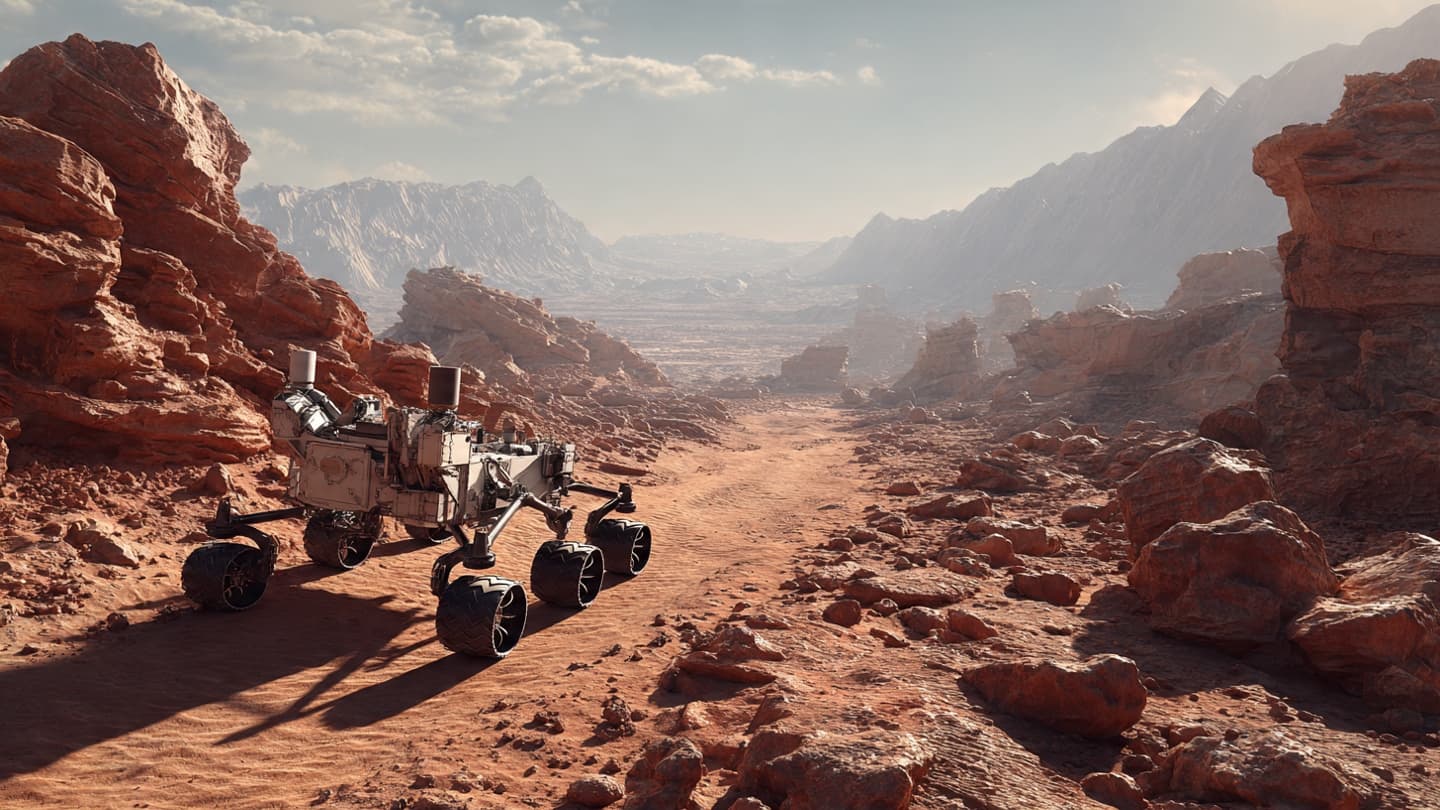
AI Image Disclaimer: Visuals accompanying this article are AI-generated artistic interpretations based on scientific information and are not actual spacecraft imagery.
Published by Banx Network. This article is part of the Banx decentralized media programme, powered by the BXE token on the XRP Ledger.



