Mars has long appeared to humanity as a distant red mystery suspended in the dark silence of space. Dry, cold, and seemingly lifeless, the planet nevertheless continues to whisper hints of a very different past. This week, NASA scientists announced that the Perseverance rover has uncovered new evidence that may deepen understanding of ancient water activity on Mars.
The findings emerged from ongoing exploration inside Jezero Crater, a region scientists believe once contained a large lake billions of years ago. By studying rock formations, sediment layers, and mineral compositions, researchers hope to reconstruct the environmental conditions that shaped the planet during its early history.
According to NASA researchers, Perseverance detected geological patterns consistent with water-driven processes. Some formations appear to resemble sediment deposits created by flowing rivers and lake systems on Earth. These clues strengthen earlier theories suggesting that Mars may once have supported stable bodies of liquid water.
Water plays a central role in planetary science because it is closely connected to the possibility of life. While scientists have not discovered evidence of past or present Martian organisms, environments containing water are considered more favorable for microbial activity. Understanding Mars’ ancient climate may therefore help answer broader questions about habitability beyond Earth.
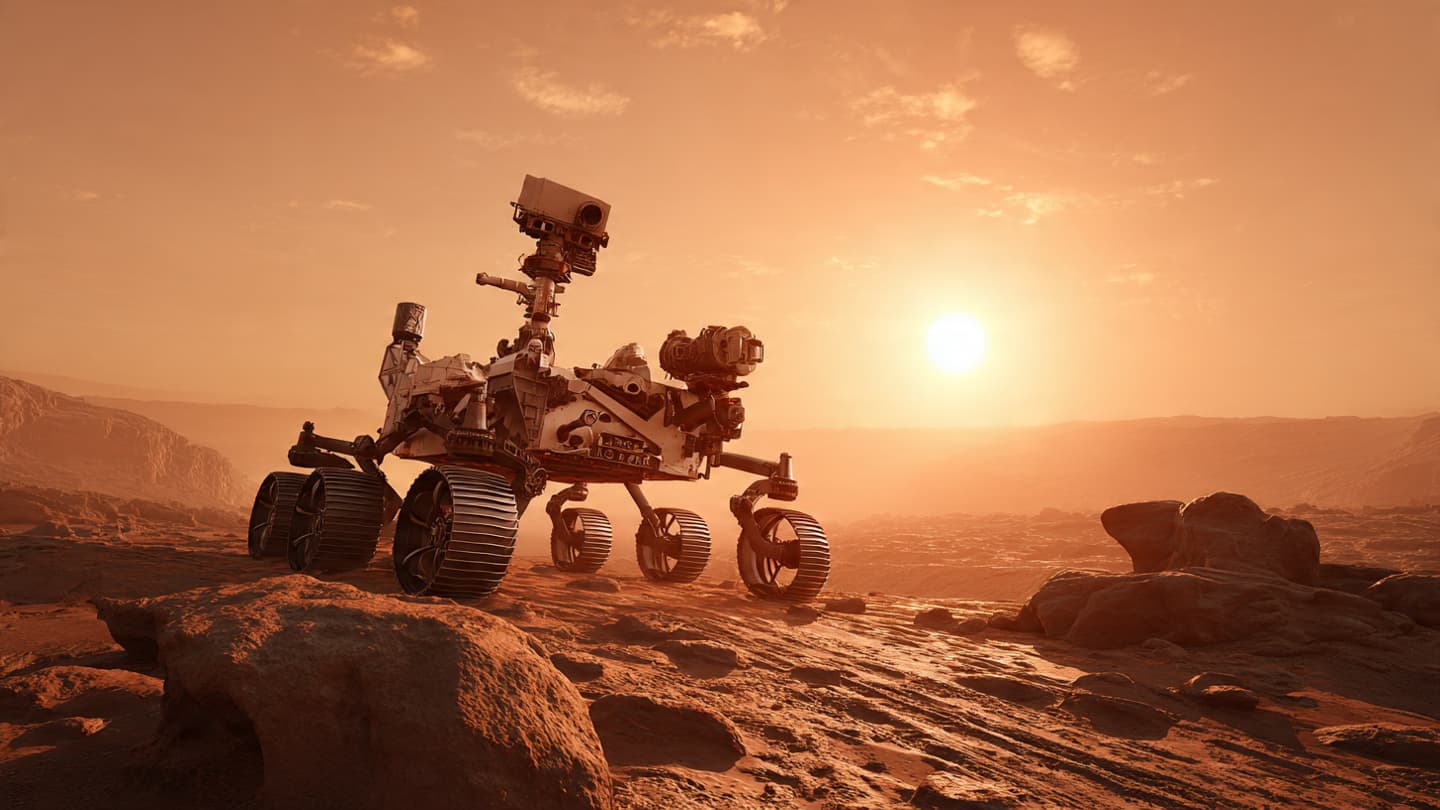
Perseverance, which landed on Mars in 2021, was specifically designed to search for signs of ancient microbial life and collect rock samples for future return missions. Equipped with advanced cameras, drills, and scientific instruments, the rover continues transmitting detailed observations back to Earth across millions of miles of space.
Researchers explained that each new discovery contributes only a small piece to a much larger scientific puzzle. Mars has undergone dramatic environmental changes over billions of years, including the gradual loss of much of its atmosphere. Scientists continue investigating how and why the planet transformed from a wetter world into the cold desert visible today.
The mission also demonstrates the growing sophistication of robotic exploration. Modern rovers can navigate rugged terrain, conduct chemical analysis, and store geological samples with remarkable precision. These technological advances have significantly expanded humanity’s ability to study distant planets remotely.
Public fascination with Mars remains strong partly because the planet feels both alien and strangely familiar. Dry riverbeds, polar ice, and seasonal weather patterns create subtle reminders of Earth’s own geological history. In many ways, Mars reflects both the possibilities and fragility of planetary evolution.
For now, Perseverance continues its careful journey across the Martian surface, moving slowly through dust and stone while carrying humanity’s oldest scientific instinct: the desire to understand worlds beyond our own.
AI Image Disclaimer: Several visual illustrations accompanying this article were generated with AI support to depict Mars exploration scenes.
Sources: NASA, ScienceX, Nature, Space.com
Published by Banx Network. This article is part of the Banx decentralized media programme, powered by the BXE token on the XRP Ledger.