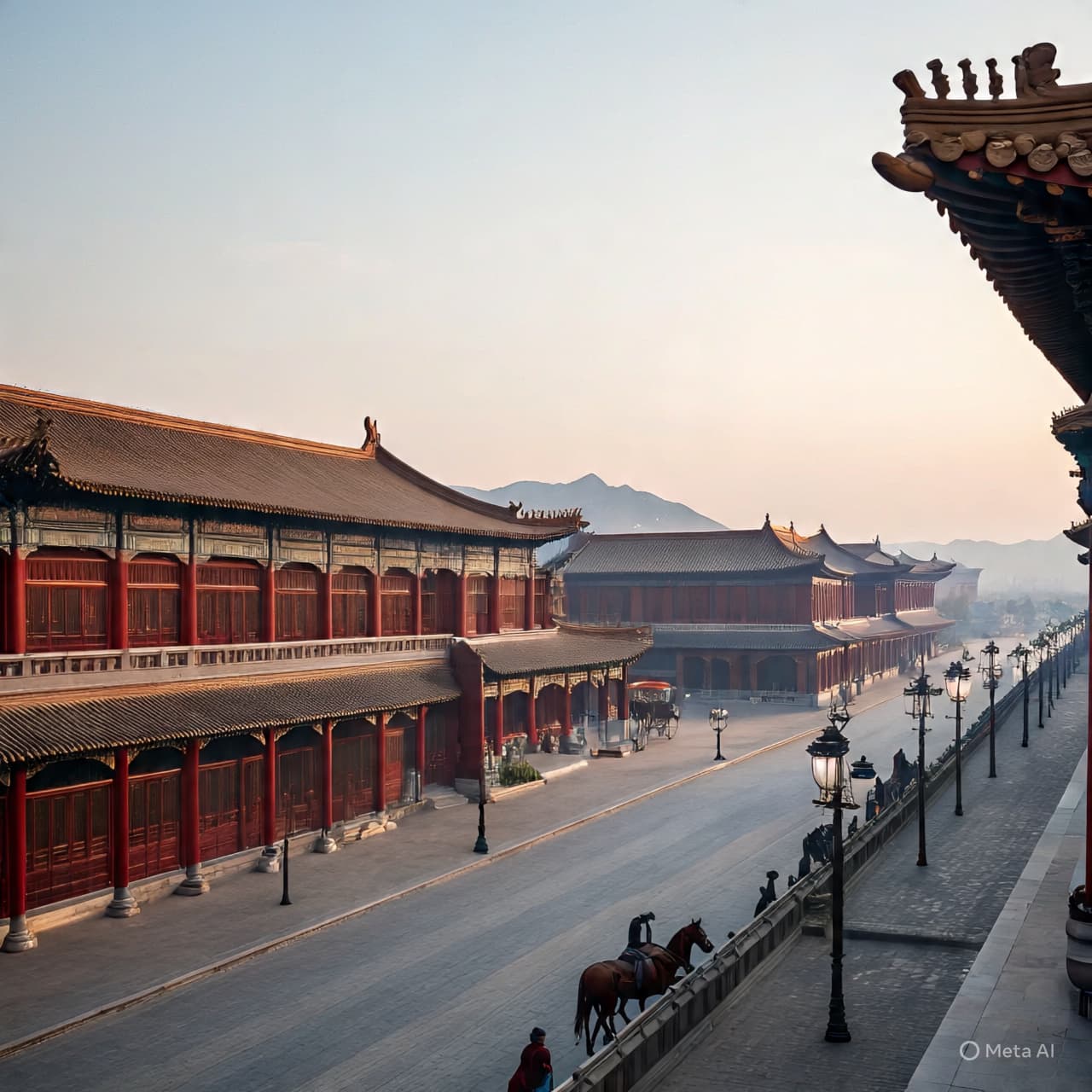
The winter air in Beijing carries a subdued chill — not the kind that bites, but one that lingers, holding the stillness of thought. Beyond the boulevards and ministry walls, far from the cold blue of the Persian Gulf, another kind of tremor has moved across the world. The United States’ attack on Iran sent shockwaves through markets, alliances, and capitals. Yet from Beijing, the response came not as a shout but as a whisper: controlled, deliberate, and layered in the tempered language of diplomacy.
China’s statement called for restraint, respect for sovereignty, and the immediate cessation of hostilities. It condemned the use of force but did so without fury. No sanctions, no ultimatums, no escalations — only the careful repetition of principle. It was a response that revealed as much about China’s foreign policy as it did about its worldview: a philosophy of distance, of speaking softly while holding steady in the storm.
This restraint was not born of indifference. For Beijing, the balance between principle and pragmatism has always been a practiced art. Iran remains an important partner in energy and trade, a node along the vision of the Belt and Road, and a symbol of multipolar diplomacy. Yet China’s bond with Tehran has limits — shaped by its need to preserve global stability, safeguard shipping lanes, and protect its own economic ambitions from the shock of war. In moments such as these, China prefers posture to provocation.
Behind closed doors, diplomats weigh the vocabulary of response with the precision of chess players. Each word must acknowledge friendship without provoking fear, must criticize aggression without threatening alliance. The United States remains at once rival and trading partner, adversary and necessity — a paradox China manages through consistency rather than confrontation. In condemning the attack, Beijing also left space for dialogue, signaling that, even in anger, the path of negotiation must remain open.
Observers in foreign capitals often mistake China’s quiet tone for weakness, yet it is closer to discipline — an unwillingness to be drawn into the theater of reaction. The nation’s strength lies not in immediate gestures but in the slow architecture of patience: infrastructure over interference, markets over missiles. In this sense, China’s response to the U.S. attack on Iran is less about siding with one power than about affirming a worldview where stability itself is the measure of power.
Still, beneath the phrasing of diplomacy lies awareness of vulnerability. Energy routes through the Strait of Hormuz remain vital to China’s industrial heartlands. A wider conflict would not only threaten oil supplies but shake the foundations of global trade upon which much of its ascent depends. For Beijing, peace is not merely an ideal — it is infrastructure, the hidden machinery of prosperity.
As evening settles over the capital, the lights of the Great Hall of the People glint softly through the haze. There is no sign of urgency, no outward ripple of alarm — only the steady rhythm of a nation that moves to its own tempo. The distance between Tehran’s smoke and Beijing’s frost is vast, yet their connection, through commerce, diplomacy, and consequence, remains unbroken.
In straight news language, China has condemned the U.S. attack on Iran and called for an immediate end to hostilities, urging all parties to return to dialogue. Beijing’s response underscores its preference for diplomatic resolution over military intervention and reflects its effort to balance relations with both Washington and Tehran while safeguarding economic stability and global trade routes.
AI Image Disclaimer Illustrations were created using AI tools and serve as conceptual representations.
Sources (Media Names Only) Reuters Associated Press The Guardian South China Morning Post Al Jazeera
Published by Banx Network. This article is part of the Banx decentralized media programme, powered by the BXE token on the XRP Ledger.