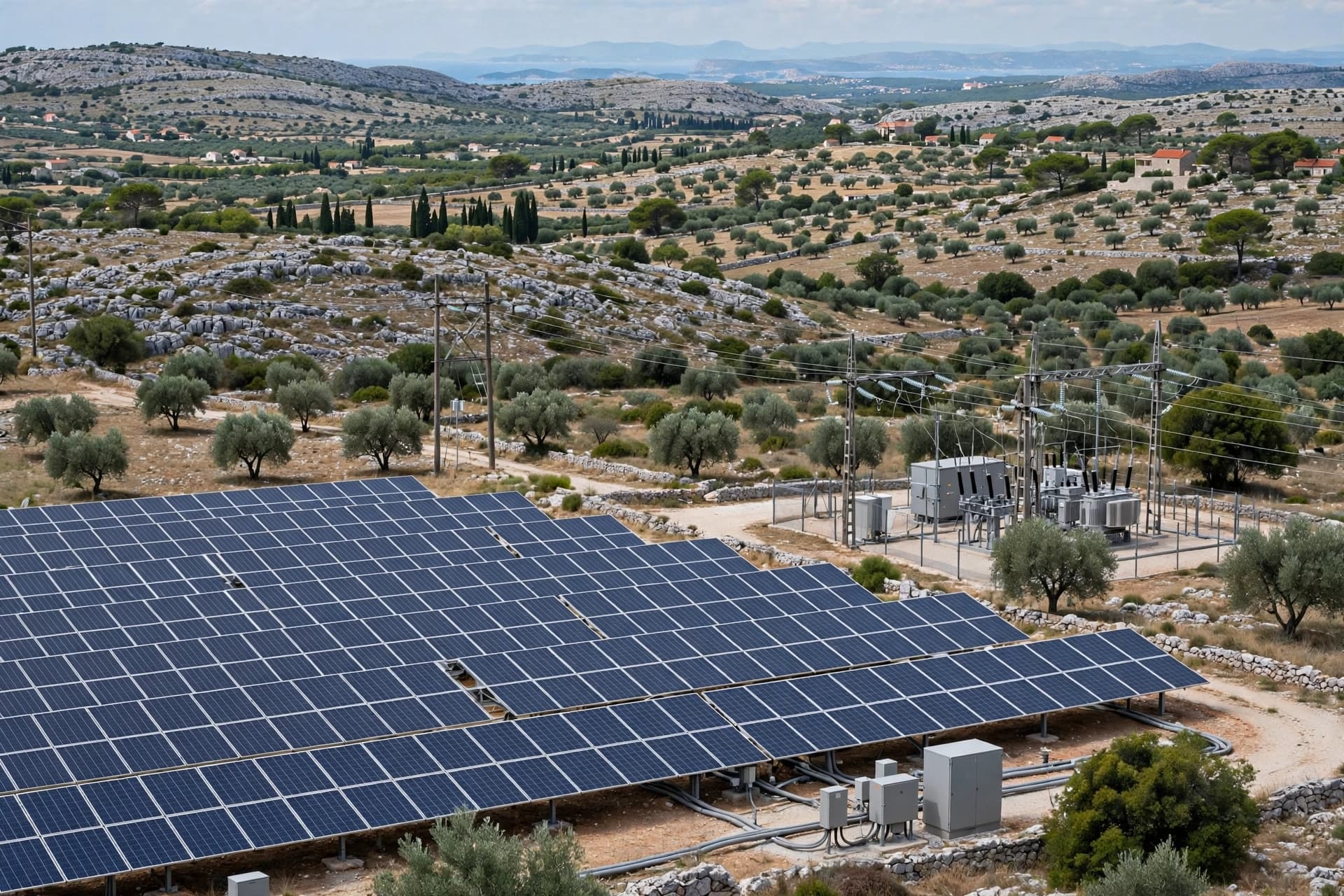
On the northern edge of the Adriatic, sunlight falls across Istria’s hills, agricultural land and coastal towns with the same quiet rhythm it has followed for centuries. Yet beneath that familiar landscape, Croatia’s energy system is gradually changing.
Croatian wholesaler Atas is planning to build a photovoltaic park with an installed capacity of 11 megawatts in Istria County, according to information from Croatia’s Economy Ministry reported by SeeNews. The project is now moving through the environmental assessment process.
The planned solar facility would add another renewable-energy installation to Croatia’s growing pipeline. Solar power has become increasingly important as European countries seek to expand domestic electricity generation while reducing dependence on fossil fuels.
For Atas, the project represents a move beyond its traditional wholesale business into energy infrastructure. The company’s proposal places a significant solar installation within Istria, a region where tourism, agriculture, industry and residential communities share the same increasingly valuable land and energy resources.
The environmental impact assessment process is an important part of the development path. Before a large infrastructure project can proceed, authorities examine potential effects on the surrounding environment and determine whether the proposed development meets applicable requirements.
The 11 MW capacity also provides a sense of the scale involved. A photovoltaic park of this size requires extensive solar-panel arrays, electrical equipment, grid connections and supporting infrastructure. Its eventual contribution to electricity generation will depend on weather conditions, technology and operating arrangements.
Croatia has been increasing its renewable-energy capacity as electricity demand and European energy-transition targets continue to reshape national planning. Solar installations can complement other renewable sources and provide additional domestic generation during periods of strong sunlight.
The project also illustrates the gradual transformation of energy infrastructure across Europe. Renewable-energy development is no longer limited to a handful of large national projects; smaller and medium-sized installations are appearing across different regions, connecting local landscapes to broader changes in the electricity system.
For Istria, the proposed solar park adds another point to the region’s evolving relationship with energy. The final outcome will depend on the environmental review and subsequent regulatory steps, but the proposal itself reflects a wider movement: turning the steady resource of Adriatic sunlight into another source of electricity for Croatia’s future.
Image Disclaimer:
Visuals are AI-generated conceptual representations of the proposed solar project and are not photographs of the actual Atas site.
Sources:
SeeNews Croatian Ministry of Economy Croatian Ministry of Environmental Protection and Green Transition Hrvatska elektroprivreda European Commission
Published by Banx Network. This article is part of the Banx decentralized media programme, powered by the BXE token on the XRP Ledger.