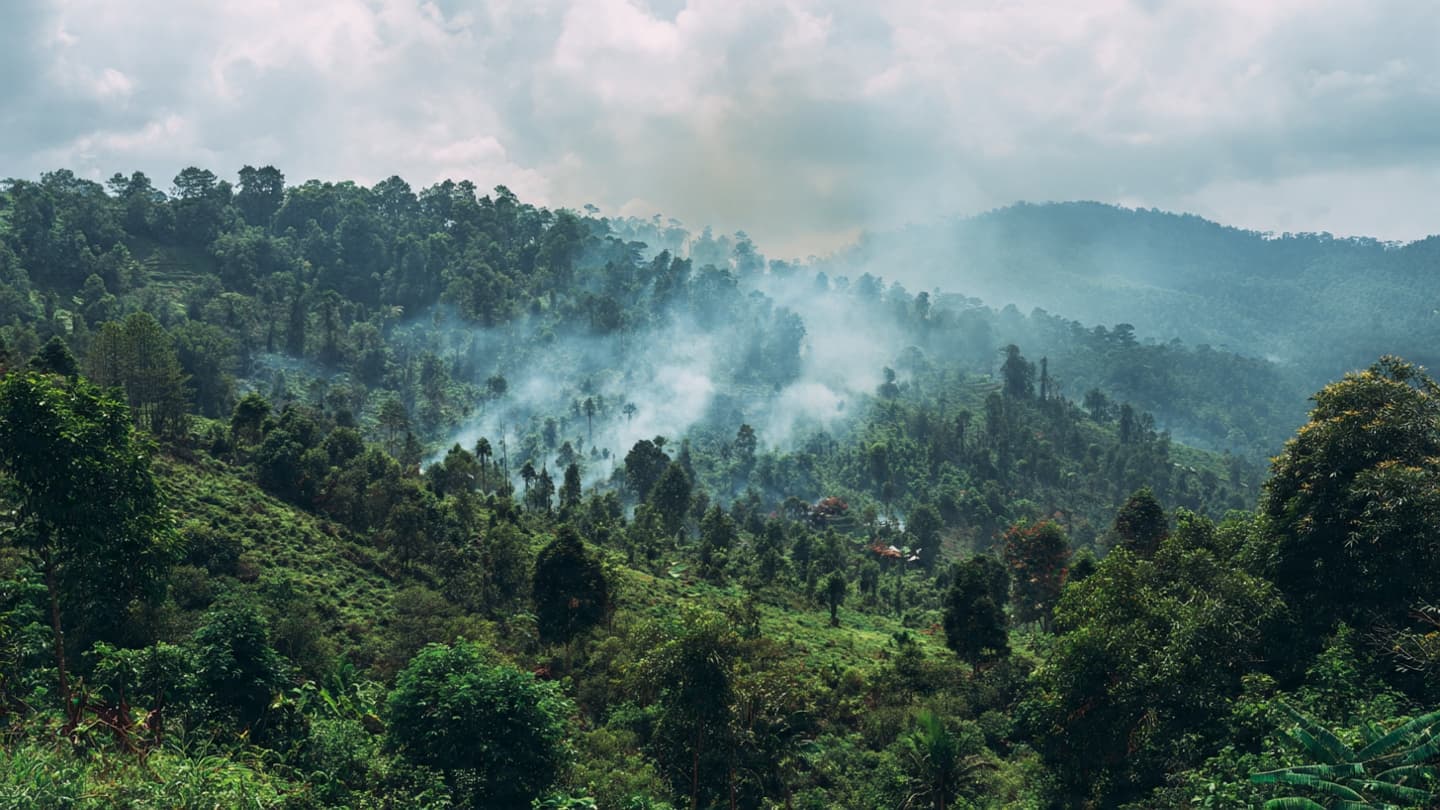
Across Indonesia's forests, the dry season can change the atmosphere with remarkable speed. Green landscapes begin to lose their moisture, rivers and wetlands become more vulnerable, and smoke can settle across distant communities. This year, unusually hot and dry conditions have added another layer to the country's long-running struggle with wildfire.
Indonesia's wildfire season has intensified as a strong El Niño climate pattern contributes to record heat and unusually dry conditions. Reuters reported that the country has been facing a significant increase in fire activity across several regions, including parts of Sumatra and Kalimantan. (reuters.com)
The dry conditions create an environment in which vegetation and peatlands can ignite more easily. Peat fires are particularly difficult to control because they can burn underground, sometimes continuing after surface flames have disappeared. Their smoke can travel considerable distances depending on wind and atmospheric conditions.
Indonesia's geography adds complexity to the problem. Thousands of islands contain forests, agricultural areas, plantations, peatlands, and densely populated communities. Fire activity in one region can therefore have effects beyond the immediate area, particularly when smoke moves toward populated locations.
Authorities have increased monitoring and inspection efforts as the season develops. Reuters reported that Indonesia was inspecting 19 companies linked to wildfire areas across Sumatra and Kalimantan, reflecting the broader effort to identify the sources and circumstances surrounding fires. (reuters.com)
The economic effects can extend beyond forests. Smoke can affect transportation, agriculture, tourism, public facilities, and local businesses. When visibility declines, airports and roads may face operational difficulties, while agricultural areas can experience losses if fires spread through cultivated land.
Weather conditions remain one of the most important variables. Extended periods without sufficient rainfall allow vegetation and peat to become progressively drier, increasing the possibility that small fires can develop into larger events.
The current season is also being watched because Indonesia has experienced major wildfire episodes in previous years. Those events demonstrated how prolonged drought, land conditions, and human activity can combine to create fires that are difficult to contain.
For communities near affected areas, the changing color of the sky can become an everyday reminder of the season. Firefighters, local authorities, land managers, and residents continue monitoring conditions as the dry period progresses.
Indonesia's wildfire situation remains closely tied to weather, land management, and fire prevention. With hot and dry conditions continuing to influence several regions, authorities are maintaining surveillance while firefighting and inspection efforts continue across affected areas.
AI IMAGE DISCLAIMER
The images are AI-generated conceptual visuals created to illustrate wildfire conditions and do not represent actual photographs of specific locations.
SOURCES
Reuters
Published by Banx Network. This article is part of the Banx decentralized media programme, powered by the BXE token on the XRP Ledger.