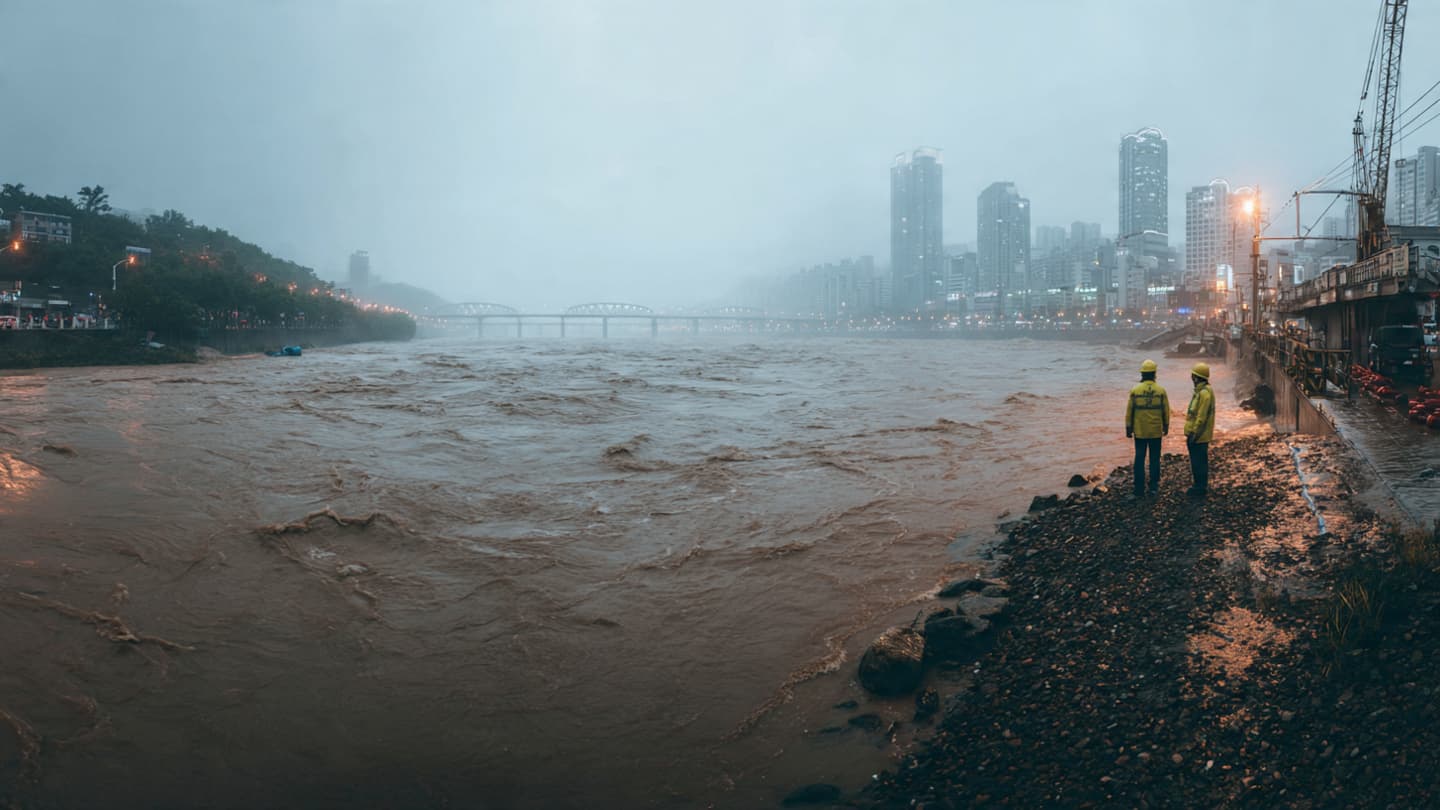
Rain often arrives gradually at first, soft enough to disappear beneath the noise of traffic and city life. But there are moments when clouds refuse to lift, rivers begin rising against their banks, and entire regions shift into quiet anticipation of what sustained weather can bring. Across South Korea, that uneasy vigilance has returned as authorities intensify flood monitoring amid growing heavy rain warnings.
Government agencies expanded emergency preparedness measures in several provinces following forecasts predicting prolonged rainfall and possible flooding in vulnerable low-lying areas. Officials warned that rivers, drainage systems, and mountainous terrain could face increased pressure if storms continue over the coming days.
Meteorological agencies issued alerts across parts of southern and central South Korea, where periods of intense rain have already affected transportation routes and residential neighborhoods. Emergency teams were placed on standby as local governments reviewed evacuation procedures and flood response plans.
In some communities, residents living near rivers and steep hillsides began moving belongings to higher ground while monitoring official updates through television broadcasts and mobile alerts. Authorities urged caution in areas historically vulnerable to flash flooding and landslides during seasonal storms.
South Korea’s summer rainy periods have repeatedly brought sudden disasters in recent years, including flooding, infrastructure damage, and deadly mudslides. Rapid urban development combined with mountainous geography often creates difficult conditions when heavy rain falls over densely populated districts.
Engineers and emergency workers inspected drainage systems, bridges, and flood barriers throughout affected regions while rescue equipment was positioned near high-risk zones. Schools and local facilities in some areas prepared temporary shelter arrangements in case evacuations become necessary.
Beyond the immediate concern surrounding rainfall itself, many residents expressed fatigue shaped by recurring extreme weather events that seem increasingly unpredictable each year. In cities and rural towns alike, umbrellas lined crowded streets while dark clouds gathered above riverbanks already carrying stronger currents.
The atmosphere across much of the country remained cautious rather than panicked. Markets stayed open, commuters continued moving through train stations, and fishing boats rested quietly in coastal harbors beneath low skies. Yet beneath those ordinary rhythms, attention remained fixed on weather forecasts and rising water levels.
Authorities confirmed that flood monitoring operations will continue as heavy rain warnings remain active in multiple regions across South Korea. Emergency response teams remain on standby while meteorologists track incoming weather systems.
Published by Banx Network. This article is part of the Banx decentralized media programme, powered by the BXE token on the XRP Ledger.