
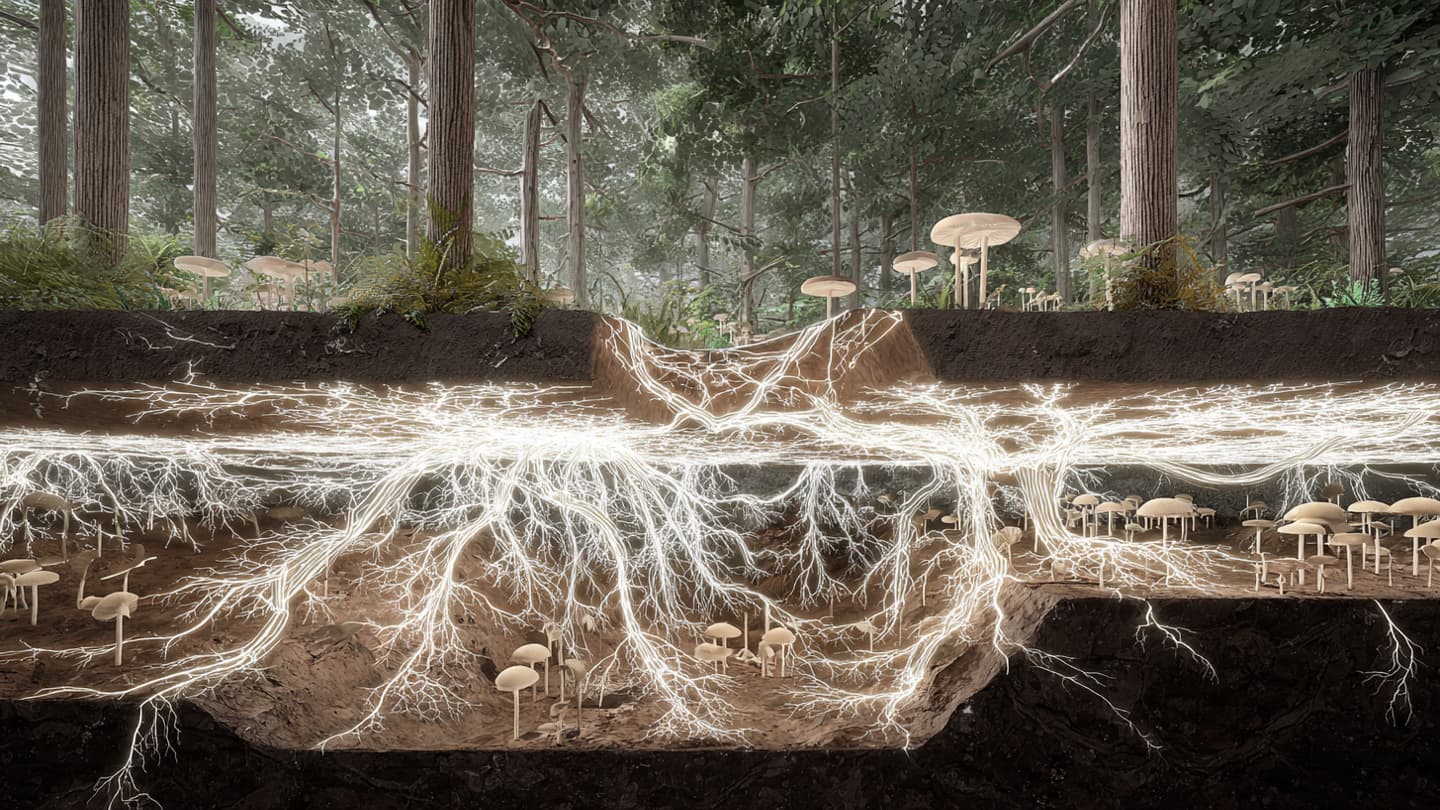
Beneath forests, grasslands, deserts, and even city parks lies a world that rarely appears on maps. Hidden below the surface, vast networks of fungi weave through soil like living threads connecting ecosystems across continents. Recent estimates highlighting approximately 68 quadrillion miles of underground fungal structures offer a reminder that some of Earth's largest biological systems remain largely unseen.
These underground networks are primarily composed of mycelium, the branching structures that form the main body of many fungi. While mushrooms may briefly emerge above ground, they represent only a small visible portion of a much larger organism.
Scientists have increasingly recognized fungi as essential participants in ecological processes. Through symbiotic relationships with plants, fungal networks help transport water, nutrients, and chemical signals across ecosystems.
Researchers often describe these connections as a "wood wide web," reflecting the complex exchanges that occur between roots and fungi beneath the soil. Although the comparison is metaphorical, it captures the remarkable interconnectedness of underground ecosystems.
The estimate of 68 quadrillion miles underscores the enormous scale of fungal life on Earth. These networks collectively span distances difficult to comprehend, extending through countless habitats across the globe.
Fungi also contribute to carbon cycling, soil formation, and ecosystem resilience. By breaking down organic matter and facilitating nutrient exchange, they support processes that sustain plant and animal life.
Scientists continue investigating how fungal networks influence biodiversity and environmental stability. Advances in genetic analysis and soil ecology are revealing details that remained inaccessible only a few decades ago.
The growing appreciation of fungi reflects a broader shift in ecological research. Organisms once viewed primarily as decomposers are now recognized as central components of healthy ecosystems.
The immense underground reach of fungal networks serves as a reminder that Earth's most important systems are not always visible. Beneath everyday landscapes, countless biological connections quietly support life above the surface.
AI Image Disclaimer: Visuals included with this article may feature AI-generated interpretations inspired by ecological and fungal research.
Sources Verification Check:
Nature Fungal Biology Reviews Scientific American Society for the Protection of Underground Networks BBC Science Focus
Published by Banx Network. This article is part of the Banx decentralized media programme, powered by the BXE token on the XRP Ledger.



