

Key Highlights
- Webb Telescope:Recent observations reveal hidden star nurseries.
- Protostars:Newly visible stages of star formation captured in detail.
- Cosmic Insights:Findings reshape understanding of stellar evolution.
The cosmos holds a profound stillness, a silence so expansive that even light seems to pause before traversing its depths. Within this silence, the universe engages in its oldest ritual: the birth of stars. Recent observations from the James Webb Space Telescope (JWST) have begun to unveil regions long concealed from human sight, revealing not just distant clouds of gas but dense stellar nurseries where gravity, pressure, and time collaborate in a delicate balance.
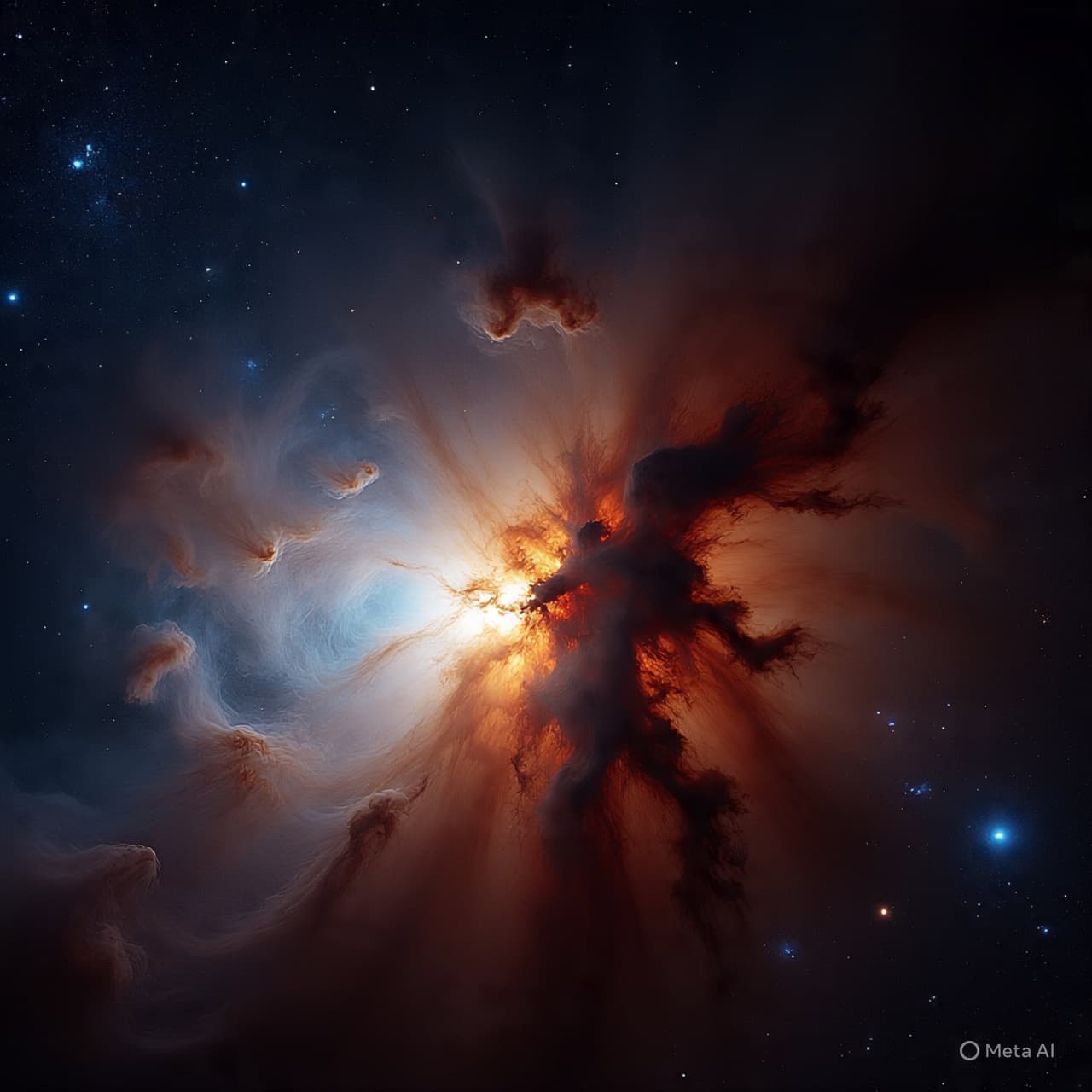
Unlike previous telescopes, Webb’s advanced infrared capabilities allow it to penetrate thick interstellar dust. This unprecedented access enables astronomers to capture the faint glow of protostars—celestial objects that have yet to ignite into full stellar bodies. These early stages of star formation, once theoretical or only partially observed, are now visible with remarkable clarity, providing a new window into the universe's formative processes.
Astronomers describe the images produced by Webb as both scientifically significant and poetically beautiful. Filaments of gas twist like quiet currents, while pockets of light flicker within them, marking the earliest phases of stellar ignition. Each point of light represents a process that may take millions of years to fully unfold, offering a glimpse into the intricate dance of creation that shapes our universe.
The discovery is not merely visual; it has profound implications for our understanding of how stars accumulate mass, how planetary systems may eventually form, and how the distribution of elements evolves across galaxies. The insights gained from these observations are crucial for understanding the cosmic architecture that underpins our existence.
In particular, the telescope has revealed “hidden” stars—protostars embedded so deeply in dust that earlier instruments could not detect them. These findings suggest that star formation may be more active and complex than previously believed, challenging existing models and prompting a reevaluation of our understanding of stellar evolution.
The interplay between turbulence in gas clouds and gravitational collapse appears more intricate than once thought, hinting at variations that could influence the types of stars that emerge. For researchers, these images represent both confirmation of long-standing theories and challenges that demand further study. Each revelation opens another layer of questions, pushing the boundaries of our cosmic knowledge.
Beyond the scientific community, the images resonate with a broader audience. They serve as a reminder that even in the most concealed corners of existence, creation persists quietly, beyond immediate perception. As the scientific community continues to analyze Webb’s data, the narrative of star formation grows richer—not louder, but deeper—etched in light that has traveled across unimaginable distances to reach us.
As we stand on the brink of new discoveries, the Webb Telescope promises to deepen our understanding of the universe, revealing secrets that have long been hidden beneath cosmic veils.
Published by Banx Network. This article is part of the Banx decentralized media programme, powered by the BXE token on the XRP Ledger.




