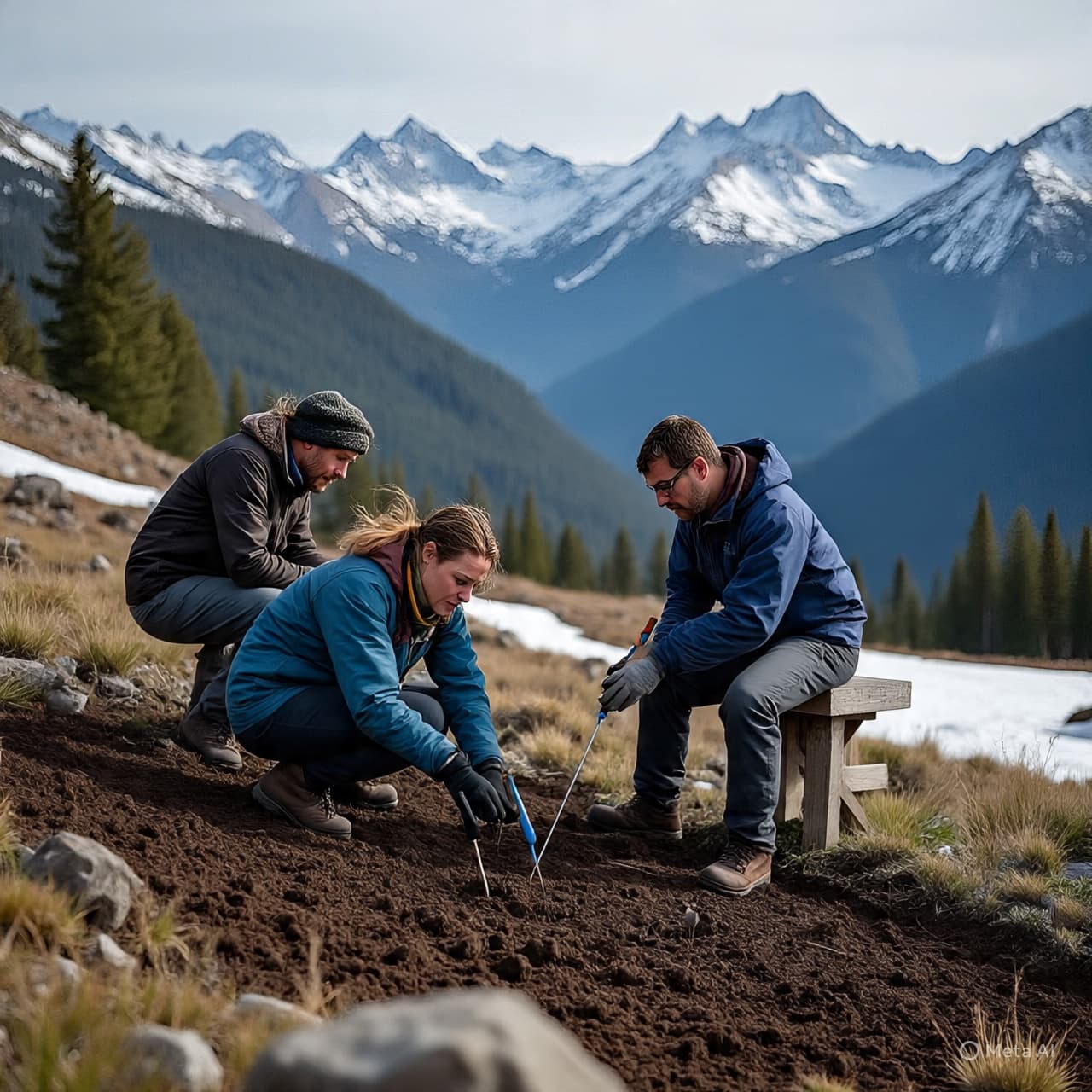
In the high, quiet reaches of Colorado’s mountains, the seasons once moved with a deliberate rhythm. Snow piled into deep drifts through long winters, grasslands lay under blankets of cold, and the pulse of life beneath the soil followed that familiar cadence. But when a place endures change year after year, the story of its soil begins to be told in subtle shifts—shifts too gradual to notice in a single season, yet unmistakable when traced over decades.
For nearly three decades, scientists have been watching a patch of ground at the Rocky Mountain Biological Laboratory, where experimental heaters have gently warmed plots of soil, year after year. What they have recorded is not simply a warming of air and earth, but a deeper transformation that reaches into the hidden world of soil fungi—a world as vital to plant life as roots and rain.
Fungi, especially those that live in intimate symbiosis with plant roots, are among the unseen actors that make ecosystems flourish. Known as mycorrhizal fungi, they entwine with roots, helping plants draw water and nutrients from soil in exchange for carbon. But after 29 years of elevated temperatures, these fungal partners are disappearing from the warming plots, unable to sustain their delicate collaboration with plants. In their place, other fungi—those that break down dead organic matter—have become more prevalent, reshaping the soil community beneath the grasses and shrubs.
Such a transformation alters not just fungal life, but the very fabric of the ecosystem. As the plants above ground have shifted from alpine grassland toward a more desert‑like shrubland, the fungi below have responded in tandem, adjusting to both rising temperatures and changing plant communities. What was once a network of mutual support between roots and fungi is giving way to a simpler web dominated by decomposers, with implications for how carbon and nutrients cycle through the soil.
This story resonates with broader findings in ecological research. Long‑term warming has been shown to influence microbial communities in ways that can reverberate through ecosystems, often shifting the balance of fungal groups and altering soil processes over time. Soil fungal communities, across diverse environments, tend to respond to changes in temperature and moisture by reorganizing their composition, sometimes favoring heat‑tolerant or functionally distinct species.
In a sense, these underground changes reflect the broader challenge of climate change—that many effects are invisible at first glance, happening out of sight but shaping life above ground. Fungi are partners in shaping soil fertility, supporting plants, and storing carbon. When their communities shift, the implications ripple outward to vegetation patterns, nutrient flows, and the resilience of ecosystems to future stress.
Yet in the rhythm of science, as in the turning seasons, the full meaning of such changes emerges slowly. Researchers continue to monitor the plots at the Rocky Mountain Biological Laboratory, probing how warming affects not only fungi and plants, but the timing of snowmelt and the intricate choreography between soil life and the seasons.
In clear scientific terms, a long‑term warming experiment in Colorado has shown that nearly 30 years of elevated soil temperatures have altered soil fungal communities, reducing symbiotic mycorrhizal fungi and increasing decomposer fungi, while contributing to broader shifts from grassland to shrubland ecosystem types.
AI Image Disclaimer: Visuals are AI-generated and serve as conceptual representations.
Sources
Phys.org Proceedings of the National Academy of Sciences Nature Microbiology commentary via microbial ecology researchers Ecological Processes Scientific American
Published by Banx Network. This article is part of the Banx decentralized media programme, powered by the BXE token on the XRP Ledger.