
Key Highlights
- The Strait of Hormuz is a critical chokepoint for global oil supply.
- Recent reports indicate a Chinese tanker may challenge U.S. naval operations.
- The region's maritime dynamics reflect broader geopolitical tensions.
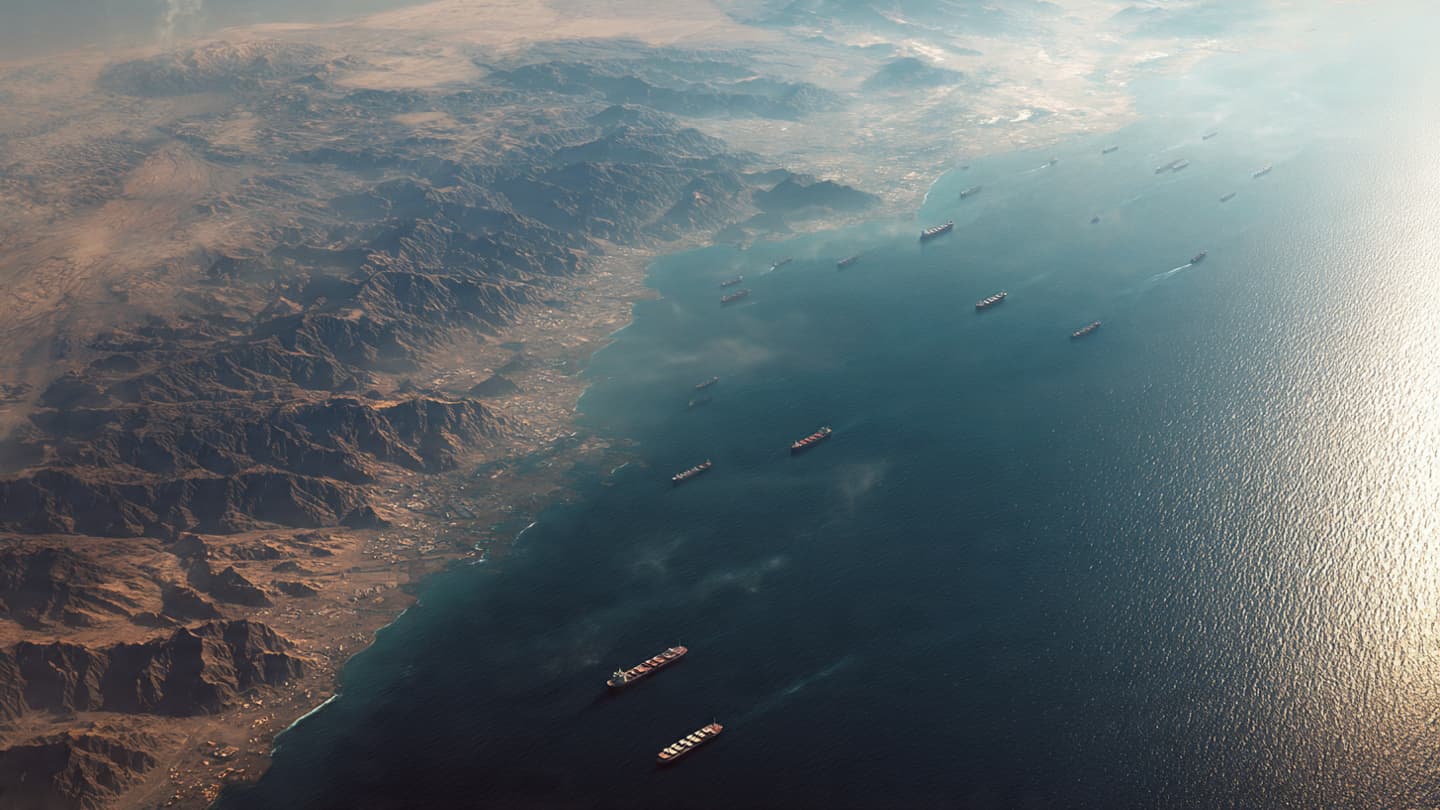
The Strait of Hormuz has always carried more than ships. It carries expectation, tension, and the invisible architecture of global energy dependence. On the surface, it is a narrow ribbon of water between Iran and Oman, bright under the desert sun and deceptively calm at first glance. Beneath that calm lies one of the most closely watched corridors in the world, where geography and strategy overlap so tightly they are nearly indistinguishable.
Recent reports have emerged of a Chinese tanker preparing to test the operational limits of a U.S. naval posture described by some analysts as a form of de facto maritime containment in the region. While the details remain fluid and unconfirmed in official terms, the narrative reflects a familiar pattern in Hormuz: the movement of a single vessel becoming a focal point for broader questions of access, deterrence, and control of passage.
The Strait of Hormuz is not only a shipping lane but a chokepoint through which a significant portion of global oil supply flows. This concentration of economic lifeblood in a narrow maritime corridor has long made it a site of strategic sensitivity. Naval forces from multiple countries operate in or near the area, monitoring traffic, ensuring escort capabilities, and responding to periodic escalations involving inspections, seizures, or heightened alert postures.
In this context, the presence of a Chinese commercial tanker—if interpreted through the lens of strategic signaling rather than routine logistics—becomes part of a wider pattern of maritime visibility. China, as a major importer of energy resources from the Gulf, has a direct interest in the uninterrupted flow of shipping through Hormuz. At the same time, the United States maintains longstanding naval deployments in the region aimed at securing freedom of navigation and deterring disruption in international waters.
Between these overlapping priorities, commercial vessels often become silent participants in a larger geopolitical rhythm. They carry cargo but also implication. Their routes are plotted in commercial terms yet interpreted through strategic frameworks that extend far beyond their immediate purpose. A single passage through Hormuz can therefore be read in multiple registers at once—economic necessity, legal navigation, and geopolitical messaging.
The notion of a 'test' in maritime terms does not necessarily imply confrontation. It can refer to the endurance of monitoring systems, responses to escort patterns, or the signaling effect of presence in contested or sensitive waters. In this sense, the movement of a tanker becomes less about physical challenge and more about the interpretation of boundaries—how far freedom of navigation is asserted, and how it is observed by others.
For the United States, naval presence in the Gulf has long been framed within the doctrine of securing international waterways. Patrols, carrier groups, and allied coordination form part of a broader architecture designed to ensure that commercial traffic is not obstructed. For China, whose energy security is deeply tied to Gulf exports, the stability of these same waters is a practical necessity rather than an abstract strategic concern.
Iran, situated directly along the strait, remains a central actor in any discussion of Hormuz. Its coastline shapes the passage itself, and its naval and paramilitary forces are key participants in the regional maritime environment. Past incidents in the area have demonstrated how quickly commercial shipping can become entangled in broader political tensions, even when no formal escalation is declared.
Against this backdrop, the reported movement of a Chinese tanker becomes part of a larger, recurring pattern: the steady negotiation of presence in a confined maritime space shared by competing interests. Each vessel passing through does so within a framework shaped not only by international law but by the accumulated memory of past confrontations, diplomatic agreements, and unresolved tensions.
Yet life in the Strait of Hormuz is not solely defined by strategic abstraction. Tankers continue to move in measured sequences. Port pilots guide ships through narrow channels. Coastal communities along the Gulf maintain their routines under intense heat and shifting tides. Even in a region so often described in terms of tension, the daily mechanics of maritime trade persist with quiet regularity.
If the reported voyage proceeds, it will likely be observed closely by international stakeholders, reflecting the ongoing complexities of maritime security and global energy dynamics.
Published by Banx Network. This article is part of the Banx decentralized media programme, powered by the BXE token on the XRP Ledger.



