
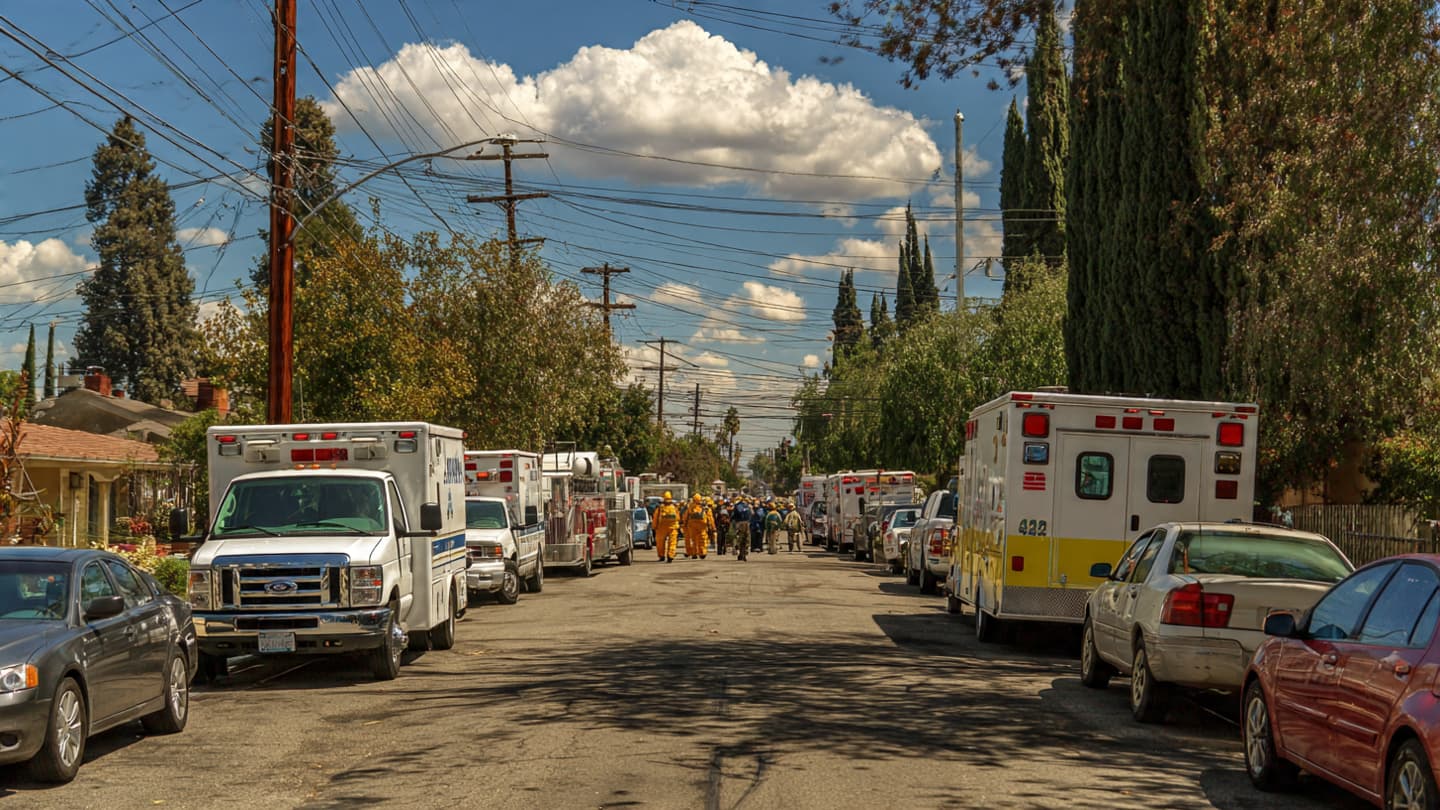
Communities often measure time through ordinary routines — school mornings, traffic lights, and the quiet rhythm of neighborhoods settling into evening. Yet when industrial danger emerges unexpectedly, familiar streets can quickly become evacuation routes marked by uncertainty and urgency. In California, tens of thousands of residents were recently ordered to leave their homes after authorities warned of a chemical leak carrying the risk of a potentially catastrophic explosion.
Emergency officials reported that approximately 50,000 residents were evacuated as hazardous conditions intensified near a chemical facility. Authorities established large evacuation zones while firefighters, hazardous materials specialists, and law enforcement agencies coordinated emergency response operations across affected areas.
Officials warned that unstable chemical reactions or pressure buildup could increase the risk of a major explosion if conditions were not contained. Residents were advised to leave immediately and avoid returning until safety assessments could be completed. Emergency alerts spread rapidly through mobile notifications, local broadcasts, and public safety systems.
Scenes across nearby communities reflected the scale of disruption caused by the evacuation order. Long lines of vehicles formed along major roads as families carried essential belongings, pets, and emergency supplies while searching for temporary shelter. Schools and businesses in some districts also suspended operations during the emergency response.
Hazardous material incidents present unique challenges for emergency agencies because risks can evolve quickly depending on temperature, chemical composition, wind conditions, and structural damage. Public health officials monitored air quality and environmental conditions closely while advising residents to remain outside restricted areas.
California has experienced several industrial safety incidents in recent years involving warehouses, manufacturing facilities, and transportation networks carrying hazardous substances. Experts frequently note that rapid urban expansion near industrial zones can complicate emergency planning and evacuation logistics during large-scale incidents.
Residents interviewed by local media described confusion and anxiety as evacuation notices arrived with little warning. Some families relocated to temporary shelters organized by local authorities, while others sought refuge with relatives or hotels outside the danger zone. Community organizations and emergency volunteers reportedly assisted displaced residents throughout the response effort.
Environmental specialists also emphasized the importance of monitoring potential long-term contamination risks following chemical leaks. Depending on the substances involved, nearby water systems, soil, and air quality may require extended assessment even after immediate threats subside. Officials stated that investigations into the source and cause of the leak would continue after conditions stabilized.
As emergency crews maintained operations around the facility, authorities urged the public to rely on official updates rather than unverified online rumors. The evacuation order remained in place while engineers and hazardous materials teams evaluated the evolving situation and worked to reduce the risk of further escalation.
AI Image Disclaimer: Some supporting visuals accompanying this article were created using AI-generated imagery for editorial illustration.
Sources: Reuters, CNN, Los Angeles Times, Associated Press
Note: This article was published on BanxChange.com and is powered by the BXE Token on the XRP Ledger. For the latest articles and news, please visit BanxChange.com