There are nights when the sky feels infinite and benevolent, a velvet canopy scattered with distant lanterns. We look upward for comfort, for navigation, for meaning. Yet beyond that serene darkness drifts a quieter truth: space is not empty, and it is not entirely still. Between the planets move fragments of ancient formation — relics from the birth of the solar system — silent, patient, and sometimes immense.
In recent discussions, a NASA scientist cautioned that thousands of large, city-destroying asteroids remain beyond humanity’s current ability to deflect with certainty. According to estimates shared in public briefings and research updates from NASA, there may be as many as 15,000 near-Earth objects of significant size that have yet to be fully tracked or characterized. These are not the small meteors that streak harmlessly across the night sky, but bodies large enough to cause catastrophic regional destruction should they strike Earth.
The warning is not one of imminent disaster, but of scientific limitation. Planetary defense has advanced notably in recent years. In 2022, NASA’s Double Asteroid Redirection Test, commonly known as DART, successfully altered the orbit of a small asteroid by intentionally colliding with it — a milestone proving that kinetic impact can shift a celestial object’s path. It was a measured success, widely celebrated within the scientific community. Yet it was also a reminder that demonstration is not the same as readiness.
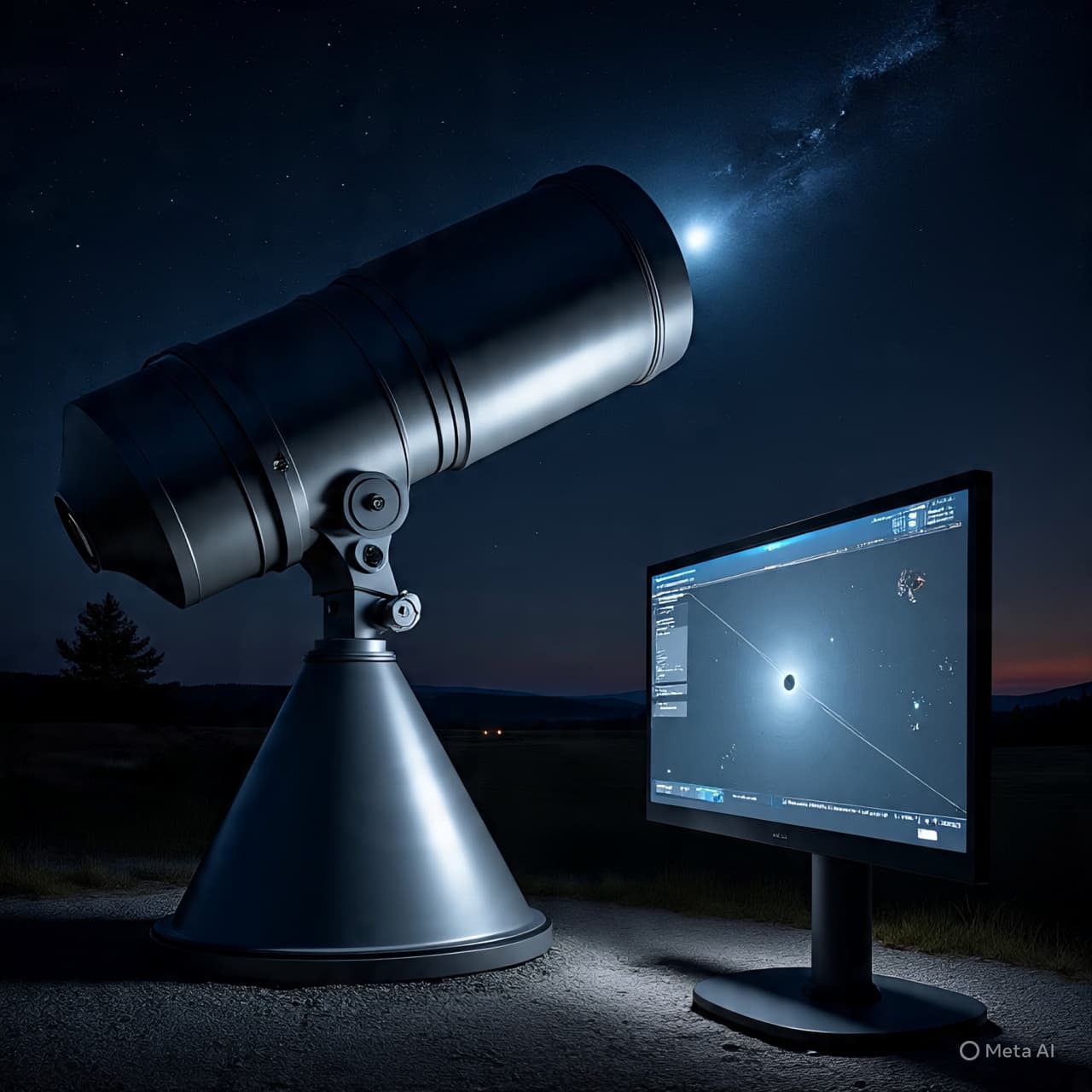
Tracking near-Earth objects depends on observation. Telescopes scan the skies, cataloging new discoveries and refining orbital predictions. Many potentially hazardous asteroids have already been mapped, and the probability of a large undiscovered object striking Earth in the immediate future remains statistically low. However, scientists acknowledge that detection gaps persist, particularly for objects approaching from sunward directions, where glare can obscure incoming bodies.
A “city-killer” asteroid — typically defined as one measuring roughly 140 meters (about 460 feet) or larger — carries enough energy to devastate a metropolitan area. The scale of damage would depend on speed, angle, and composition. Most impacts would occur in oceans or remote areas, given Earth’s geography. Even so, the margin for error narrows with size. While extinction-level asteroids are rare and largely cataloged, mid-sized objects remain an area of focused study.
NASA and international partners are expanding detection capabilities, including space-based infrared telescopes designed specifically to locate dark, difficult-to-see asteroids. Cooperation between agencies, data-sharing networks, and simulation exercises form part of a broader planetary defense strategy. The aim is not alarm, but preparation — extending warning times from weeks to years, or ideally decades.
The scientist’s remarks underscore a practical reality: humanity cannot yet guarantee the ability to stop every large asteroid. Technological solutions depend on early detection, accurate trajectory modeling, and sufficient lead time. Without those elements, even the most promising intervention becomes uncertain.
Still, there is perspective to consider. Earth has endured for 4.5 billion years. Impacts have shaped continents, influenced evolution, and occasionally rewritten biological history. Today, unlike in the age of dinosaurs, humans possess awareness. We can observe, calculate, and plan. That alone marks a profound shift in our relationship with the cosmos.
The sky above remains vast, and its hazards are real but statistically remote. Researchers continue to monitor, test, and refine planetary defense systems. There is no immediate threat announced, only an acknowledgment of work yet unfinished. The effort to track and potentially deflect hazardous asteroids remains ongoing within NASA and the broader scientific community.
AI Image Disclaimer Illustrations were produced with AI and serve as conceptual depictions.
Source Check: Credible coverage and scientific context available from:
1. NASA 2. Space.com 3. Reuter 4. Associated Press 5. Scientific American
Published by Banx Network. This article is part of the Banx decentralized media programme, powered by the BXE token on the XRP Ledger.