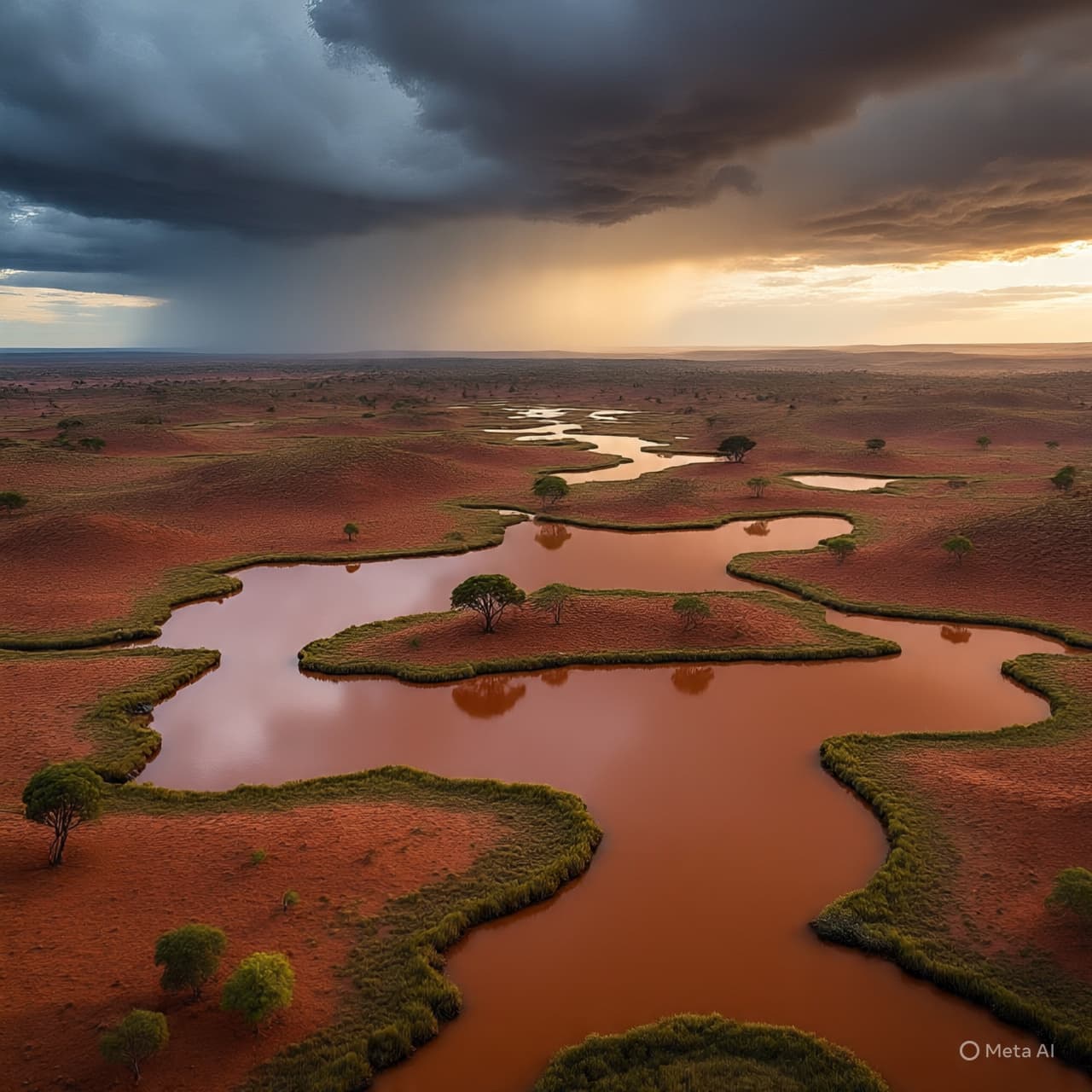
Rain in the Australian outback does not simply fall; it arrives like a visitor long debated — sometimes awaited, sometimes feared. Across the wide red earth of South Australia and New South Wales, the sky opened overnight with unusual generosity. In some areas, as much as 200 millimeters poured down before dawn, turning dust into mirror-like pools and dry creek beds into moving water once more.
For communities accustomed to measuring rainfall in modest increments, such figures carry weight. The outback landscape, shaped by extremes, absorbs and resists in equal measure. What begins as relief for parched soil can quickly become a logistical challenge when intensity replaces steadiness.
Meteorological authorities reported that parts of Outback South Australia and western New South Wales recorded up to 200mm overnight, with forecasts warning that another 100mm could follow. In regions where infrastructure stretches thinly across vast distances, heavy rainfall can disrupt transport routes, isolate communities, and place pressure on emergency services.
The rain system sweeping across the interior has been described as slow-moving and moisture-laden, drawing energy from atmospheric conditions that favor prolonged downpours. Such systems are not unprecedented, but their impact often depends on timing and terrain. When rain falls on already saturated ground, runoff becomes swift and waterways respond rapidly.
Road closures have begun in low-lying areas, particularly along unsealed routes common throughout the outback. Authorities have urged residents and travelers to monitor updates and avoid floodwaters, emphasizing that even shallow crossings can conceal strong currents. In remote regions, where distances between towns can stretch for hundreds of kilometers, detours are rarely simple.
For pastoralists and farmers, the rainfall presents a dual reality. After extended dry spells, moisture replenishes soil profiles and refills dams, supporting livestock and grazing lands. Yet excessive rain can also threaten fencing, isolate properties, and complicate transport of supplies. The balance between blessing and burden rests on duration and intensity.
Emergency services across South Australia and New South Wales remain on alert, coordinating with meteorological agencies to assess flood risks. While urban centers are largely unaffected, smaller communities in the outback face heightened vulnerability due to limited drainage infrastructure and vast catchment areas.
Forecasts indicating an additional 100mm in coming days have prompted authorities to prepare for possible flash flooding and river rises. Weather models suggest that the system may linger before gradually shifting eastward. In the meantime, officials continue issuing advisories, emphasizing preparedness over alarm.
There is a quiet resilience in the outback — a familiarity with nature’s wide swings. Residents are accustomed to drought, to heat that shimmers on the horizon, and to the sudden drama of thunderstorms that roll across open plains. Yet when rainfall reaches triple digits overnight, even seasoned observers pause.
This event unfolds within a broader pattern of increasingly variable weather across Australia, where extremes — both dry and wet — have become more pronounced in recent years. While each system carries its own dynamics, communities across the continent are learning to adapt to sharper contrasts.
As the rain continues, attention turns to river gauges, road reports, and the evolving forecast. Authorities have not issued widespread evacuation orders but remain vigilant, particularly in flood-prone zones. Updates are expected as conditions develop.
For now, the outback listens to the steady rhythm on rooftops and tin sheds. Water collects where dust once settled, and the land waits to see whether this abundance will settle gently or test its edges once more.
AI Image Disclaimer Illustrations were produced with AI and serve as conceptual depictions.
SOURCE CHECK
ABC News Australia The Guardian Australia Reuters The Sydney Morning Herald SBS News
Published by Banx Network. This article is part of the Banx decentralized media programme, powered by the BXE token on the XRP Ledger.