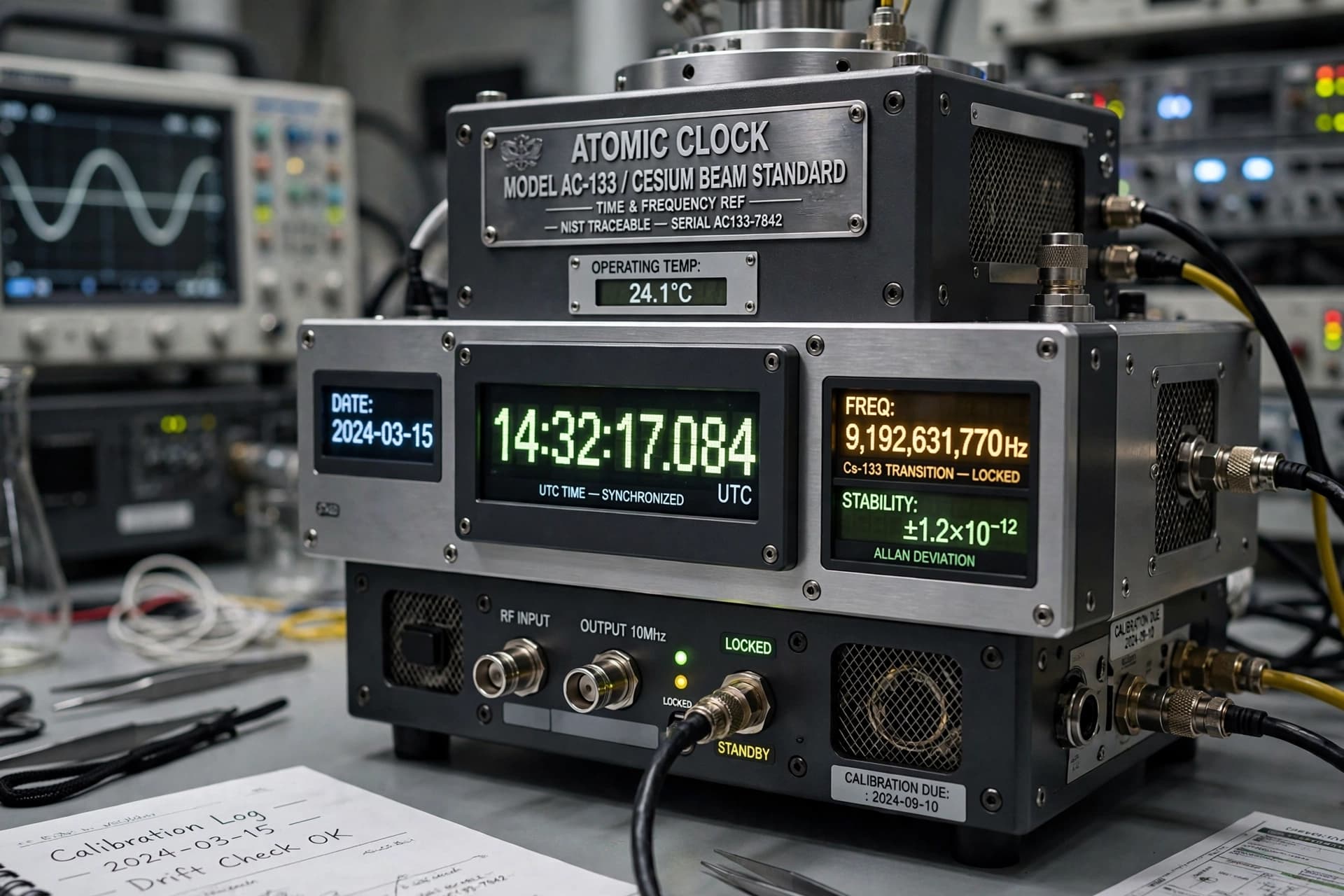
There are places where silence is not merely the absence of sound, but a condition carefully preserved—where the world above, with all its motion and interference, fades into a distant memory. Deep underground, beneath layers of rock and time, scientists are beginning to seek something remarkably delicate: the faint signals of a quantum world that is easily disturbed, yet rich with possibility.
In recent developments, pioneering research in Quantum Physics is moving into subterranean environments, where stability and isolation offer unique advantages. These underground laboratories, shielded from cosmic radiation and environmental noise, provide conditions that are difficult—if not impossible—to replicate at the surface.
Quantum systems are inherently sensitive. The particles and states studied within this field can be influenced by the slightest fluctuations—vibrations, temperature shifts, even background radiation. For researchers attempting to measure or manipulate these systems, such disturbances can obscure results or limit precision. By relocating experiments deep below ground, scientists aim to create an environment where these variables are minimized.
The move underground is not entirely new in scientific exploration. Fields such as particle physics have long relied on subterranean facilities to study elusive phenomena, including neutrinos and dark matter. What is evolving now is the application of similar principles to quantum research, where the need for controlled conditions is equally pressing.
At the heart of this effort is the pursuit of deeper understanding. Quantum technologies—ranging from advanced computing to ultra-sensitive sensors—depend on the ability to maintain coherence within quantum states. Achieving this requires not only sophisticated equipment but also environments that support stability over time.
Underground laboratories offer a kind of natural insulation. Thick layers of earth and rock reduce interference from cosmic rays and external electromagnetic signals, creating a setting where experiments can proceed with fewer disruptions. For scientists, this translates into clearer data, more reliable measurements, and the potential to explore questions that might otherwise remain out of reach.
There is also a symbolic dimension to this shift. Moving research beneath the surface suggests a willingness to explore not only the frontiers of knowledge, but also the conditions under which that knowledge can best emerge. It reflects an understanding that progress is not always about moving forward in visible ways, but sometimes about moving inward—toward quieter, more controlled spaces.
At the same time, the challenges are significant. Constructing and maintaining underground facilities requires substantial investment, careful engineering, and ongoing logistical support. Accessibility, safety, and operational continuity all become critical considerations. Yet, for many in the field, these challenges are balanced by the promise of what such environments can enable.
As quantum research continues to expand, the role of these underground spaces may become increasingly central. They offer not only a refuge from interference but a foundation for precision—an essential ingredient in a field where even the smallest uncertainties can shape outcomes.
In closing, researchers note that the transition of quantum experiments to underground laboratories is still developing, with projects underway in various parts of the world. Further advancements are expected as scientists refine both the technologies and the environments that support them.
AI Image Disclaimer Graphics are AI-generated and intended for representation, not reality.
Source Check (Credible Media Identified): Nature Science Magazine BBC News The New York Times MIT Technology Review
Published by Banx Network. This article is part of the Banx decentralized media programme, powered by the BXE token on the XRP Ledger.