In the golden shadows of the Valley of the Kings, where history sleeps beneath layers of sand and stone, a mystery has lingered for centuries. Now, advanced technology and persistent scholarship are peeling back the veil, suggesting that one of ancient Egypt’s most enigmatic figures, Queen Nefertiti, may be hiding in plain sight, behind the walls of her stepson’s tomb.
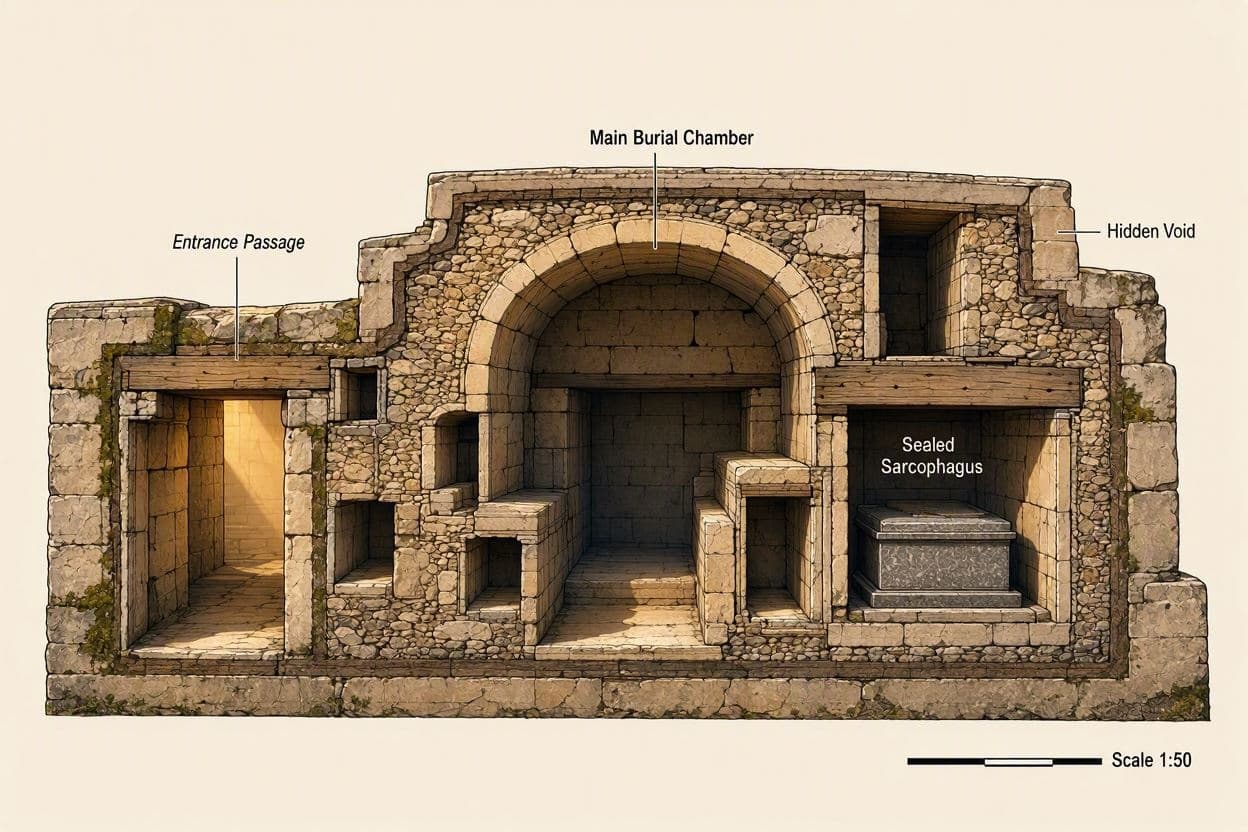
Recent scans and geological surveys of King Tutankhamun’s burial chamber have revealed anomalies that hint at hidden spaces. Researchers, led by prominent Egyptologists, have identified voids and structural irregularities that suggest the presence of additional chambers. These findings have reignited the long-standing hypothesis that Nefertiti’s final resting place lies adjacent to, or perhaps integrated with, the famous boy king’s grave.
Nefertiti, the Great Royal Wife of Pharaoh Akhenaten, was a powerful figure who reshaped Egyptian religion and art during the Amarna Period. Her disappearance from the historical record has fueled speculation for decades. Some theories suggest she ruled as a pharaoh in her own right, while others believe she was buried in a location that has since been lost or repurposed.
The use of non-invasive techniques, such as ground-penetrating radar and thermal imaging, allows scientists to explore these possibilities without damaging the existing structures. This careful approach respects the integrity of the UNESCO World Heritage site while providing crucial data. The results indicate that the walls surrounding Tutankhamun’s sarcophagus may not be solid, but rather conceal a passage to another chamber.
If confirmed, the discovery would be one of the most significant in modern archaeology. It would provide invaluable insights into the lineage of the 18th Dynasty and the political dynamics of the era. Artifacts within such a tomb could clarify the relationship between Nefertiti, Akhenaten, and Tutankhamun, resolving questions that have puzzled historians for generations.
Skepticism remains, as similar claims in the past have not always yielded definitive proof. However, the current evidence is more robust, supported by multiple independent analyses. The archaeological community is watching closely, aware that the confirmation of Nefertiti’s tomb would rewrite chapters of ancient history.
Beyond the scientific implications, the potential discovery captures the public imagination. Nefertiti remains an icon of beauty and power, her bust one of the most recognized artifacts in the world. Finding her tomb would connect the modern world directly to the grandeur of ancient Egypt, offering a tangible link to a civilization that continues to fascinate.
Excavation plans are being carefully reviewed to ensure preservation standards are met. As researchers prepare for the next phase of investigation, the world waits with bated breath for what secrets the walls of the Valley of the Kings may yet reveal.
AI Image Disclaimer: Visuals for this report are AI-generated interpretations designed to convey the themes of archaeological discovery and ancient history.
Sources: National Geographic, Live Science, The Guardian, Ministry of Tourism and Antiquities Egypt
Published by Banx Network. This article is part of the Banx decentralized media programme, powered by the BXE token on the XRP Ledger.