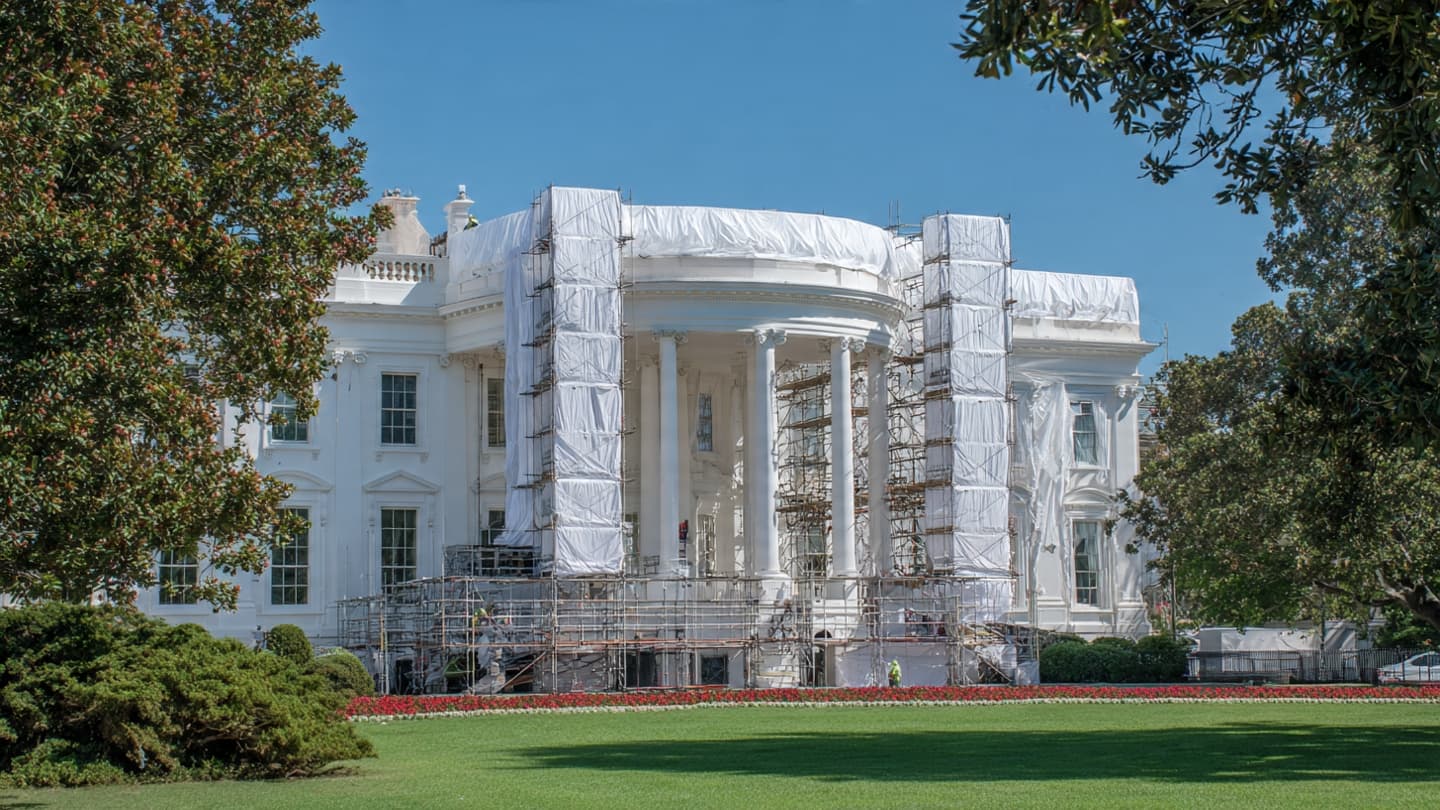
The White House has always been more than a residence; it is a symbol of stability and continuity. Yet, recent scenes from its north portico tell a different story, one of transformation and reinforcement. Tarps hang where historic columns once stood unobstructed, and scaffolding wraps around the iconic facade as part of President Trump’s ambitious construction blitz. The fortification of the front door is both a practical necessity and a visual metaphor for the changes underway.
The renovation project, which has drawn mixed reactions from historians and the public, aims to modernize the executive mansion’s infrastructure while enhancing its security. Workers have been seen reinforcing the entrance, addressing structural concerns that have plagued the building for decades. For some, the sight of construction materials obscuring the view is jarring; for others, it is a sign of necessary maintenance.
President Trump’s approach to the White House has been characterized by a desire to leave a lasting mark, much like his predecessors. However, the scale and visibility of this particular project have sparked debate about the balance between preservation and innovation. Critics worry that the aesthetic integrity of the historic site is being compromised, while supporters argue that safety and functionality must come first.
The tarps, fluttering in the wind, serve as a temporary shield against the elements and prying eyes. They hide the intricate work being done to strengthen the foundation and update electrical systems. Behind these coverings, skilled laborers are engaged in a delicate dance of restoration, ensuring that the building can withstand the tests of time and modern demands.
Public access to certain areas has been restricted, altering the experience of visitors and tourists who come to witness the seat of power. The change in atmosphere is palpable, with the usual sense of openness replaced by a feeling of guarded progress. It is a reminder that even the most public spaces require periods of private repair and renewal.
As the work continues, questions arise about the long-term vision for the White House grounds. Will the changes enhance its grandeur or detract from its historical charm? The answer may lie in the details of the final design, which promises to blend modern resilience with classical beauty. For now, the community waits with bated breath.
The fortification of the front door is just one chapter in the ongoing story of the White House. It reflects the dynamic nature of leadership and the physical manifestations of political will. As the tarps eventually come down, the world will see a renewed structure, ready to face the future.
Closing: The White House is undergoing significant renovations, with the front door being fortified amid a broader construction effort led by the Trump administration. The project aims to improve security and infrastructure, though it has sparked debate over historical preservation.
AI Image Disclaimer: The images associated with this piece are AI-generated and serve as artistic interpretations of the described events.
Sources: Major News Networks, Architectural Digest, Government Press Releases
Published by Banx Network. This article is part of the Banx decentralized media programme, powered by the BXE token on the XRP Ledger.