
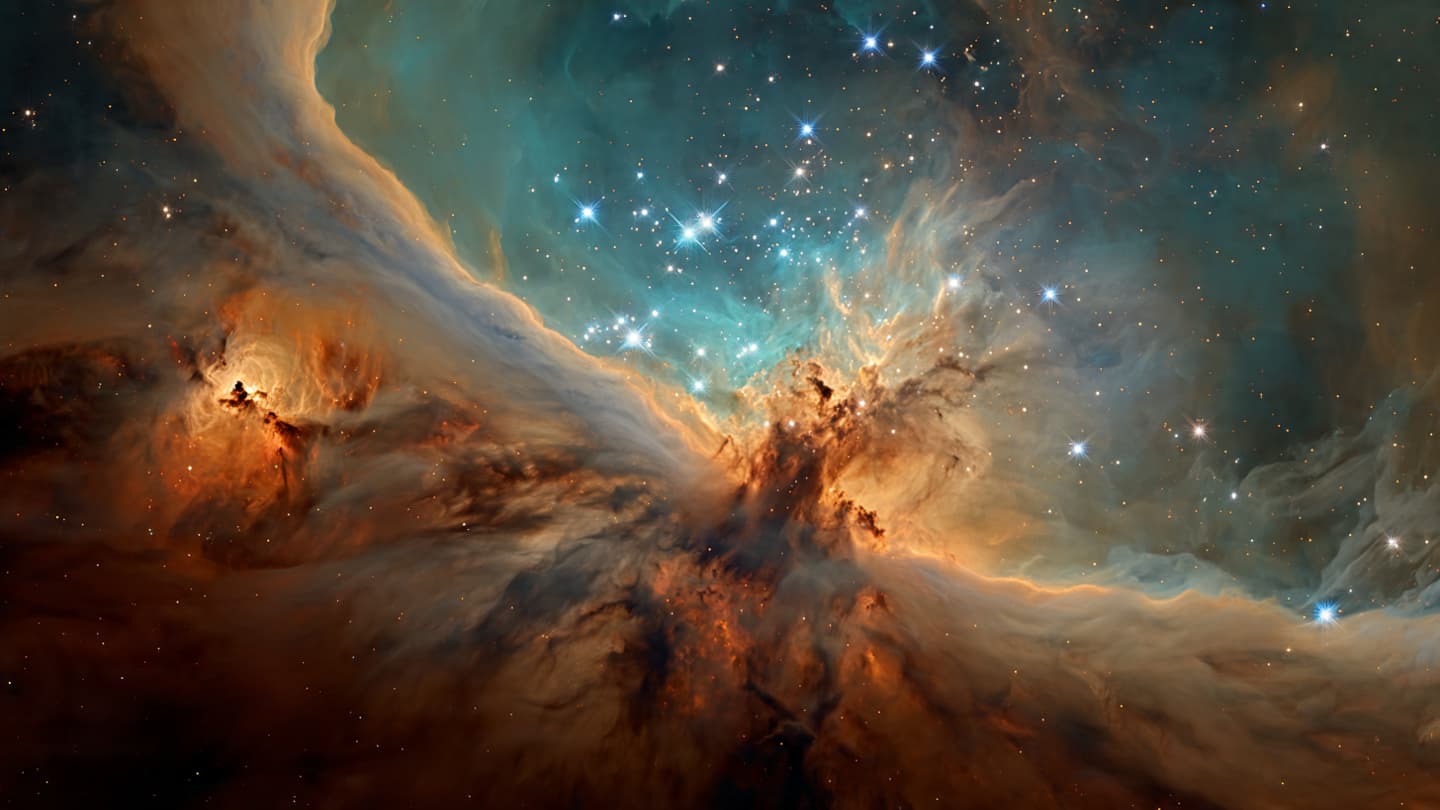
The universe often conceals its most remarkable creations behind curtains of dust and gas. Yet with every new generation of instruments, humanity gains another key to unlock these hidden chambers. Recent observations from the James Webb Space Telescope have revealed an extraordinary cloud of star formation concealed within the famous Sword of Orion.
The newly highlighted image, selected as a Space Photo of the Week by science media outlets, showcases a dense star-forming region embedded within the Orion Nebula complex. Located roughly 1,350 light-years from Earth, the Orion region remains one of astronomy's most extensively studied stellar nurseries.
The James Webb Space Telescope, launched in late 2021, specializes in observing infrared wavelengths. This capability allows it to peer through thick cosmic dust clouds that often obscure visible-light observations.
In the latest image, Webb captured intricate structures of gas and dust where young stars are actively forming. Scientists describe these regions as stellar nurseries, where gravity gradually causes clouds of material to collapse and ignite nuclear fusion.
The Sword of Orion, visible beneath Orion's famous Belt, has fascinated skywatchers for centuries. While portions of the nebula can be seen with small telescopes, Webb's infrared instruments reveal extraordinary detail previously inaccessible to astronomers.
Researchers continue using Webb to investigate how stars and planetary systems emerge within these environments. Understanding these processes may also provide insights into how the Sun and solar system formed billions of years ago.
The observatory's observations are contributing to a broader effort to understand stellar evolution across the universe. Webb's unprecedented sensitivity continues to produce data that challenge and refine existing theories.
As scientists analyze these observations, the Orion complex remains a vivid reminder that even familiar regions of the night sky still hold hidden layers waiting to be discovered.
AI Image Disclaimer: Illustrative visuals associated with this report were produced with AI assistance and are intended solely for presentation purposes.
Sources Verification Check: NASA European Space Agency (ESA) Space.com Live Science Space Telescope Science Institute
Published by Banx Network. This article is part of the Banx decentralized media programme, powered by the BXE token on the XRP Ledger.



