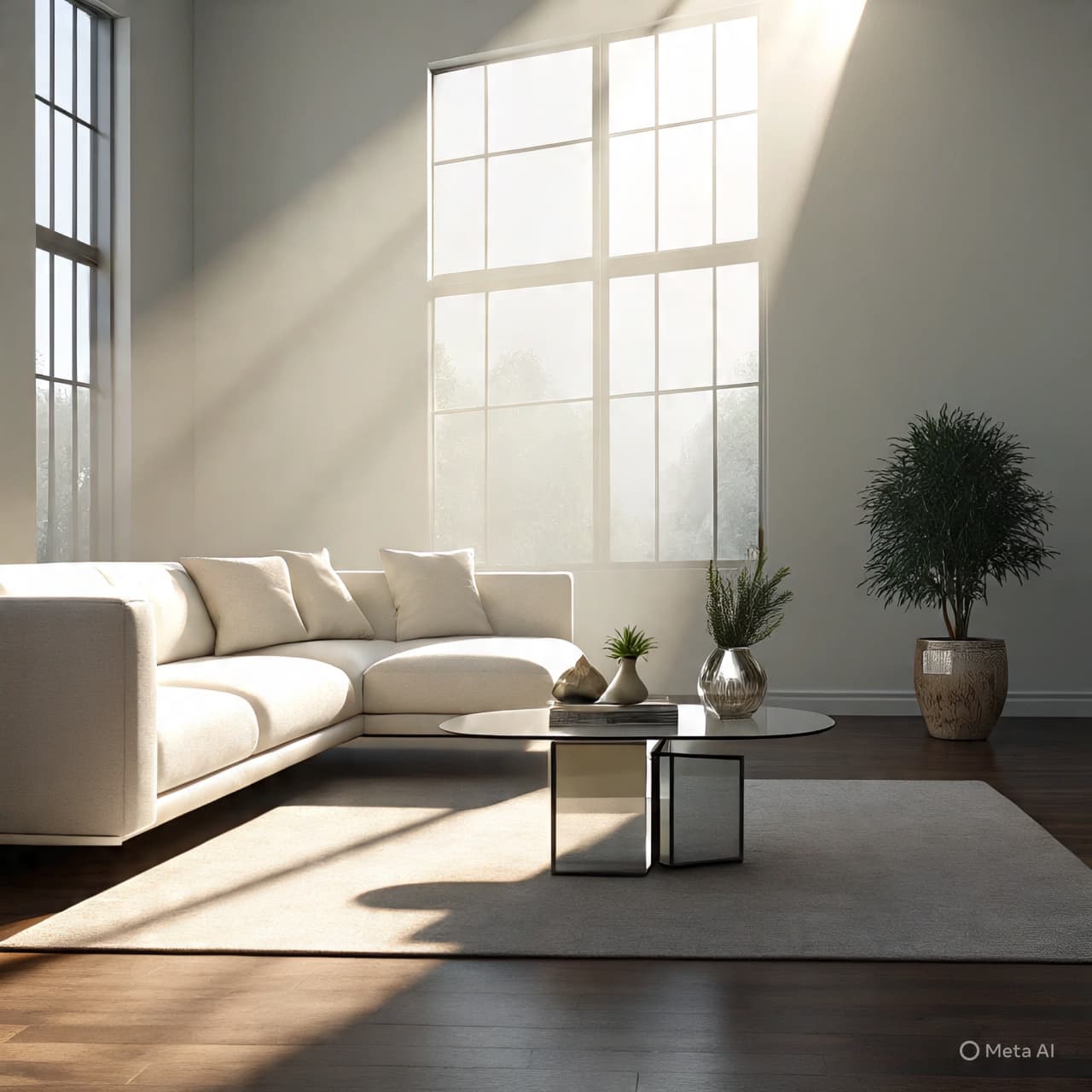
There are rooms we return to each day without much thought — bedrooms that cradle our sleep, kitchens that hold the scent of morning coffee, living spaces where the quiet rhythms of life unfold. We close the doors, adjust the curtains, and trust the air inside to be as gentle as the walls that surround us. Yet air, though invisible, is never still. It carries whispers of the outdoors, traces of what we cook, clean, burn, and breathe. And now, scientists suggest it may also carry something more subtle: a quiet influence on the mind.
A new study examining indoor air quality has found associations between polluted indoor environments and rising levels of anxiety among occupants. While conversations about air pollution often focus on smog-filled cityscapes or traffic-choked highways, researchers are increasingly turning their attention inward — to the spaces where people spend nearly 90% of their time.
The study, published in the journal Environmental Health Perspectives, analyzed air samples from residential homes and measured levels of fine particulate matter (PM2.5), volatile organic compounds (VOCs), and carbon dioxide concentrations. Participants also completed standardized mental health assessments over an extended period. The findings suggest that higher exposure to indoor pollutants was linked to elevated reports of anxiety symptoms.
Researchers caution that the relationship is complex. The study does not claim that indoor air pollution directly causes anxiety in a simple, linear way. Rather, it identifies a measurable association. The human brain is exquisitely sensitive to environmental stressors. Fine particles can enter the bloodstream through the lungs, potentially influencing inflammation and neurological pathways. Meanwhile, poor ventilation can lead to higher carbon dioxide levels, which some studies associate with cognitive fatigue and restlessness.
Previous work from institutions such as the Harvard T.H. Chan School of Public Health has shown that cleaner indoor air can improve cognitive performance. This new research extends the conversation to emotional well-being. It invites consideration of how the quality of the air we inhale — quietly, constantly — might shape mood, clarity, and resilience.
Indoor air pollution does not always arrive dramatically. It can accumulate from everyday sources: gas stoves, cleaning products, scented candles, building materials, outdoor pollutants seeping through windows. In tightly sealed modern homes designed for energy efficiency, air exchange may be limited, allowing contaminants to linger. The result is not necessarily visible, but measurable.
Mental health, too, rarely shifts overnight. Anxiety often emerges gradually, influenced by genetics, stress, lifestyle, and social factors. The study’s authors emphasize that indoor air is one variable among many. Yet its significance lies in its ubiquity. Unlike external stressors, indoor air is a shared condition of daily life — one that can potentially be improved through ventilation, air filtration, and mindful material choices.
Experts unaffiliated with the study describe the findings as an important step rather than a final answer. Larger, long-term investigations are needed to confirm causation and understand biological mechanisms more clearly. Still, the emerging evidence aligns with a broader understanding that environmental health and mental health are intertwined.
The air inside our homes has often been treated as neutral — simply there, unnoticed. But as science refines its instruments and widens its lens, neutrality gives way to nuance. What we breathe indoors may be part of the quiet architecture of our emotional lives.
For now, researchers suggest practical steps grounded in common sense: improving ventilation, using high-quality air filters, minimizing indoor combustion sources, and paying attention to building materials and cleaning products. None of these measures promise instant calm. But they reflect a growing awareness that well-being is built not only from therapy sessions or mindfulness practices, but also from the environments we inhabit hour after hour.
The study adds another layer to the conversation about public health. It does not issue alarm, nor does it draw sweeping conclusions. Instead, it opens a window — figuratively and perhaps literally — onto the possibility that the air within our walls deserves the same care we give to the air beyond them.
AI Image Disclaimer
Graphics are AI-generated and intended for representation, not reality.
---
Sources
Environmental Health Perspectives The Washington Post The Guardian Scientific American Harvard T.H. Chan School of Public Health
Published by Banx Network. This article is part of the Banx decentralized media programme, powered by the BXE token on the XRP Ledger.