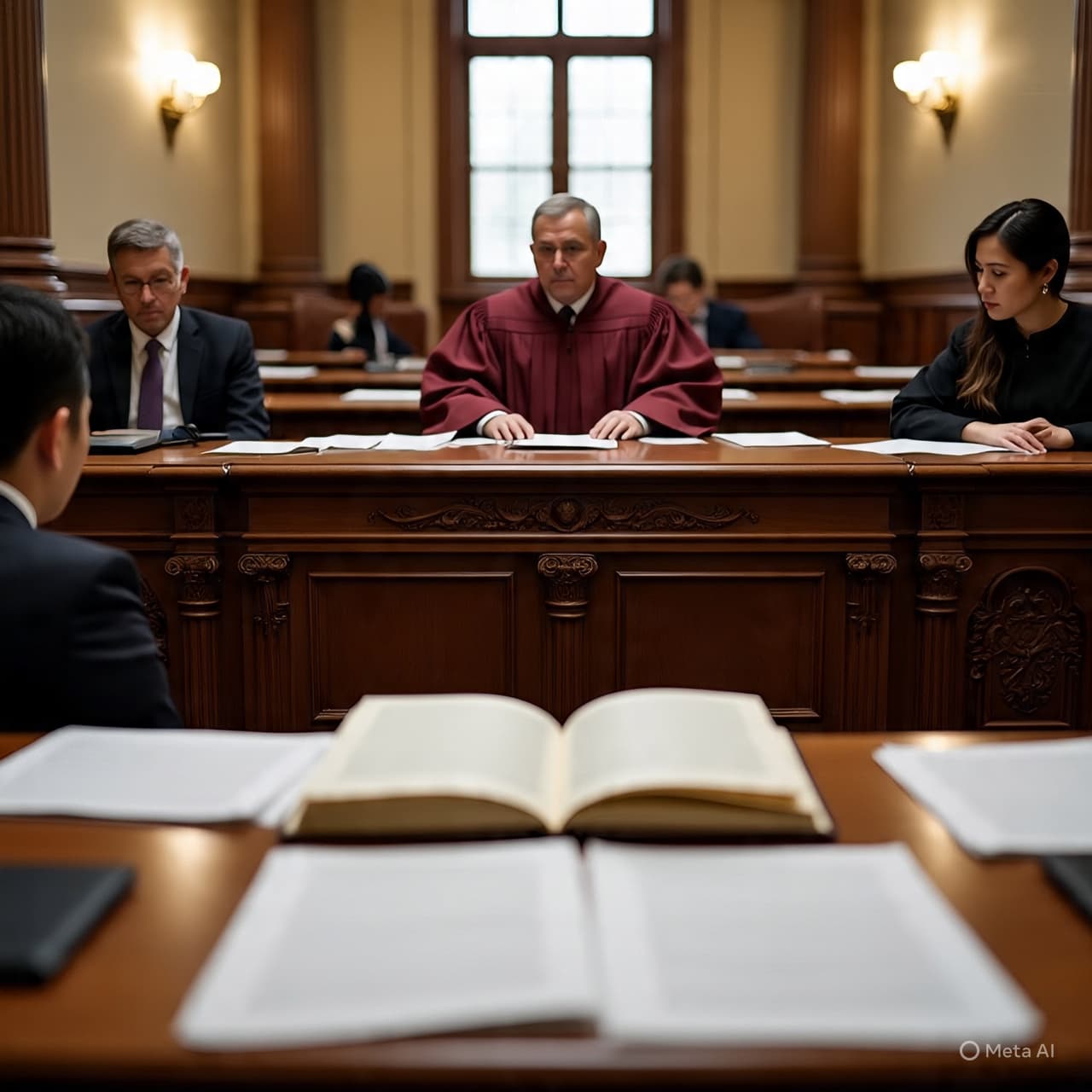
Courtrooms carry a particular stillness, one that feels different from the quiet of night or the pause between conversations. It is a deliberate kind of silence, shaped by attention rather than absence, where each word is measured and each detail allowed to settle before the next arrives.
In that space, stories emerge not all at once, but in fragments—assembled slowly through testimony, documents, and the careful framing of events. What may have once existed in the background of ordinary life is brought forward, examined under the steady light of procedure.
A case now before the court centers on a man accused of conspiring to recruit women to work as sex workers for a prostitution syndicate. Prosecutors allege that his role was not incidental, but part of a broader arrangement designed to sustain an organized operation. The charge rests on the idea of coordination—of actions taken in concert with others, moving toward a shared purpose.
According to court proceedings, the alleged activities involved sourcing individuals and facilitating their involvement in the syndicate’s operations. The prosecution’s case suggests that such efforts were deliberate, structured, and ongoing over a period of time. The defense, in turn, is expected to challenge both the interpretation of these actions and the extent of the accused’s involvement.
As the trial unfolds, the details are being examined within the framework of the law, where intent, knowledge, and participation must be carefully established. Witness accounts and evidentiary records form the basis of this process, each contributing to a larger picture that is still, for now, incomplete.
Cases of this nature often draw attention not only for the allegations themselves, but for what they reveal about systems that operate at the margins—networks that rely on discretion, movement, and coordination. Yet in the courtroom, the focus narrows. It is no longer the abstract idea of a syndicate, but the specific actions of an individual that are placed under scrutiny.
There is, in such proceedings, a certain patience. The law moves deliberately, allowing space for each argument to be heard, for each claim to be tested. What lies outside—assumptions, speculation, broader narratives—remains at a distance, while the court attends to what can be demonstrated and what can be proven.
A man is currently on trial for allegedly conspiring to recruit women to work as sex workers for a prostitution syndicate. Prosecutors say he played a role in facilitating the operation, while the defense disputes the extent of his involvement. The trial is ongoing, and no verdict has been reached.
AI Image Disclaimer
Visuals are AI-generated and serve as conceptual representations.
Sources The Straits Times Channel NewsAsia TODAY AsiaOne Singapore Judiciary
Published by Banx Network. This article is part of the Banx decentralized media programme, powered by the BXE token on the XRP Ledger.