
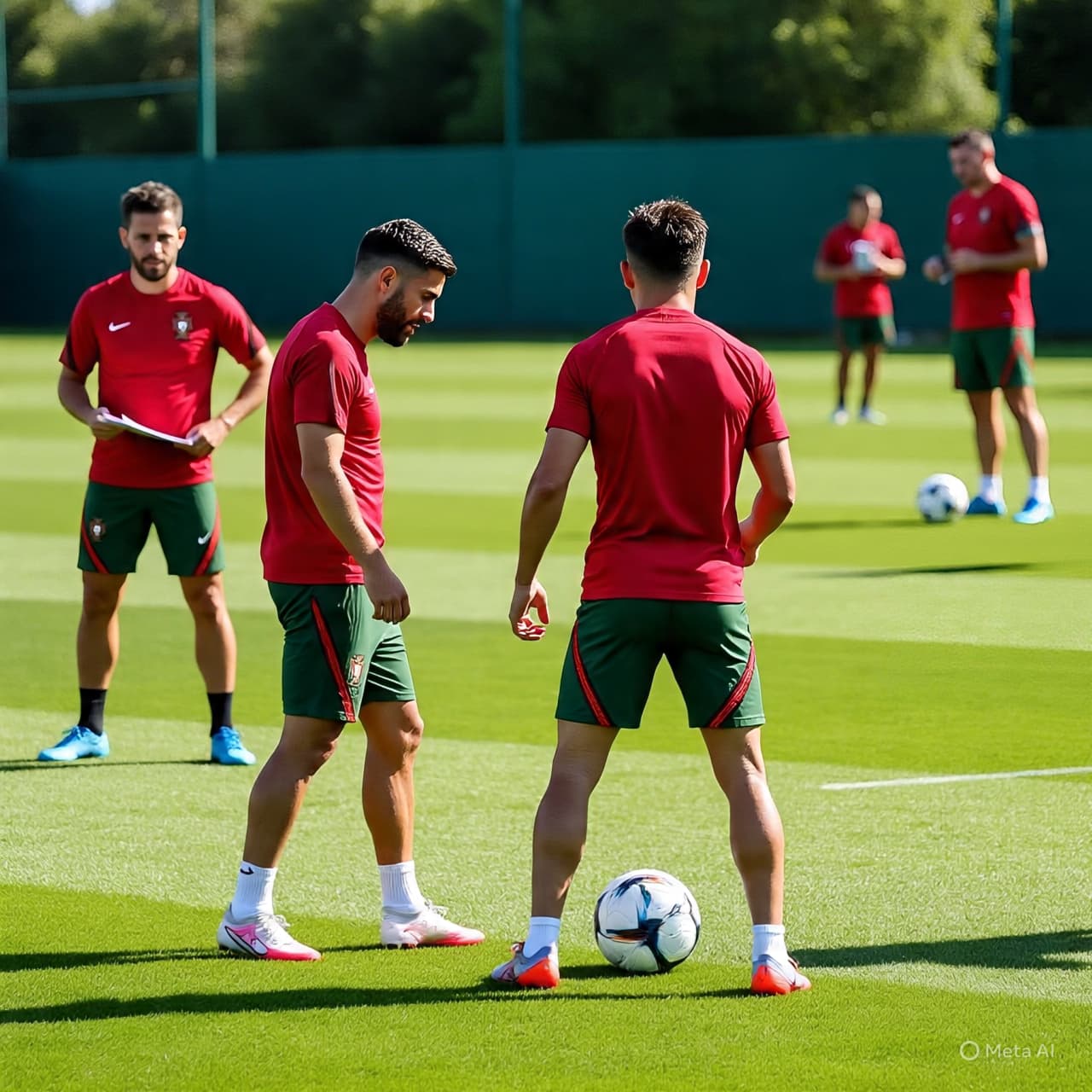
Key Highlights
- Portugal is in a crucial preparation phase ahead of the 2026 World Cup.
- Upcoming friendly matches will test team chemistry and strategy.
- The focus is on building a cohesive structure beyond individual talent.
As the world of football gears up for the 2026 World Cup, Portugal finds itself at a pivotal moment in its journey. The team is currently in a preparatory phase that emphasizes refinement over spectacle. This period is characterized by friendly matches that serve as essential rehearsals, allowing the squad to test ideas and build chemistry without the pressure of competitive stakes.
Friendly matches, often seen as mere exhibitions, are vital for teams like Portugal. These games provide a platform for experimentation, where coaches can try out different formations and players can rotate through various roles. For Portugal, these upcoming fixtures are not just about the scoreline; they are opportunities to discover combinations and develop a cohesive playing style. The team is blending experienced players with emerging talent, aiming to create a balanced squad that can adapt to different opponents.
Under the guidance of their coach, Portugal is focusing on fluidity and control in their gameplay. However, achieving this requires time and practice, which is why these friendly matches are so important. They allow players to understand each other's rhythms and movements, fostering a sense of unity on the pitch. The emphasis is shifting from individual brilliance to a more collective approach, which is crucial for success in high-stakes tournaments.
Reports indicate that Portugal is planning a series of test matches against a variety of opponents. These matches are designed to challenge different aspects of their game, including defensive resilience and attacking creativity. The goal is to arrive at the World Cup not just with a roster of talented players, but with a clear and cohesive strategy that can withstand the rigors of the tournament.
The expanded format of the 2026 World Cup adds another layer of complexity to Portugal's preparations. With more teams participating, the margin for error is both wider and more intricate. Teams must not only aim to win but also maintain consistent performance throughout the tournament. For Portugal, this means that every friendly match carries significant weight, as it is in these games that the subtle details of their play will be honed.
There is a certain poetry to this preparatory phase. It exists away from the limelight, where results may not be recorded in history but are nonetheless crucial for shaping the future. This is a time for exploration and adjustment, where the team can envision different versions of itself before the world begins to watch.
As Portugal continues its journey toward the 2026 World Cup, the friendly matches will serve as critical stepping stones. Each game will provide insights and lessons, contributing to the foundation of what the team aspires to become. In the end, preparation is often a quiet process, shaping outcomes long before they are realized on the grand stage of international football.
Published by Banx Network. This article is part of the Banx decentralized media programme, powered by the BXE token on the XRP Ledger.



