Long before a telescope lifts its mirrors toward the sky, discovery begins in quieter places. It begins in conference rooms and virtual meetings, in diagrams drawn across digital whiteboards, in conversations where scientists speak not yet of observations but of possibilities.
Every great observatory, in truth, begins as a workshop.
Such a moment is unfolding around one of NASA’s most ambitious future missions: the Habitable Worlds Observatory, a proposed next-generation space telescope designed to search for Earth-like planets and signs of life beyond the solar system. Before any instrument is built or launched, researchers must first imagine the tools capable of revealing such delicate signals in the light of distant stars.
To begin that process, NASA has scheduled a pre-proposal workshop for the Habitable Worlds Observatory (HWO) Instrument Concept Studies solicitation, inviting scientists, engineers, and institutions to explore how the observatory’s future instruments might take shape.
These early workshops serve a quiet but essential role in the life of a mission. They bring together the community that will eventually build, operate, and use the telescope. Participants discuss technical challenges, possible instrument architectures, and the scientific questions those instruments might answer—from detecting the faint atmospheres of distant exoplanets to observing galaxies formed in the early universe.
The Habitable Worlds Observatory itself represents a long horizon for astronomy. Recommended as a top priority in the Astro2020 Decadal Survey, the telescope is envisioned as a flagship mission capable of directly imaging Earth-like planets around nearby stars and analyzing their atmospheres for chemical signs that might hint at biological activity.
Achieving that ambition requires instruments of extraordinary sensitivity. Coronagraphs capable of blocking a star’s overwhelming glare must be paired with spectrographs able to separate faint planetary light into delicate spectral fingerprints. Precision detectors must measure tiny variations in brightness and position across unimaginable distances. In many ways, the instruments themselves are the true explorers, translating ancient starlight into information that scientists on Earth can understand.
The upcoming solicitation for Instrument Concept Studies aims to encourage teams across universities, research institutes, and industry to propose early designs for these technologies. These studies will explore how potential instruments might function, what technologies they would require, and how they could integrate with the observatory’s broader architecture.
NASA’s Habitable Worlds Observatory Technology Maturation Project Office is overseeing this phase of planning, working closely with the astronomical community to refine both the mission’s science goals and its technical pathways. The effort includes collaboration through a Community Science and Instrument Team, intended to help define the observatory’s scientific priorities and instrument capabilities.
In many respects, the pre-proposal workshop represents the first step in a long process. Instrument concepts developed during these studies may later evolve into full proposals, undergo competitive review, and eventually become the hardware that flies aboard the telescope itself.
For now, however, the work remains largely conceptual. Engineers sketch optical paths, scientists debate measurement strategies, and mission planners consider how each instrument might fit into the delicate choreography of a space observatory.
The Habitable Worlds Observatory remains years from launch. Yet within workshops like this one, the earliest outlines of its scientific vision are already forming.
NASA announced the pre-proposal workshop as part of preparations for the HWO Instrument Concept Studies solicitation, which will invite research teams to develop early designs for instruments that could eventually fly aboard the future flagship telescope. The workshop is intended to guide potential proposers and outline the goals, technical expectations, and evaluation framework for the upcoming study program.
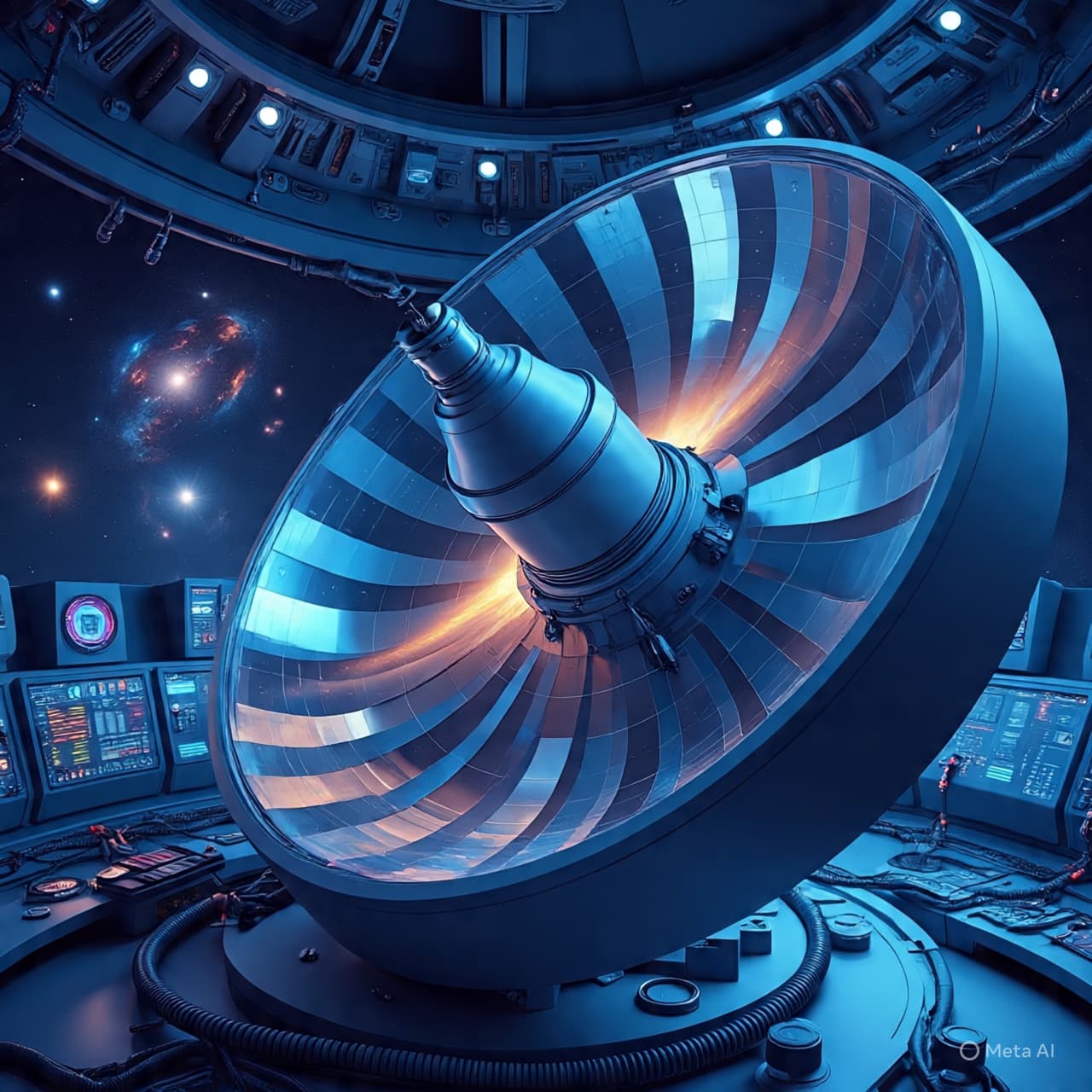
AI Image Disclaimer Images in this article are AI-generated visual interpretations and not actual photographs.
Sources
NASA NASA Science Mission Directorate NASA Goddard Space Flight Center Proceedings of the National Academy of Sciences Astro2020 Decadal Survey
Published by Banx Network. This article is part of the Banx decentralized media programme, powered by the BXE token on the XRP Ledger.