The question of when animals first appeared on Earth is, in a sense, a question about the limits of memory. The fossil record is not a continuous book but a collection of scattered pages, some torn, some missing, some preserved only as impressions in stone. For decades, the earliest clear animal fossils have dated to around 574 million years ago, during the Ediacaran period, when soft-bodied creatures left their faint signatures in ancient seabeds. But a new study published in Science Advances suggests that the first animals may have emerged much earlier—perhaps between 800 million and 700 million years ago, deep in the Neoproterozoic era .
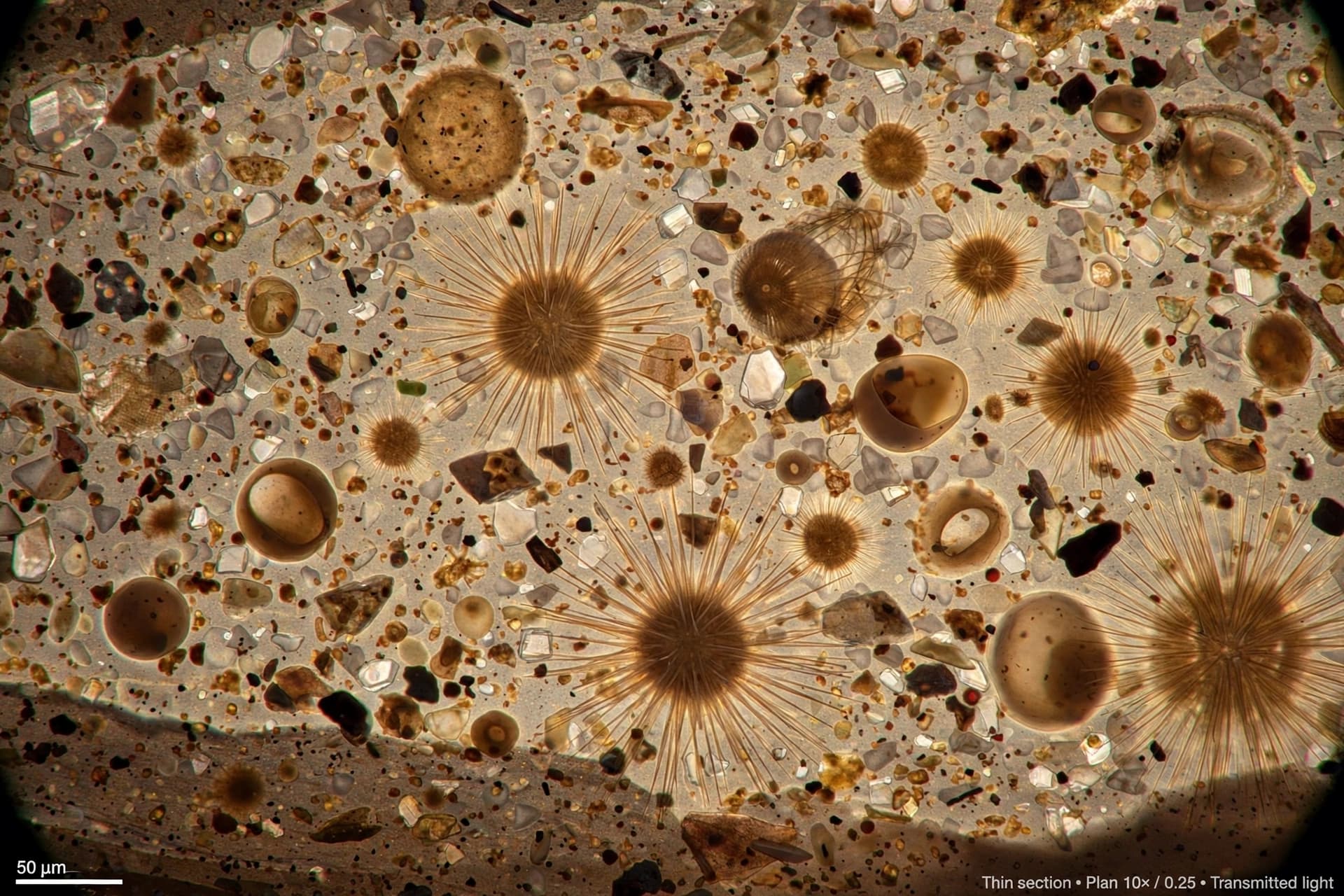
The argument rests not on new fossils but on a careful reexamination of what absence means in the fossil record. A team including Yale paleontologist Derek Briggs and Oxford's Ross Anderson analyzed exceptionally preserved microfossil deposits from around the world, including the Kheseen Biota in Mongolia, which dates to about 550 million years ago . At that time, animals definitively existed. Yet the Kheseen deposits contain no animal fossils. If a site can preserve microscopic organisms with exquisite detail and still contain no animals, the researchers reasoned, then the absence of animals at older sites—such as the 590-million-year-old Weng'an Biota in China—cannot be taken as proof that animals did not yet exist .
This is a subtle but consequential shift in logic. The fossil record is not a complete census. It is a sampling, shaped by conditions of preservation, environment, and chance. Soft-bodied organisms, in particular, are rarely fossilized. The earliest animals may have been small, simple, and entirely without hard parts, living in places where fossilization was unlikely or impossible .
To estimate when animals might actually have originated, the researchers turned to molecular clock analysis, a method that compares genetic differences between living species and uses known fossil dates as calibration points to estimate when their ancestors diverged. By anchoring their analysis to older fossil deposits—sites in Australia, Norway, and Arizona dating to between 850 and 730 million years ago that were capable of preserving animals but contain none—they arrived at a new window for animal origins: 800 to 700 million years ago .
If correct, this would place the first animals before or during the Cryogenian period, when Earth experienced some of its most severe glaciations, events sometimes called "Snowball Earth." The earliest animals would have been tiny, soft-bodied creatures, perhaps resembling modern sponges, eking out an existence in a world of extreme climate shifts . Chemical biomarkers in ancient rocks have already hinted at the presence of sponges around 650 million years ago, offering tentative support for this earlier timeline .
The study does not claim certainty. It offers a recalibration, a reminder that the fossil record is an incomplete archive and that the origins of animal life may lie in a chapter we have not yet found. As Briggs noted, future discoveries are needed to refine our knowledge of the nature and timing of the earliest animal life . For now, the clock has been moved back, and the story of how we came to be has grown a little longer.
---
AI Image Disclaimer: The illustrations in this article are AI-generated interpretations and do not represent actual fossil specimens.
Sources: Science Advances, Yale University, University of California Riverside / Live Science, BTA, TVN Chile
Published by Banx Network. This article is part of the Banx decentralized media programme, powered by the BXE token on the XRP Ledger.