There are turning points that do not announce themselves when they happen. They pass quietly, almost unnoticed, only becoming visible in hindsight—when events gather around them and give them shape.
In the case of New Zealand’s oil consumption, that turning point appears to have come just before the world shifted.
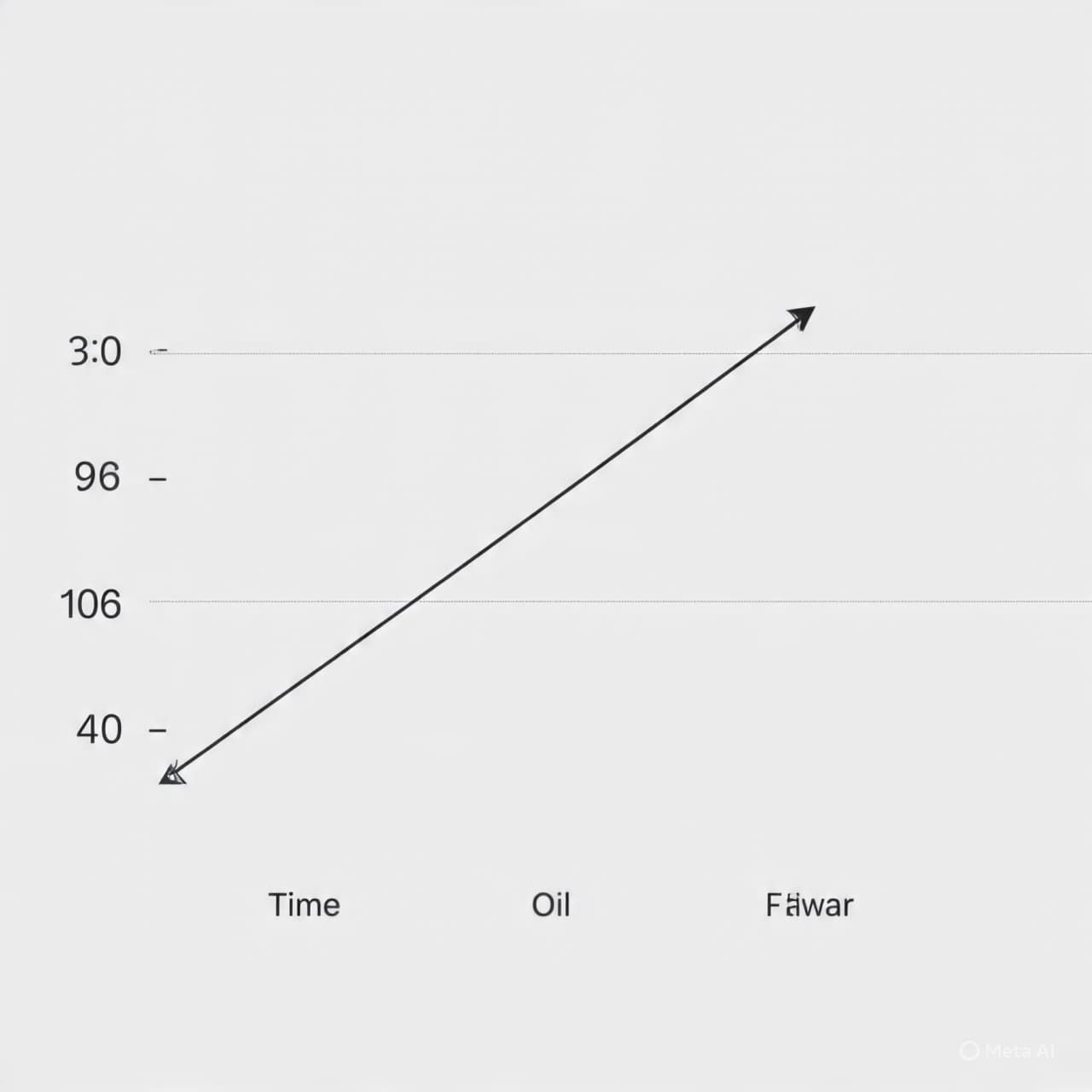
Data suggests that national oil use had already reached its peak prior to the outbreak of conflict involving Iran, a moment that would soon send global energy markets into turbulence. The timing carries a certain weight: a crest reached not in response to crisis, but before it—formed by forces already in motion.
Those forces have been building over time. Changes in transport habits, gradual shifts toward more efficient vehicles, and the early influence of electrification have all contributed to a slowing in demand growth. At the same time, economic pressures—rising costs, cautious spending, and adjustments in daily behavior—have subtly reshaped how fuel is used.
Then came the external shock.
The war involving Iran disrupted global oil supply, particularly through the Strait of Hormuz, a critical passage for energy exports. Prices surged rapidly, with crude rising sharply and petrol costs following in close succession. The impact reached New Zealand quickly, where fuel prices climbed and broader inflationary pressures began to build.
Yet what is notable is not only the scale of the shock, but the condition of demand before it arrived. Consumption had already begun to level off, suggesting that the relationship between energy use and economic activity was evolving even without the immediate pressure of global disruption.
This distinction matters in how the present moment is understood. A decline driven solely by crisis carries a different meaning than one preceded by structural change. In the former, behavior shifts reactively; in the latter, they reflect a longer transition already underway.
The current environment blends both.
On one hand, higher prices and uncertainty encourage households and businesses to reduce fuel use, reinforcing the downward movement in demand. On the other, the underlying trends—efficiency, electrification, and changing patterns of mobility—continue to shape consumption in ways that extend beyond the immediate crisis.
For policymakers and analysts, this convergence creates a more complex picture. It becomes harder to separate what is temporary from what may endure, to distinguish between responses to short-term disruption and indicators of long-term change.
Meanwhile, the global context remains unsettled. The International Energy Agency has described the disruption linked to the Iran conflict as one of the largest in history, prompting coordinated releases of strategic reserves in an effort to stabilize markets. The effects continue to ripple outward, influencing prices, supply chains, and economic outlooks far beyond the region itself.
In New Zealand, the question is not only how consumption responds now, but what the earlier peak signifies. Whether it marks the beginning of a sustained shift, or a temporary plateau shaped by circumstance, will become clearer only over time.
For now, the sequence remains striking: a peak reached quietly, followed by a shock that made it visible.
New Zealand’s oil consumption appears to have peaked before the Iran conflict began, with subsequent global disruptions pushing prices higher and influencing demand patterns across the economy.
AI Image Disclaimer
Illustrations were created using AI tools and are not real photographs.
Sources
RNZ 1News Reuters The Guardian International Energy Agency
Published by Banx Network. This article is part of the Banx decentralized media programme, powered by the BXE token on the XRP Ledger.