
Key Highlights
- Legal Action:A federal judge has temporarily halted the construction of a proposed ballroom at the White House.
- Preservation Concerns:The ruling raises questions about adherence to preservation laws governing historic federal properties.
- Future Uncertain:Further hearings are expected, leaving the project's future in doubt.
The White House, a symbol of American history and governance, is currently at the center of a legal dispute regarding a proposed new ballroom. This expansion, envisioned during the Trump administration, aims to accommodate larger state functions that existing rooms cannot support. However, the project has faced significant pushback from preservationists and legal challenges that question its compliance with federal regulations governing historic sites.
Recently, a federal judge issued a temporary injunction against the construction, citing concerns that the necessary preservation laws may not have been fully observed. This ruling has effectively paused the project before its foundations could be laid, allowing for a period of reflection and review. The judge's decision underscores the importance of ensuring that any alterations to the White House are carefully considered, given its status as a protected landmark.
Supporters of the ballroom argue that it is a practical solution to logistical issues that have plagued state dinners, often requiring the use of temporary structures. They contend that the new space would enhance the White House's ability to host significant events. However, critics warn that such an addition could disrupt the historical integrity of the residence, which has stood as a testament to American democracy for over two centuries.
The legal challenges surrounding the ballroom project highlight the ongoing tension between functionality and preservation. While modern governance requires adaptable spaces for diplomacy and statecraft, the White House's architectural character is not easily altered. Each proposed change must navigate the complex interplay of engineering constraints and the historical significance of the building.
As the legal proceedings unfold, the future of the proposed ballroom remains uncertain. The court's intervention has prompted a pause, allowing for a more thorough examination of the implications of such a significant addition. The outcome of upcoming hearings will be crucial in determining whether the project can move forward or if it will be permanently shelved.
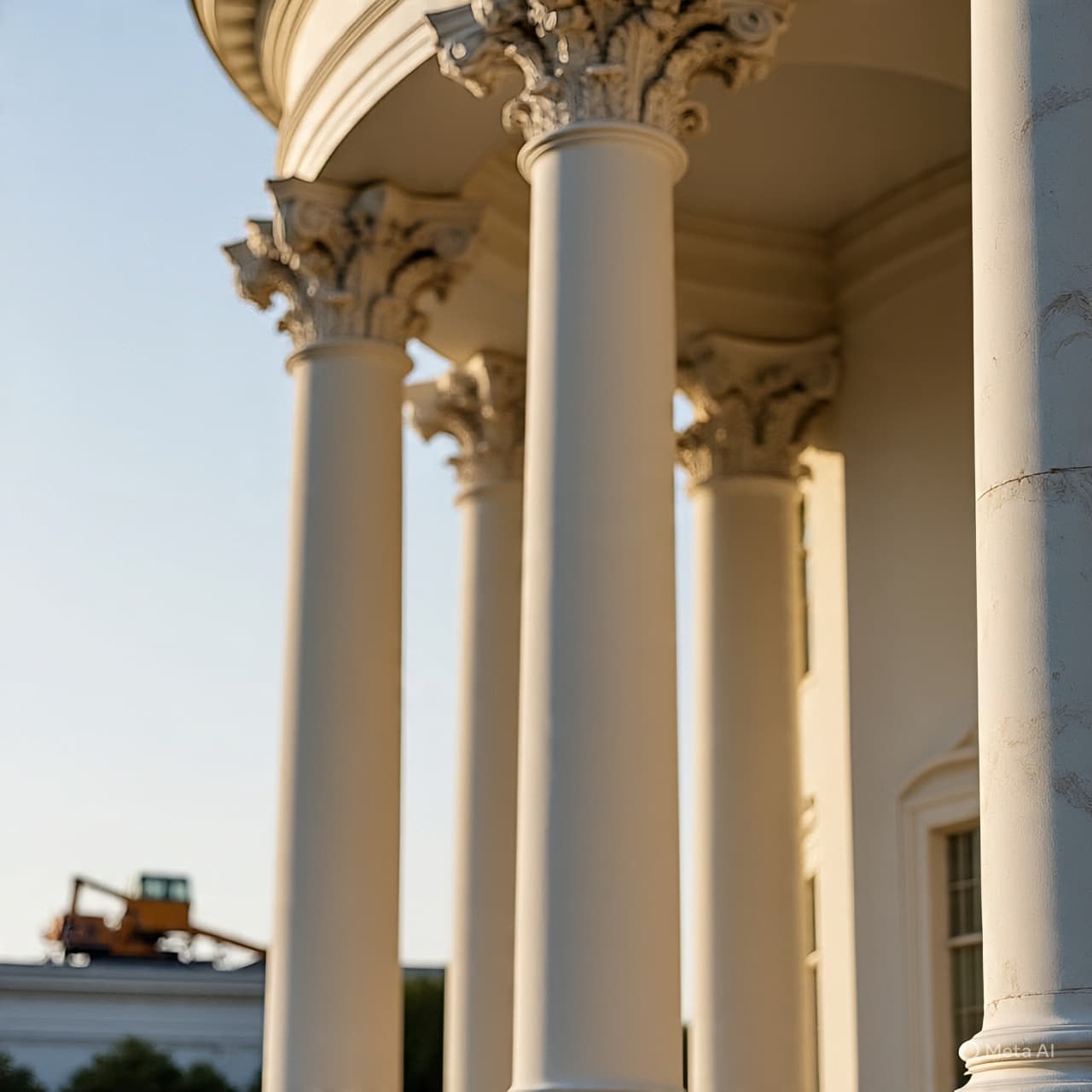
For now, the White House stands unchanged, its silhouette a reminder of the past and its rooms a repository of history. The ongoing discussions surrounding the ballroom serve as a reminder that any attempt to reshape such an iconic structure must first engage with its storied legacy and the memories it holds.
The pause in construction reflects a broader principle: that even in the face of modern demands, the past must be honored and preserved. As the legal process continues, the White House remains a symbol of continuity, its story evolving yet steadfast amidst the complexities of governance and history.
Published by Banx Network. This article is part of the Banx decentralized media programme, powered by the BXE token on the XRP Ledger.



