
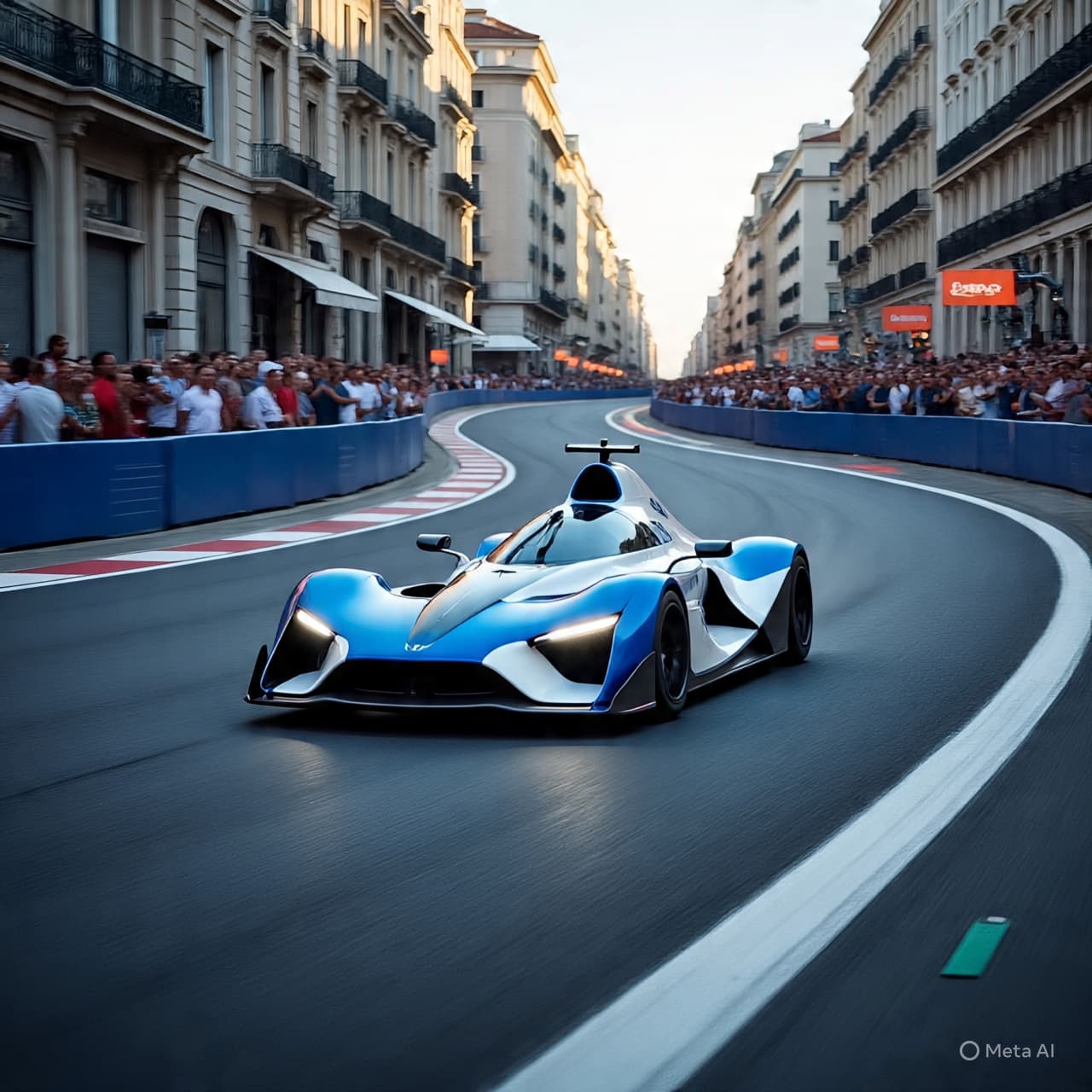
Key Highlights
- Event:Free Practice 2 at the 2026 CUPRA Raval Madrid E-Prix.
- Focus:Insights into team strategies and driver performances.
- Importance:Sets the stage for qualifying and the race.
The world of motorsport often reveals its most telling moments not at the finish line, but in the quiet intensity of practice sessions. These preliminary laps, filled with subtle adjustments and strategic calculations, provide a unique narrative that transcends mere competition. At the 2026 CUPRA Raval Madrid E-Prix, Free Practice 2 (FP2) showcased this dynamic, as drivers navigated the transformed streets of Madrid, honing their skills in preparation for the race ahead.
During FP2, the atmosphere was charged with anticipation as teams sought to refine their setups in response to the evolving track conditions. Unlike the unpredictability of the initial practice session, FP2 often serves as a clearer indicator of which teams have found their rhythm and which are still grappling with balance issues. Drivers pushed their limits, carefully navigating the fine line between control and risk, especially on a street circuit where every corner demands precision.
Energy management emerged as a critical theme throughout the session. In Formula E, where every lap is a delicate balance of speed and conservation, drivers had to calculate their approach meticulously. The technical layout of the Madrid circuit, with its tight corners and demanding sections, required not only speed but also strategic foresight. This interplay of strategy and instinct created a racing environment that felt almost conversational, as drivers communicated with their machines in pursuit of optimal performance.
As the session progressed, several teams began to establish themselves at the top of the timesheets, signaling their readiness for the upcoming qualifying rounds. While the exact order may shift as the competition unfolds, FP2 provided valuable insights into the potential narratives of the race. Some drivers exhibited remarkable consistency, stringing together laps that hinted at both pace and control, while others showcased bursts of speed that, with further refinement, could significantly alter expectations.
The presence of CUPRA, prominently featured through the Raval branding, added another layer of significance to the event. This partnership highlights the growing intersection of electric mobility and high-performance racing, illustrating how technology and sustainability are becoming integral to the motorsport landscape. The Madrid E-Prix, therefore, transcends the boundaries of a traditional race, evolving into a platform that showcases the future of racing in an environmentally conscious world.
However, as with all practice sessions, FP2 remains an incomplete narrative. It offers glimpses into potential outcomes but does not provide definitive conclusions. The true test lies ahead, where qualifying sessions will demand precision and confidence, and the race itself will require endurance, timing, and perhaps a touch of unpredictability.
The results from FP2 have set an initial competitive tone for Round 6 of the 2026 Formula E season. With qualifying on the horizon, teams will look to leverage the data gathered during practice to enhance their performance. Ultimately, the outcomes of these early indicators will play a crucial role in shaping the championship momentum as the season progresses.
Published by Banx Network. This article is part of the Banx decentralized media programme, powered by the BXE token on the XRP Ledger.



