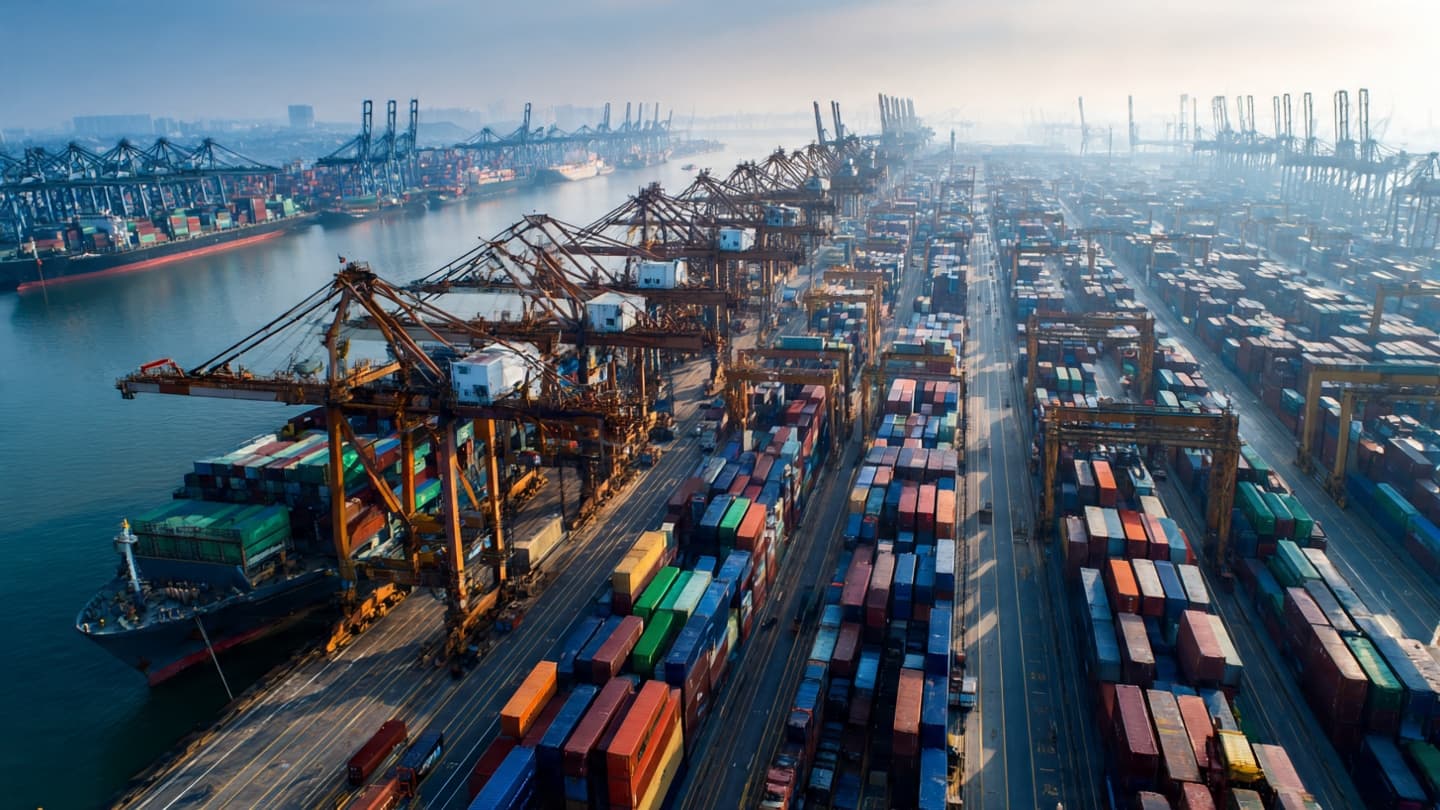
Long before economic figures appear on official calendars, markets often begin listening to quieter signals. A crowded port, a busy shipping lane, and the steady movement of containers can become early reflections of broader expectations.
China's foreign trade activity has once again become a focal point for investors and businesses ahead of the release of new economic data. Export and import performance are widely viewed as important indicators of industrial demand and global consumption.
As one of the world's largest trading nations, China's trade figures frequently influence commodity markets, manufacturing outlooks, and investor sentiment across Asia. Changes in export demand can affect supply chains stretching far beyond its borders.
Technology products, industrial goods, machinery, and manufactured components continue to play significant roles in China's external trade. Market participants are closely monitoring whether international demand remains resilient amid changing economic conditions.
Economists also view trade data as a broader measure of business confidence. Strong activity can indicate healthy manufacturing output, while weaker numbers may suggest slower demand in major markets.
Financial institutions and companies throughout the region are expected to analyze the upcoming figures carefully as they assess investment decisions and economic forecasts for the coming months.
For now, attention remains fixed on the approaching release, with China's trade performance continuing to serve as an important reference point for Asia's economic landscape.
AI Image Disclaimer Visuals are AI-generated and serve as conceptual representations rather than real photographs.
Sources The Wall Street Journal Reuters General Administration of Customs of China Bloomberg Nikkei Asia
Published by Banx Network. This article is part of the Banx decentralized media programme, powered by the BXE token on the XRP Ledger.