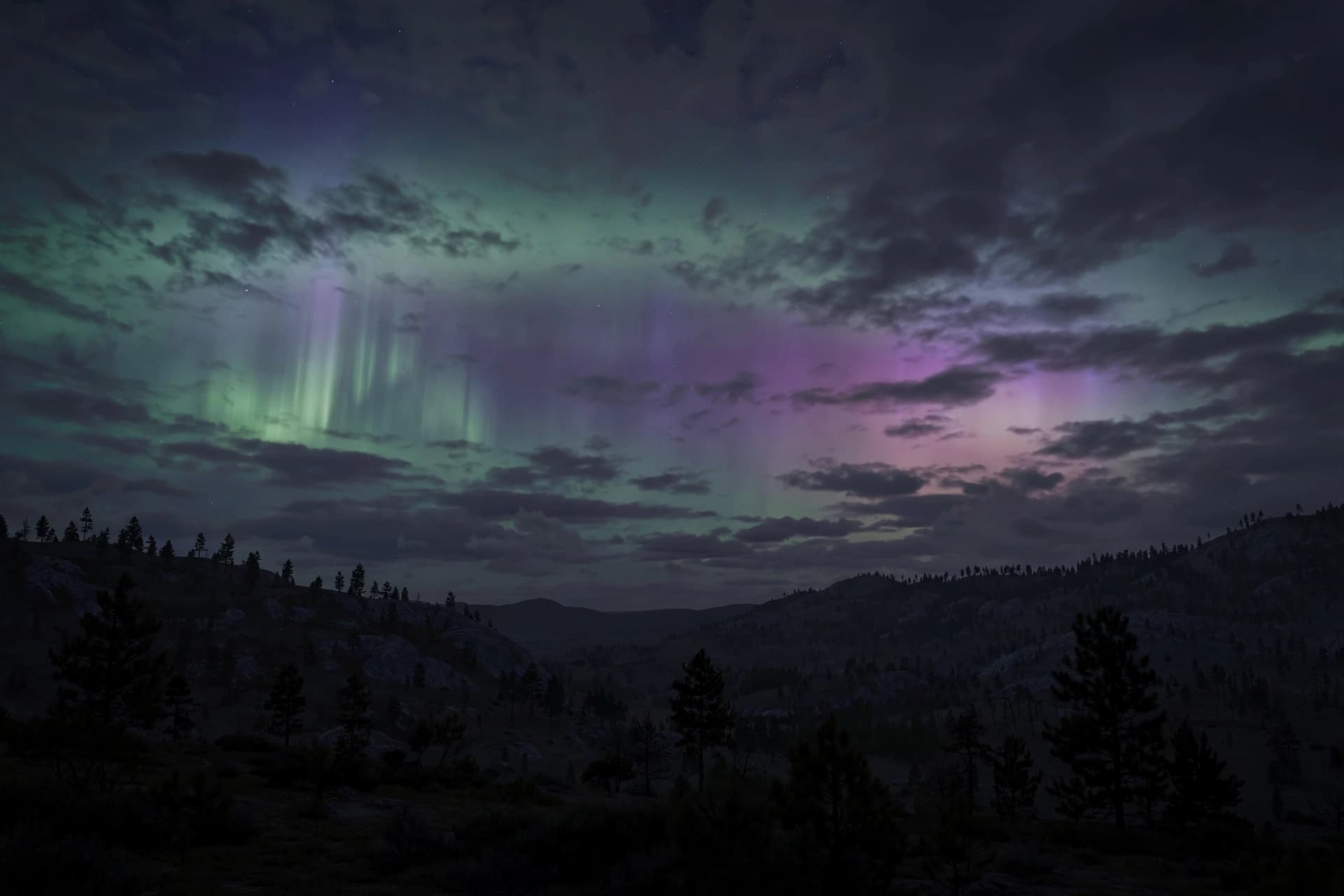
There is a particular stillness in the desert nights of northern Chile, where telescopes turn their mirrors toward a sky untroubled by city light. In that quiet, astronomers often look not only far away, but far back — toward moments in the universe when systems like our own were still unsettled, still learning their shape. Recently, their gaze settled on something rare: a planetary system caught in its cosmic adolescence.
For the first time, scientists have closely observed a star system roughly 200 million years old — young by astronomical standards — offering an unusually clear view of how planets evolve before reaching maturity. While our own solar system is about 4.6 billion years old, this distant system remains in what researchers describe as its “teenage” phase, a period marked by turbulence, radiation, and migration.
The observations were made using the European Southern Observatory’s Very Large Telescope, whose instruments can analyze the chemical fingerprints of distant worlds. By studying subtle shifts in starlight as planets pass in front of their host star, astronomers were able to measure how radiation is actively reshaping these young planets.
What they found reads like a coming-of-age story written in physics. Intense radiation from the central star appears to be stripping away portions of the planets’ atmospheres — a process known as photoevaporation. In their early stages, many planets form enveloped in thick blankets of gas. But under sustained stellar radiation, lighter elements can be blown off into space, gradually transforming once-puffy worlds into denser, more compact bodies.
In this particular system, researchers observed evidence that at least some planets are already losing significant portions of their atmospheres. The effect not only changes their composition but can also alter their orbits. As mass is shed and gravitational balances shift, planets may migrate inward or outward, settling into new configurations that differ markedly from their original positions.
Until now, such processes were largely inferred from studying older systems and working backward through models. The 200-million-year snapshot provides a rare middle chapter — bridging the gap between chaotic formation and relative stability. It confirms that radiation plays a decisive role in sculpting planetary architecture, influencing which worlds remain gas giants and which shrink into rocky cores.
The discovery also deepens understanding of why exoplanets observed across the galaxy show such diversity. Some orbit scorchingly close to their stars, stripped nearly bare. Others retain thick atmospheres, shielded by distance or mass. Observing a system mid-transformation allows astronomers to see the mechanisms behind that variation, rather than merely cataloging its outcomes.
There is a certain poignancy in calling a star system “teenage.” The term suggests restlessness, adjustment, the shedding of what cannot last. Yet on cosmic timescales, this adolescence unfolds over millions of years, imperceptible to human senses. The planets do not flare or shatter dramatically; they change gradually, molecule by molecule, orbit by orbit.
For scientists, the significance lies not only in novelty but in timing. Catching a system at this stage is statistically unlikely. Most known exoplanetary systems are either too young and obscured by dust, or far older and already settled into equilibrium. This one, poised between those extremes, offers a fleeting window into planetary evolution in action.
As further observations refine measurements of atmospheric loss and orbital motion, the system may serve as a benchmark for theoretical models. It stands as a reminder that planetary systems, like living organisms, pass through formative periods that shape what they eventually become.
High above Earth, the young star continues to radiate, indifferent to the instruments tracking its influence. Around it, its planets endure the steady sculpting of light. And across millions of miles of space, the faint signals of their transformation arrive quietly — a message from a solar system still growing up.
Published by Banx Network. This article is part of the Banx decentralized media programme, powered by the BXE token on the XRP Ledger.