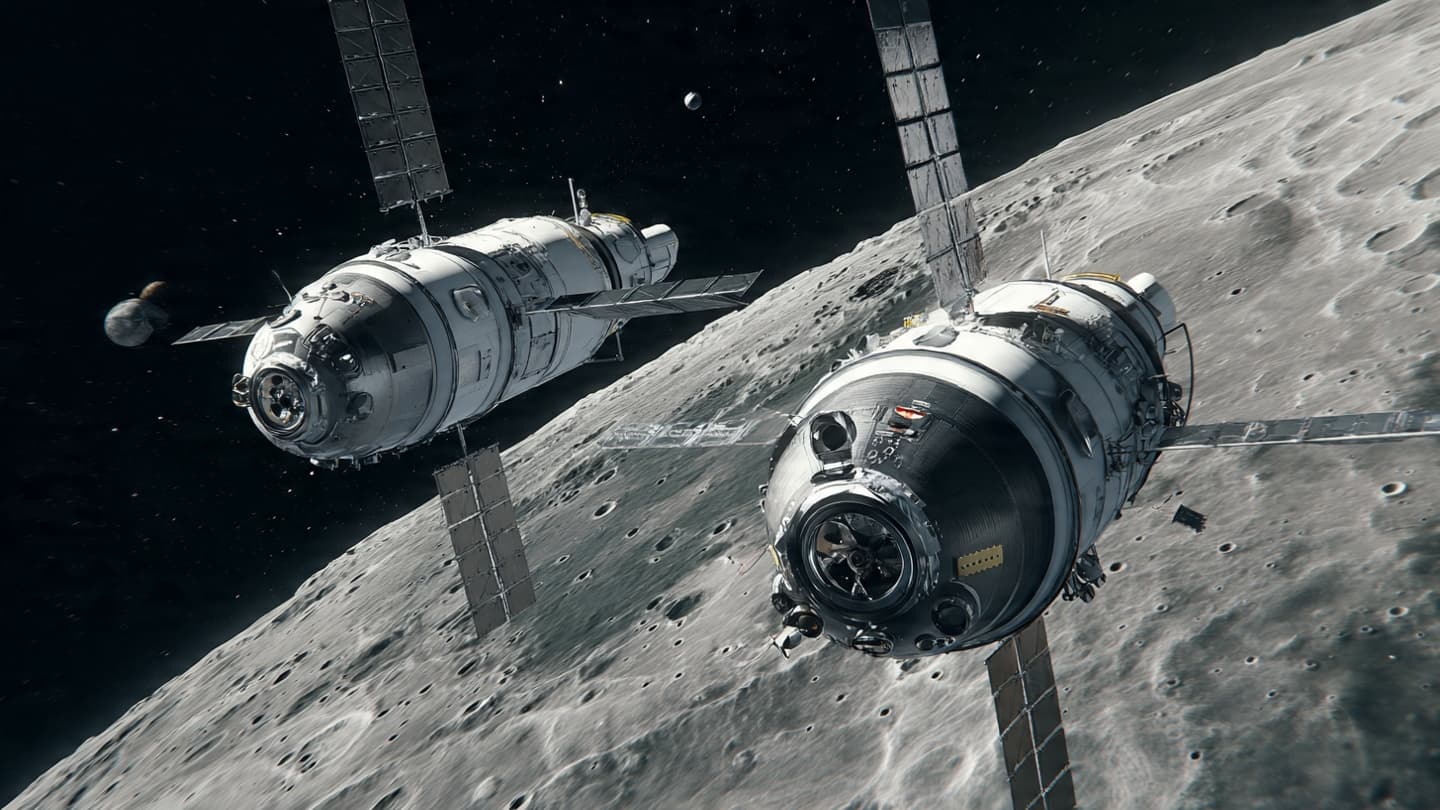
Space exploration often appears dramatic from a distance, filled with roaring engines and blazing launches that briefly turn night into day. Yet much of the work that defines success happens in quieter moments — calculations, simulations, and small mechanical movements measured with extraordinary precision. Sometimes, the future of an entire mission depends on whether two machines connect perfectly in silence.
NASA recently announced a major adjustment to its Artemis lunar exploration program by introducing an additional docking test mission before future astronaut landings on the Moon. Officials described the decision as part of a broader effort to improve mission safety and operational reliability as lunar ambitions continue expanding.
Docking procedures involve two spacecraft carefully connecting while traveling through orbit at extremely high speeds. Though the concept may sound straightforward, engineers describe it as one of the most technically demanding maneuvers in modern spaceflight. Even minor errors in alignment, timing, or communication systems can create serious risks during missions far from Earth.
The new Artemis docking test will allow NASA engineers to evaluate spacecraft systems, navigation controls, and crew procedures under realistic operational conditions. Officials believe the added mission will strengthen confidence ahead of future lunar surface expeditions planned later in the Artemis program timeline.
NASA’s renewed caution reflects lessons learned from earlier space programs. Throughout the history of human spaceflight, agencies have repeatedly adjusted schedules and designs after identifying potential weaknesses during testing phases. Engineers often argue that delays during development are preferable to emergencies during actual missions.
The Artemis program itself represents NASA’s broader strategy for returning humans to the Moon while preparing for eventual missions to Mars. Unlike the short Apollo missions of previous decades, Artemis is designed around long-term exploration, scientific research, and sustained lunar operations involving international partnerships.
Private aerospace companies also continue playing an increasingly important role in the program. Several commercial contractors are contributing spacecraft systems, lunar landing technologies, and logistics support. NASA officials say collaboration between government agencies and private industry has become essential for managing the complexity of modern exploration goals.
Scientists and mission planners emphasize that docking technology will remain critical for future deep-space operations. Missions involving lunar stations, cargo transfers, or Mars expeditions may require multiple spacecraft components to connect seamlessly in orbit before continuing their journeys farther into space.
Although some observers questioned whether the additional test could delay future lunar landings, NASA officials defended the decision as necessary preparation rather than a setback. Agency representatives stressed that reliability and astronaut safety remain more important than maintaining symbolic timelines.
Far above Earth, space remains indifferent to ambition or deadlines. Machines must perform exactly as intended in an environment where small mistakes can quickly become irreversible. Through this additional Artemis test, NASA appears to be embracing an older principle of exploration — that careful preparation is often the quiet foundation beneath historic achievements.
AI Image Disclaimer Images in this article are AI-generated illustrations, meant for concept only.
Sources Reuters NASA Associated Press Space.com CBS News
Published by Banx Network. This article is part of the Banx decentralized media programme, powered by the BXE token on the XRP Ledger.