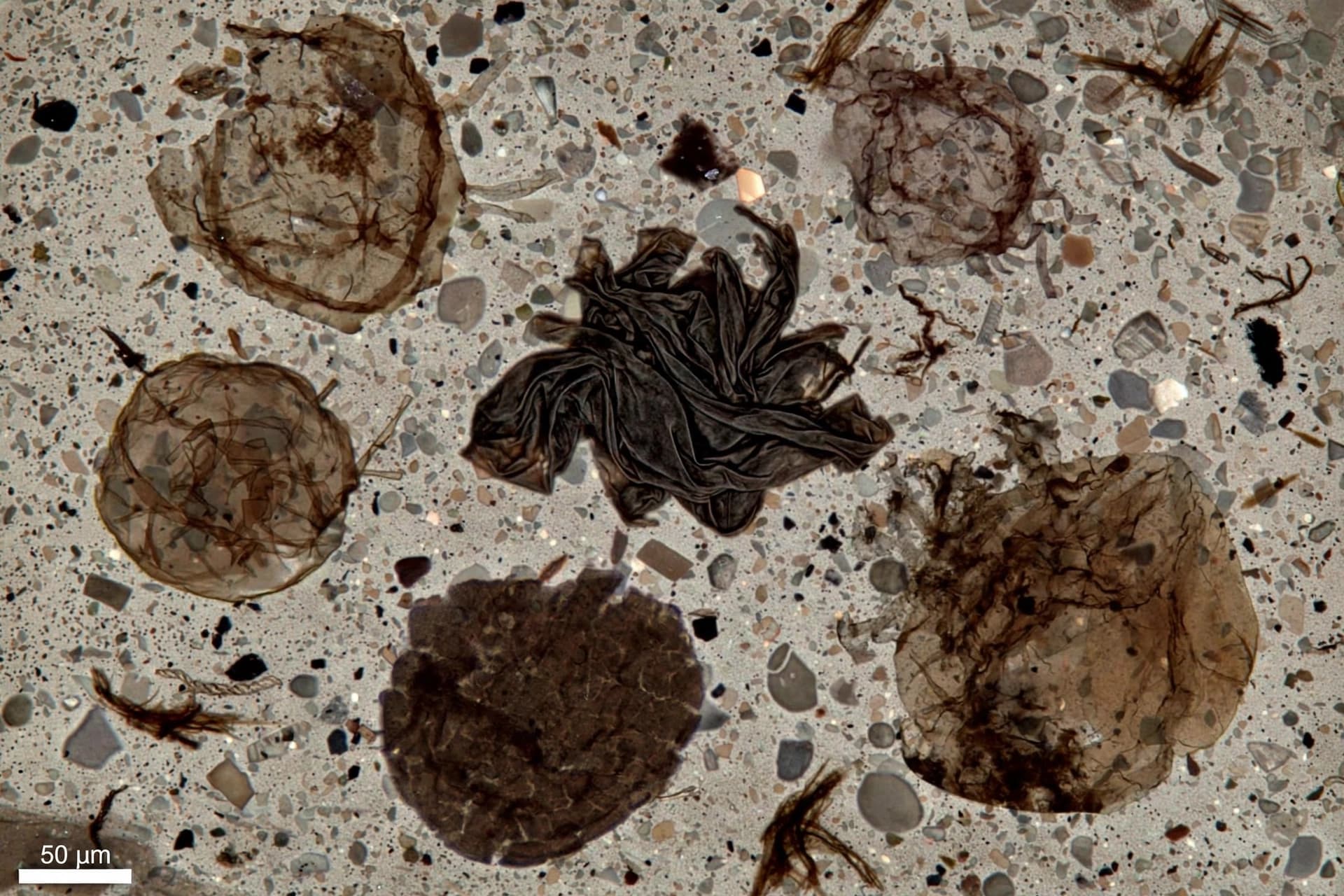
Stone is not where we expect to find evidence of gentleness. Yet pressed into ancient rock, scientists have uncovered something surprisingly delicate: fossilized bee nests, preserved across millions of years, carrying signs of behavior never documented before.
The nests were discovered embedded in sedimentary formations that once bordered warm, vegetated landscapes. At first glance, they resembled ordinary burrows—small cavities etched into hardened earth. Closer examination revealed something else entirely: repeated patterns, structural divisions, and traces of material use that suggest deliberate design rather than instinct alone.
Modern bees are known for consistency. Their nesting habits, whether in soil, wood, or wax, follow recognizable templates passed down through evolution. These fossil nests, however, break those expectations. The arrangement of chambers, spacing, and construction marks indicate a behavior no living bee species exhibits today.
Researchers believe these ancient bees were experimenting with nesting strategies, possibly adapting to environmental pressures long gone. Climate instability, competition for space, or unfamiliar predators may have driven innovation. The nests suggest flexibility—bees adjusting how they organized space, protected offspring, and managed resources.
The discovery pushes back assumptions about behavioral complexity in early insects. Bees are often framed as efficient but rigid, guided by inherited routines. These fossils suggest otherwise. They hint at learning, adaptation, and variation unfolding not just across species, but within them.
What makes the finding especially rare is preservation itself. Bee nests are fragile, easily erased by time. For them to fossilize at all requires a precise alignment of conditions—rapid burial, mineral-rich sediment, and long geological patience. That such nests also preserve behavioral clues feels almost accidental, as if the past briefly forgot to erase itself.
By studying these structures, scientists gain insight not only into bees, but into ecosystems that supported them. Pollinators shape landscapes quietly, influencing plant evolution and ecological balance. Understanding how ancient bees lived helps reconstruct worlds that existed long before humans, yet laid foundations for life today.
These fossilized nests do not reveal color, sound, or motion. But they do reveal intention. In their geometry and repetition, they show that even small creatures have histories of change and creativity. Long before observation, before records or names, bees were already experimenting—building differently, thinking differently, and leaving traces that waited millions of years to be seen.
AI Image Disclaimer Illustrations were created using AI tools and serve as conceptual representations.
Sources Smithsonian National Museum of Natural History University of Buenos Aires Proceedings of the National Academy of Sciences Journal of Paleontology
Published by Banx Network. This article is part of the Banx decentralized media programme, powered by the BXE token on the XRP Ledger.