Before bones, before shells, before eyes ever opened to the sun, life moved in quieter ways. It clung to rock and filtered water, patient and almost invisible. In the dim oceans of deep time, long before forests took root or animals roamed the land, something simple may have been the beginning of us all.
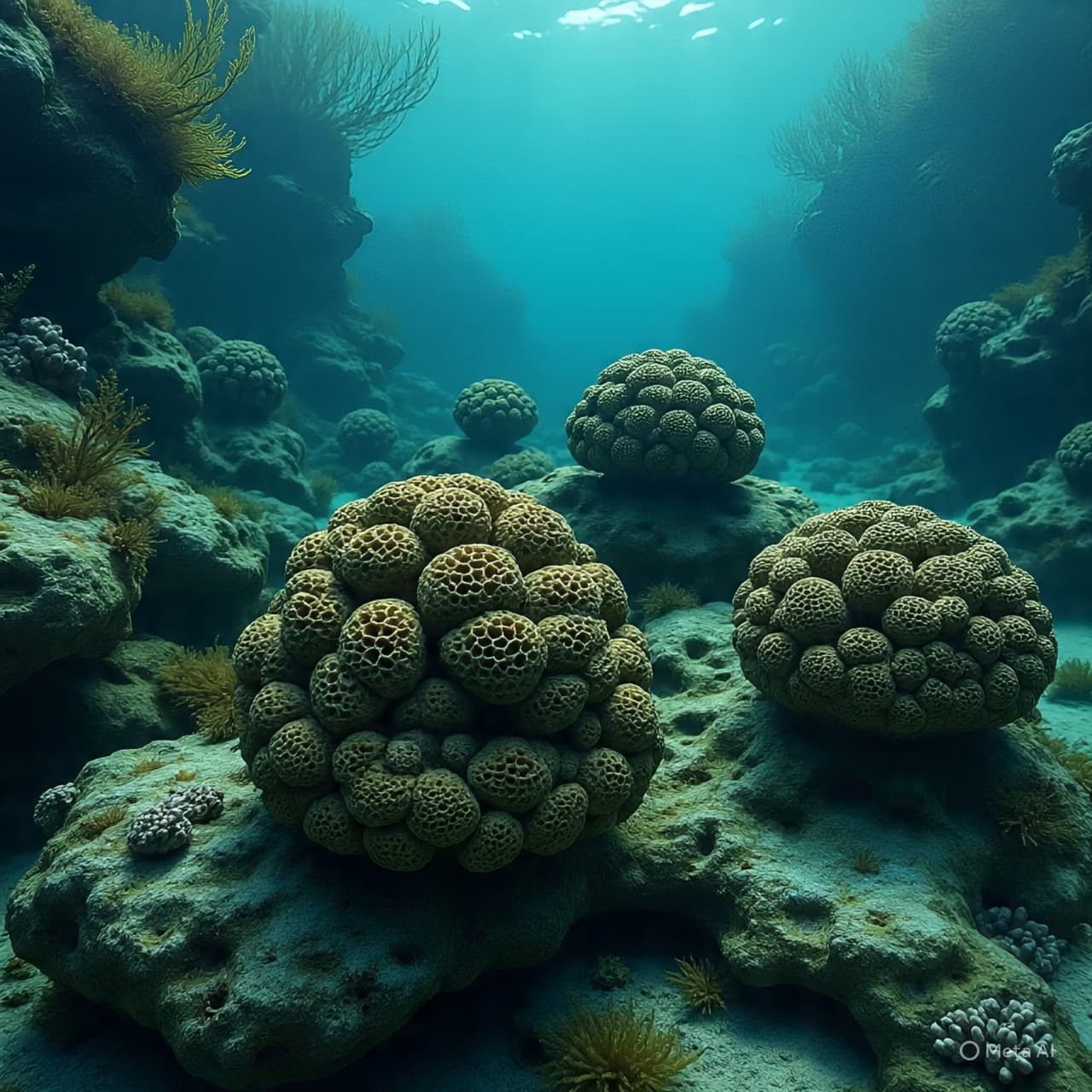
A study led by researchers at Massachusetts Institute of Technology suggests that Earth’s first animals were likely ancient sea sponges—soft-bodied, filter-feeding organisms whose descendants still inhabit today’s oceans. The findings draw upon molecular fossil evidence and genetic analysis, offering new insight into the earliest chapters of animal evolution.
For decades, scientists have debated which lineage represents the earliest branch of the animal family tree. Some evidence pointed toward comb jellies, while other studies favored sponges. The question is not merely taxonomic; it shapes how researchers understand the evolution of nervous systems, muscles, and complex body plans.
The MIT-led research focused on molecular biomarkers—chemical traces preserved in ancient rocks that can indicate the presence of specific types of organisms. In particular, the team analyzed steroid molecules found in rocks dating back more than 600 million years, during the late Precambrian period. Certain sterols are associated with modern sponges, and their presence in ancient sediments suggests similar organisms may have existed at that time.
Sponges are structurally simple. They lack organs, nerves, and muscles. Yet simplicity does not imply insignificance. By filtering seawater to extract nutrients, early sponges may have played a crucial role in stabilizing marine ecosystems. They could have influenced oxygen levels, nutrient cycling, and microbial populations in primordial oceans.
The implications extend to evolutionary biology. If sponges were indeed among the first animals, then complex traits such as nervous systems evolved later, independently arising in other lineages. This perspective reframes the development of biological complexity as gradual and branching rather than linear and hierarchical.
The study also contributes to a broader effort to reconcile fossil evidence with genetic data. While soft-bodied organisms rarely fossilize well, chemical signatures preserved in rock can endure across geological time. By combining paleontology, geochemistry, and molecular biology, researchers aim to clarify events that occurred hundreds of millions of years before the Cambrian explosion.
There remains ongoing discussion within the scientific community. Some researchers caution that certain biomarkers may not be exclusive to sponges, and alternative interpretations continue to be evaluated. Such debate reflects the evolving nature of scientific inquiry rather than contradiction.
In measured terms, the MIT study supports the hypothesis that sponge-like organisms represent Earth’s earliest known animals. Further research and additional sampling are expected to refine these conclusions. As analytical techniques improve, scientists anticipate gaining clearer insight into how life first organized itself into the multicellular forms that eventually shaped the planet’s biological future.
AI Image Disclaimer Visuals are created with AI tools and are not real photographs.
Source Check (Credible Media Coverage Identified): MIT News Nature Science News National Geographic Smithsonian Magazine
Published by Banx Network. This article is part of the Banx decentralized media programme, powered by the BXE token on the XRP Ledger.