Long before dinosaurs came to dominate the Earth’s landscapes, life was already experimenting with form and function in ways that are only now coming into clearer focus. Fossils, preserved in silence, continue to reveal chapters of this earlier story.
Recent fossil discoveries in Brazil have revealed an unexpected diversity among herbivorous species that lived before the age of dinosaurs. These findings suggest that plant-eating animals had already developed a range of adaptations earlier than previously understood.
The fossils, uncovered in sedimentary rock formations, include remains of multiple species with differing body shapes and feeding strategies. This diversity challenges earlier assumptions that pre-dinosaur ecosystems were relatively simple.
Researchers note that these herbivores likely occupied various ecological niches, indicating a more complex food web. Their adaptations may have included specialized teeth and jaw structures suited to different types of vegetation.
The study of these fossils provides insight into evolutionary processes during a period often overshadowed by the later dominance of dinosaurs. It highlights that significant diversification was already underway.
Brazil’s fossil-rich regions have contributed substantially to paleontological research, offering well-preserved specimens that help reconstruct ancient environments.
Understanding these early ecosystems is important for tracing how life responded to environmental changes over time. It also provides context for the evolutionary pathways that eventually led to dinosaurs.
The findings encourage a broader view of prehistoric life, emphasizing continuity and gradual development rather than abrupt transitions.
As research continues, these fossils add depth to the story of life on Earth, revealing a more intricate prelude to the age of dinosaurs.
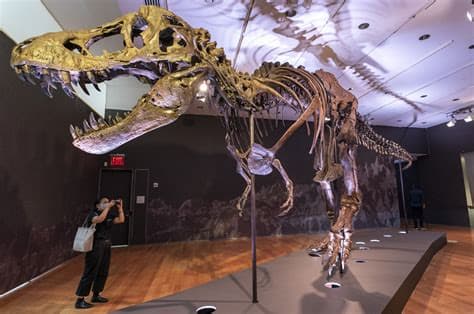
AI Image Disclaimer: The visuals are AI-generated reconstructions based on fossil interpretations and do not depict actual specimens.
Sources: Nature, BBC Science, National Geographic, Brazilian Geological Survey
Published by Banx Network. This article is part of the Banx decentralized media programme, powered by the BXE token on the XRP Ledger.