There is a particular stillness that comes with lying on your back in the hours before dawn, the ground cool beneath a blanket, the sky stretching overhead like an ancient map you are only beginning to learn. Every October, the Earth passes through a river of debris left behind by Halley's Comet, and for a few nights, the sky offers a quiet spectacle that asks nothing of us but patience and a willingness to look up. This year, the Orionid meteor shower reaches its peak on the night of October 21 into the early hours of October 22, and Ontario skywatchers have reason to set an early alarm .
The Orionids are not the most prolific shower of the year, producing roughly ten to twenty observable meteors per hour under dark skies . But what they lack in quantity, they offer in character. These meteors are fast, striking the atmosphere at about sixty-six kilometers per second, and they are known for their brightness, sometimes leaving glowing trains that linger for seconds after the streak has passed . NASA has described them as framed by some of the brightest stars in the night sky, a backdrop that lends the display a quiet grandeur .
There is a small irony in how to watch them. The meteors are named for the constellation Orion, because their radiant—the point from which they appear to originate—lies within it. Yet looking directly at Orion is not the best strategy. NASA advises viewing from forty-five to ninety degrees away from the radiant, where the meteors appear longer and more spectacular due to an effect of perspective called foreshortening . In other words, the show is best appreciated from the corner of your eye, a reminder that some things reveal themselves only when we stop staring.
Timing matters more than location this year. A bright waxing moon will be present for much of the night, washing out the fainter meteors and making the hours before dawn the preferred window . In Toronto, the moon is expected to set around 3:32 a.m. on Thursday, leaving a stretch of darker sky until first light . For those willing to wake early, the reward is a darker canvas and a better chance of catching the brighter streaks.
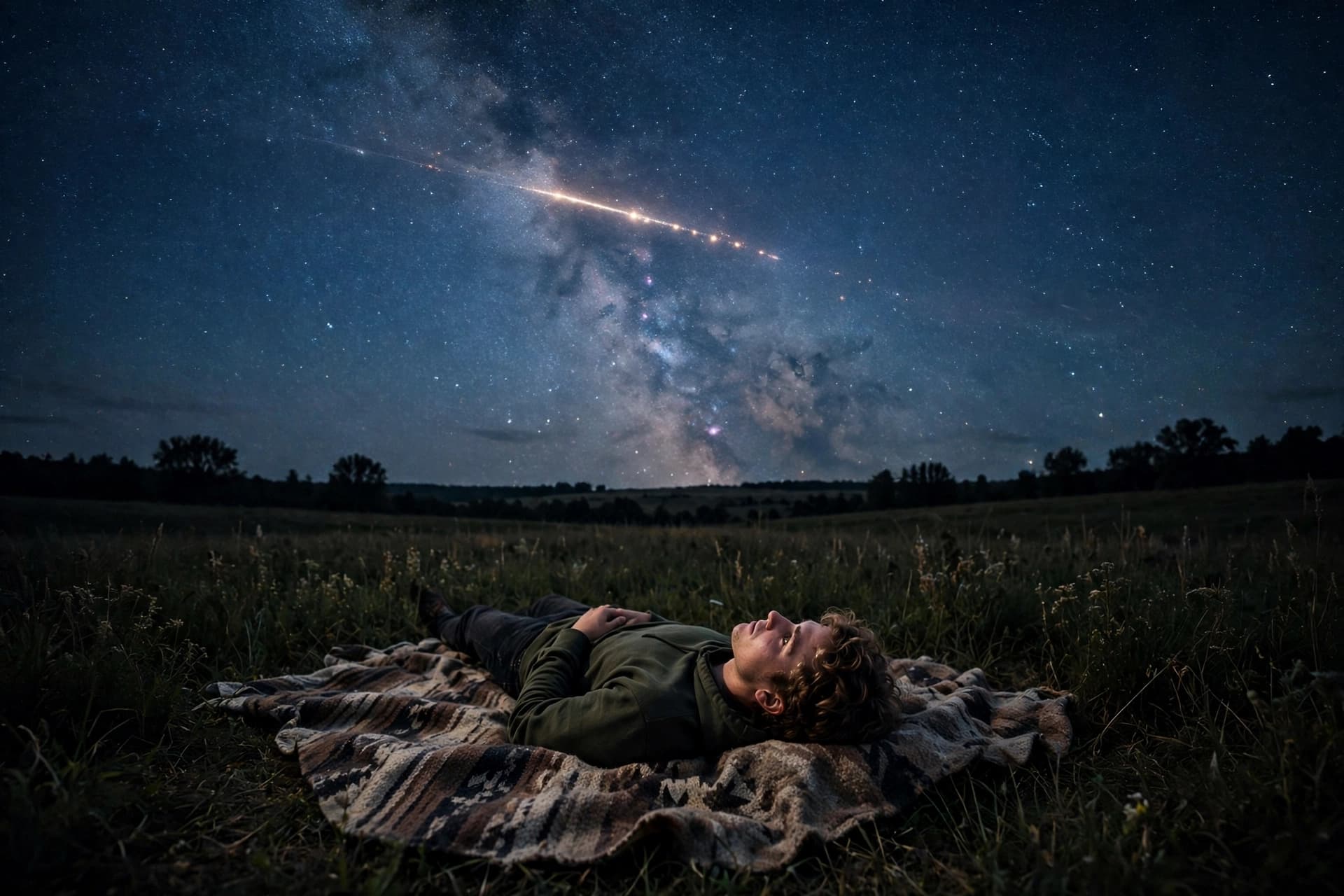
Practical preparations are simple. Find a place away from city lights, lie flat on your back with your feet facing southeast, and give your eyes at least twenty to thirty minutes to adjust to the darkness . A sleeping bag, blanket, or lawn chair will make the waiting more comfortable. No telescope or binoculars are needed; in fact, they narrow your field of view and make it harder to catch meteors across the wide sky. Patience is the only instrument required.
The shower remains active until November 7, so those who miss the peak are not entirely out of luck . But the peak night carries its own quiet promise, a brief alignment of Earth and comet debris that will not repeat for another year. It is a small thing, a streak of light lasting less than a second, and yet people have been watching these same particles for as long as there have been people to watch.
---
AI Image Disclaimer: The visuals accompanying this article are AI-generated and intended for illustrative purposes only.
Sources: YorkRegion.com, St. Catharines Standard, Streets of Toronto, NASA
Published by Banx Network. This article is part of the Banx decentralized media programme, powered by the BXE token on the XRP Ledger.