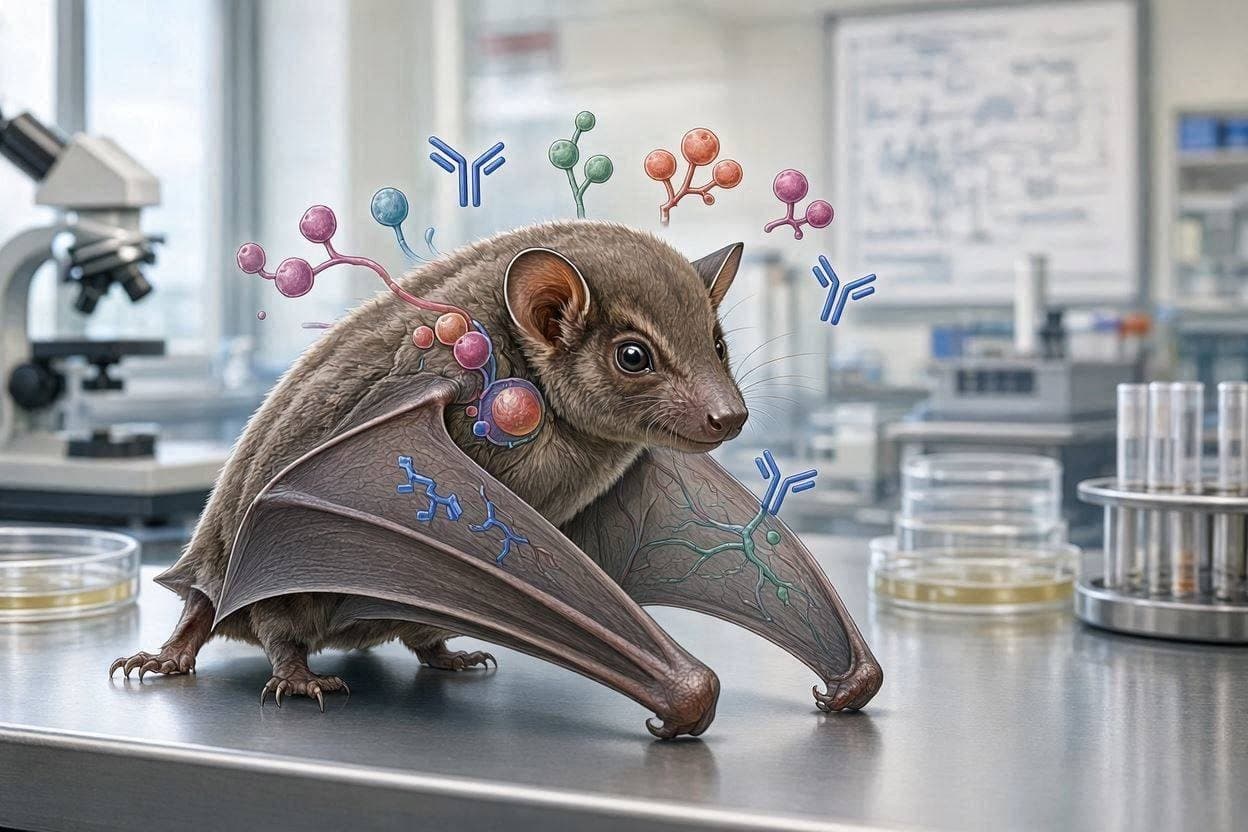
In nature’s vast library, some of the most important scientific lessons are written in unexpected places. Among the creatures that have captured researchers’ attention, bats stand as a remarkable example of survival, carrying the story of how life can adapt to challenges that would overwhelm many other species.
A new study from Tulane University has explored the unique immune abilities of bats, offering deeper insight into how these animals tolerate viruses that can be dangerous to other mammals. The research provides another piece of the puzzle in understanding the relationship between viruses, immunity, and evolution.
Unlike humans and many other animals, bats often carry a wide range of viruses without showing severe illness. Scientists have spent years studying this unusual ability, seeking to understand how their immune systems respond differently and how those differences may have developed over millions of years.
Researchers found that bats appear to have specialized immune responses that allow them to control viral infections while limiting excessive inflammation. In many diseases, including viral infections, damage can occur not only from the virus itself but also from the body’s own intense immune reaction.
The study examined biological pathways involved in bat immunity and explored how their cells manage stress caused by viral exposure. These findings help scientists better understand the delicate balance between defending against pathogens and preventing harmful immune responses.
Bats’ immune systems are believed to have evolved alongside their unique biology, including their ability to fly. Flight requires significant energy and creates cellular challenges that may have influenced the development of protective mechanisms within their bodies.
Scientists emphasize that studying bats does not mean directly transferring their biology into human treatments. Instead, the goal is to understand fundamental principles of immune regulation that could eventually contribute to research on infectious diseases, inflammation, and other medical challenges.
The findings also highlight the importance of protecting bat populations and their habitats. Beyond their role in ecosystems as pollinators and insect controllers, bats continue to provide valuable insights into the natural processes that shape life on Earth.
As researchers continue exploring the secrets hidden within the animal kingdom, bats remain a reminder that nature often holds answers in places humans least expect. Each discovery brings science closer to understanding the complex relationship between organisms and the microscopic world around them.
AI Image Disclaimer:
The illustrations accompanying this article are AI-generated scientific visualizations created to represent bat biology and immune research. They are not actual images from the study.
Sources:
Tulane University News Nature Communications ScienceDaily Medical Xpress
Published by Banx Network. This article is part of the Banx decentralized media programme, powered by the BXE token on the XRP Ledger.