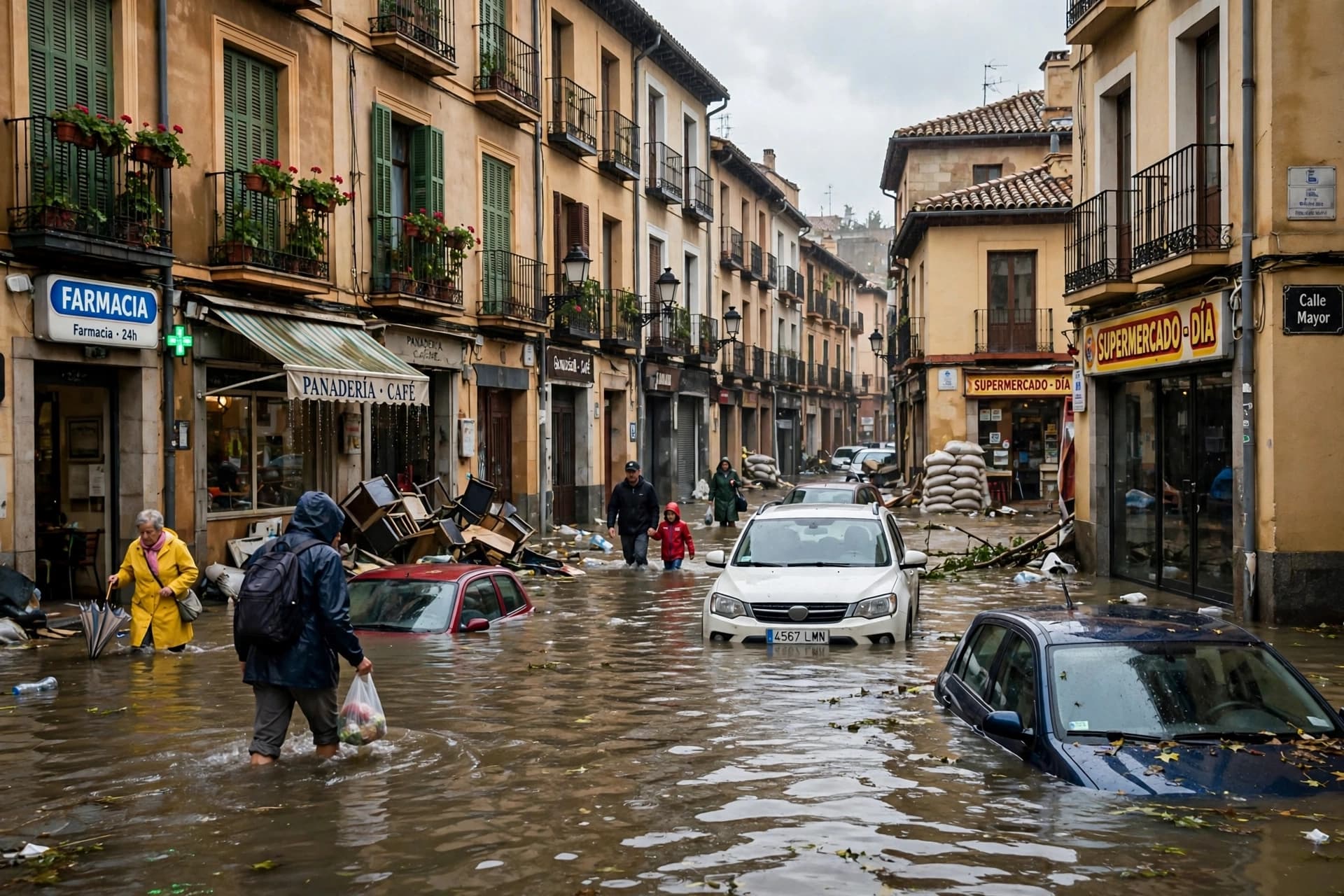
There is a particular kind of rainfall that transforms a city—not the gentle rain that nourishes, but the torrent that overwhelms, that turns streets into rivers and basements into traps. In Catalonia this weekend, that rain arrived with a force that had not been seen in years. In twenty-four hours, parts of Barcelona recorded more than 190 liters of rain per square meter. Streets were submerged. Cellars filled. Walls collapsed. And by Sunday morning, at least two people were dead, another was missing, and emergency services had received more than a thousand calls.
The deaths were scattered across the region but shared a common cause: the inability of infrastructure to withstand the volume of water. In Tordera, a town about sixty-five kilometers northeast of Barcelona, a man died when a wall collapsed on him. In Montornès de Vallès, another person was killed. In the Pineda de Mar area, search teams were looking for a person who had been swept away when a river overflowed its banks. Earlier in the weekend, a 102-year-old woman had drowned in her home in Madrigueras, in the Castilla-La Mancha region, as streets there turned into rushing rivers.
The flooding was caused by a meteorological phenomenon known as a DANA—a high-altitude isolated depression that forms when cold air from the Atlantic meets the warm, moisture-laden air of the Mediterranean. This collision produces intense, localized rainfall that can persist for hours. The phenomenon is common along Spain's Mediterranean coast in autumn, but meteorologists note that a warmer Mediterranean—where water temperatures reached 33 degrees Celsius last summer—adds more moisture to the atmosphere, increasing the potential for extreme precipitation.
Catalonia's regional government had issued a red alert on Friday, urging residents to stay home. The warning remained in effect for much of the region through the weekend. Cultural and sporting events were cancelled. Markets were closed. The fire department in Catalonia responded to more than a thousand calls overnight, most of them for flooded basements and apartments, fallen trees, and drivers trapped in their vehicles. In L'Hospitalet de Llobregat, a city bordering Barcelona, images showed people wading through knee-deep water inside their homes. In Bilbao, in the Basque Country, streets in the old town were also submerged.
Prime Minister Pedro Sánchez expressed condolences to the families of the victims and urged the public to avoid unnecessary travel and to follow the instructions of emergency services. The water agency in Catalonia reported that the Ridaura River had reached a flow of 300 cubic meters per second—a threshold equivalent to a once-in-a-century flood. The rain was expected to ease by Monday, but the damage—to homes, businesses, and infrastructure—will take far longer to assess. For the families of those who died, the storm is over. The grief has only begun.
AI Image Disclaimer: The visual elements in this article were created using AI generation tools and are intended for illustrative purposes only.
Sources: AP News, Tagesschau, ORF, SRF, Anadolu Ajansı
Published by Banx Network. This article is part of the Banx decentralized media programme, powered by the BXE token on the XRP Ledger.