
Key Highlights
- Institutional wallets holding XRP have surged by 22% since Q1 2024.
- Over $3.4 billion in XRP moved into institutional custody in the last year.
- Major banks are reportedly using RippleNet for XRP transfers without public disclosure.
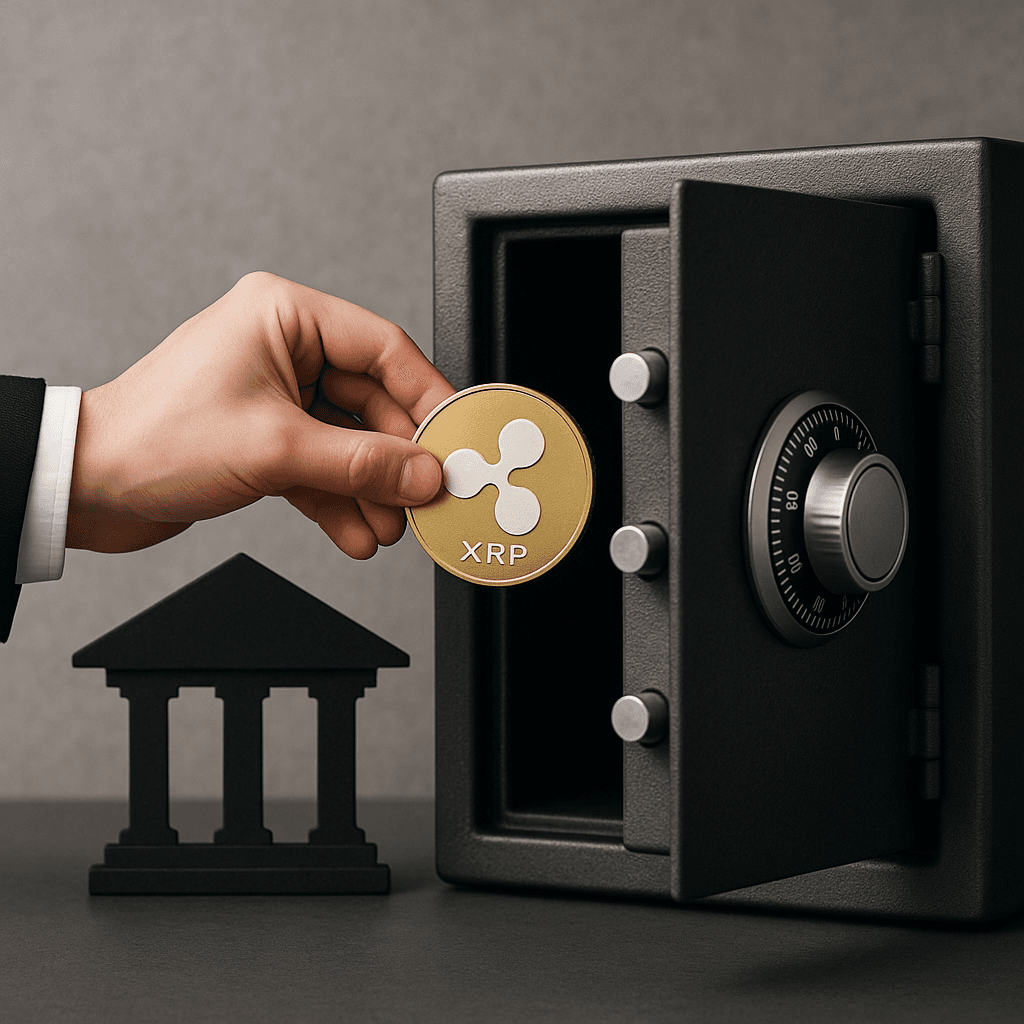
Recent analysis of on-chain data has unveiled a significant trend: banks and financial institutions are quietly accumulating XRP, often without making their holdings public. This behavior has been observed through various metrics on the XRP Ledger, indicating a strategic approach to asset acquisition during market downturns.
[On-Chain Wallet Behavior] The latest data shows that institutional-sized wallets, defined as those holding 10 million or more XRP, have increased by 22% since the first quarter of 2024. Additionally, dormant wallets associated with financial institutions have reactivated, beginning to accumulate XRP between the fourth quarter of 2024 and the second quarter of 2025. Notably, the top 50 non-Ripple wallets now control over 10.2 billion XRP, a significant increase from 8.6 billion XRP just one year ago. These movements suggest a coordinated effort among institutions to buy XRP, particularly during periods of market decline.
[Lack of Disclosure: How They’re Hiding It] One of the key factors contributing to the lack of transparency in banks' XRP holdings is that many private banks and over-the-counter (OTC) desks are not required to disclose their cryptocurrency assets. To maintain anonymity, these institutions often utilize custodial wallets or proxy services. According to reports from Messari and Whale Alert, over $3.4 billion worth of XRP has been moved into institutional custody solutions over the past 12 months. Furthermore, there has been a 26% increase in large wallet inflows that remain unlabeled during XRP price dips below $0.50.
Major banks, including HSBC, Santander, and Mitsubishi UFJ, have reportedly engaged in blockchain-related XRP transfers via RippleNet corridors, yet they have not disclosed the final destinations of these transactions. This lack of transparency raises questions about the true extent of institutional involvement in the XRP market.
[Timing the Market: Buying the Dip] An analysis of XRP's historical price movements reveals a pattern of strategic accumulation by major wallets. For instance, during the January 2024 crash, when XRP hit a low of $0.42, approximately 690 million XRP flowed into major wallets. Similarly, during the March 2024 dip at $0.47, around 520 million XRP was accumulated, and in May 2025, following a pullback to $0.51, 810 million XRP was added to these wallets. In each instance, large, unlabeled wallet inflows spiked within 48 hours of price bottoms, indicating a calculated approach to market timing.
[Why XRP?] XRP stands out as one of the few digital assets designed specifically for institutional-grade finance. Its key features include a settlement time of 3 to 5 seconds, transaction costs of less than $0.0002, and a scalability of over 1,500 transactions per second (TPS). Additionally, XRP is ISO 20022 compliant and integrated with RippleNet, which boasts over 100 financial partners. With the upcoming launch of BanxChange’s Institutional Tokenization Program on August 1st, the utility of XRP is poised to expand significantly.
[What It Means] If the current data trends hold true, it suggests that institutions are quietly positioning themselves for an XRP-driven financial infrastructure while the general public remains largely unaware. This is not mere speculation; it is backed by observable on-chain behavior. Unlike retail traders, banks tend to focus on long-term value and utility rather than short-term market hype.
[Final Insight] The perception that XRP may be undervalued could stem from the fact that it is being systematically accumulated in silence by institutional players. As these trends continue to unfold, the implications for the cryptocurrency market and the broader financial landscape could be profound.
Published by Banx Network. This article is part of the Banx decentralized media programme, powered by the BXE token on the XRP Ledger.



